La rue Legerova est une voie de Prague. Une partie de la rue se trouve dans le quartier de Nové Město, et une autre partie dans le quartier de Vinohrady.

1. Origine du nom

La rue porte le nom du professeur français Louis Léger (1843-1923), qui a soutenu l'idée d'un État tchèque indépendant.

1. Historique

Les nouveaux murs de la ville couraient dans le sens de la rue sur une longueur totale d'environ 6 kilomètres. Actuellement, une partie de la rue forme la frontière entre les quartiers Nové Město et Vinohrady. Elle fait partie de l'autoroute Nord-Sud, et mène du pont Nusle au centre de Prague.[réf. nécessaire] Le nom original de la rue était Táborská. Le 8 janvier 1923, à l'occasion du 80e anniversaire du professeur Louis Léger, la rue fut rebaptisée « Legerova ». Au moment de la Seconde Guerre mondiale, elle s'appelait Havlíčkova, puis sous le régime communiste, elle s'appelait Lidových milicí (cs) (Milice populaire), c'est depuis 1990 qu'elle s'appelle à nouveau Legerova. En raison du trafic automobile intense, les valeurs de concentration de poussière sont les plus élevées non seulement à Prague, mais parfois aussi de toute la République tchèque.

1. Galerie


1. Références

(cz) Cet article est partiellement ou en totalité issu de l’article de Wikipédia en tchèque intitulé « Legerova » (voir la liste des auteurs).

Portail de l’architecture et de l’urbanisme Portail de Prague

Nearby Places View Menu
Location Image
59 m

State Opera (Prague)

The State Opera (Czech: Státní opera) is an opera house in Prague, Czech Republic. It is part of the National Theatre of the Czech Republic, founded by Ministry of Culture of the Czech Republic in 1992. The theatre itself originally opened in 1888 as the New German Theatre and from 1949 to 1989 it was known as the Smetana Theatre. More recently it was renamed the Prague State Opera. Currently it is home to approximately 300 performances a year.
Location Image
130 m

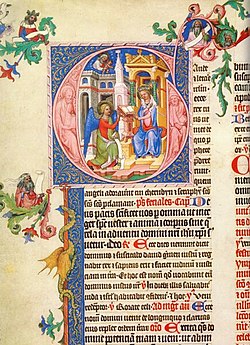
Liber viaticus

Liber viaticus is a breviary made sometime in the 1350s, at the latest in 1364, for Bishop John of Neumarkt. This is an illuminated manuscript of 319 sheets in relatively good condition preserved to this day (not the original binding) and deposited in the National Museum Library, Prague (sign. XIII A 12).
Location Image
201 m

Petschek Palace

The Petschek Palace (Czech: Petschkův palác or Pečkárna) is a neoclassicist building in Prague. It was built between 1923 and 1929 by the architect Max Spielmann upon a request from the merchant banker Julius Petschek and was originally called "The Bank House Petschek and Co." (Bankhaus Petschek & Co.) Despite its historicizing look, the building was then a very modern one, being constructed of reinforced concrete and fully air-conditioned. It also had tube post, phone switch-board, printing office, a paternoster lift (which is still functioning), and massive safes in the sublevel floor. The building was sold by the Petschek family before the occupation of Czechoslovakia, and the family left the country. It was during the war years that the place gained its notoriety, as it immediately became the headquarters of Gestapo for the Protectorate of Bohemia and Moravia. It was here where the interrogations and torturing of the Czech resistance members took place, as well as the courts-martial established by Reinhard Heydrich which sent most of the prisoners to death or to Nazi concentration camps. Many people died as a result of imprisonment and torture in the building itself. A memorial plaque that commemorates the victims was unveiled on the corner of the building. In 1948 the building was acquired by the then-Czechoslovak Ministry of Foreign Trade. Today it is the residence of a part of the Czech Ministry of Industry and Trade. In 1989 the building became a National Cultural Monument (Národní kulturní památka). The exterior was used as stand-in for the Gemeinschaft Bank (Zurich, Switzerland) in the 2002 film The Bourne Identity.
Location Image
224 m

Battle for Czech Radio

An illicit broadcast from the radio studio in Prague helped spark the Prague uprising during the final days of World War II, but German counterattacks led to a pitched battle breaking out. The conflict became known as the Battle for Czech Radio (Czech: Boj o Český rozhlas). By controlling the radio, the Czech resistance was able to inform and inspire the people of Prague to effective action during the Prague uprising. German forces were unable to prevent the Czechs from broadcasting. However, the attempts to appeal to Russians and Americans for aid were unsuccessful.
Location Image
224 m

Czech Radio

Czech Radio (Czech: Český rozhlas, ČRo) is the public radio broadcaster of the Czech Republic operating continuously since 1923. It is the oldest national radio broadcaster in continental Europe and the second-oldest in Europe after the BBC. Czech Radio was established in 1992 by the Czech Radio Act, which sets out the framework for its operation and finance. It acts as the successor to the previous state-owned Czechoslovak Radio which ceased to exist by 1992. The service broadcasts throughout the Czech Republic nationally and locally. Its four national services are Radiožurnál, Dvojka, Vltava and Plus. Czech Radio operates twelve nationwide stations and another fourteen regional stations. All ČRo stations broadcast via internet stream, digital via DAB+ and DVB, and part analog via terrestrial transmitters. It is based in Prague in a building in Vinohradská třída.