

 English
 Français

The State Opera (Czech: Státní opera) is an opera house in Prague, Czech Republic. It is part of the National Theatre of the Czech Republic, founded by Ministry of Culture of the Czech Republic in 1992. The theatre itself originally opened in 1888 as the New German Theatre and from 1949 to 1989 it was known as the Smetana Theatre. More recently it was renamed the Prague State Opera. Currently it is home to approximately 300 performances a year.
Nearby Places View Menu
87 m
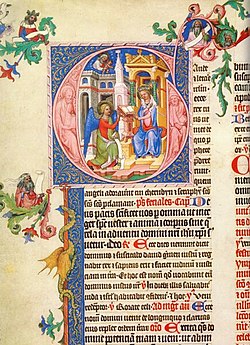
Liber viaticus
Liber viaticus is a breviary made sometime in the 1350s, at the latest in 1364, for Bishop John of Neumarkt. This is an illuminated manuscript of 319 sheets in relatively good condition preserved to this day (not the original binding) and deposited in the National Museum Library, Prague (sign. XIII A 12).

151 m
Petschek Palace
The Petschek Palace (Czech: Petschkův palác or Pečkárna) is a neoclassicist building in Prague. It was built between 1923 and 1929 by the architect Max Spielmann upon a request from the merchant banker Julius Petschek and was originally called "The Bank House Petschek and Co." (Bankhaus Petschek & Co.) Despite its historicizing look, the building was then a very modern one, being constructed of reinforced concrete and fully air-conditioned. It also had tube post, phone switch-board, printing office, a paternoster lift (which is still functioning), and massive safes in the sublevel floor. The building was sold by the Petschek family before the occupation of Czechoslovakia, and the family left the country.
It was during the war years that the place gained its notoriety, as it immediately became the headquarters of Gestapo for the Protectorate of Bohemia and Moravia. It was here where the interrogations and torturing of the Czech resistance members took place, as well as the courts-martial established by Reinhard Heydrich which sent most of the prisoners to death or to Nazi concentration camps. Many people died as a result of imprisonment and torture in the building itself. A memorial plaque that commemorates the victims was unveiled on the corner of the building.
In 1948 the building was acquired by the then-Czechoslovak Ministry of Foreign Trade. Today it is the residence of a part of the Czech Ministry of Industry and Trade. In 1989 the building became a National Cultural Monument (Národní kulturní památka).
The exterior was used as stand-in for the Gemeinschaft Bank (Zurich, Switzerland) in the 2002 film The Bourne Identity.

177 m
Muzeum (Prague Metro)
Muzeum (Czech pronunciation: [ˈmuzɛjum]) is a major interchange station on the Prague Metro, located directly beneath Wenceslas Square and the historic building of the National Museum. It serves as a transfer point between Line A and Line C. The station opened in two phases: the Line C part on 9 May 1974 and the Line A part on 12 August 1978.

231 m
Natural History Museum, Prague
The Natural History Museum (Czech: Přírodovědecké muzeum) is a museum in Prague in the Czech Republic. It is one of the five components of the National Museum and currently consists of eight departments: the Mineralogical and Petrological, Paleontological, Mycological, Botanical, Entomological, Zoological, Anthropological, and the Ringing Station. The Natural History Museum employs over 80 people, and its collections contain more than 15 million objects, of which only a fraction are exhibited. Ivo Macek has been the director of the museum since 2015.
The museum's activities fulfill three main tasks:
It expands and manages natural history collections and continuously documents nature in the Czech Republic and abroad.
It scientifically processes its collections and organizes its own research at the international level.
It presents its own collections and scientific activities to the general public through expositions, exhibitions, popular educational publications, lectures, and accompanying programs to expositions and exhibitions. It also involves the public in scientific research through citizen science projects.