L'insurrection de Prague (en tchèque : Pražské povstání) désigne le soulèvement de la résistance tchèque qui eut lieu entre le 5 mai 1945 et le 8 mai 1945 à Prague, alors en Tchécoslovaquie.

1. Contexte

Alors que la bataille de Berlin faisait rage et que le Troisième Reich était sur le point de s'effondrer, la résistance tchèque (plus de 30 000 personnes), voyant là une occasion de libérer la ville du joug nazi, prend les armes contre les Allemands.

1. Déroulement

Elle débute par la prise de l'immeuble de radiodiffusion de Prague par la résistance et l'appel à la révolte au peuple tchèque. Le 7 mai 1945 l'Armée Vlassov, stationnée à Prague et formée de soldats russes incorporés dans l'armée allemande, se retourne contre les Allemands mais est dans l'incapacité de libérer totalement la ville. Le 8 mai 1945, dépourvue de soutien, la résistance tchèque est amenée à négocier un cessez-le-feu avec les Allemands, qui cherchent à garantir le libre passage de leurs troupes et de leurs civils qui fuient l'avancée de l'Armée rouge. Le 9 mai 1945, la ville est libérée par les Soviétiques du premier front ukrainien (général Koniev) lors de l'offensive sur Prague.

1. Annexes


1. = Articles connexes =

Soulèvement national slovaque Offensive de Prague (6-11 mai 1945) Fin de la Seconde Guerre mondiale en Europe

1. = Bibliographie =

(cs) Zdeněk Roučka, Skončeno a podepsáno: Drama Pražského povstání, Plzeň : ZR&T, 2003, 163 p. (ISBN 80-238-9597-4). (en) Karel Bartošek, The Prague Uprising (trad. anglaise de J. M. Kohoutová), Artia, Prague, 1965, 294 p. (fr) Pierre Bonnoure, La résistance tchèque en 1944-1945 et l'insurrection de Prague (mai 1945), Pensée, Paris, 1955, 27 p. (extrait de La Pensée, octobre 1964, no 117, p. 3-29)

1. = Liens externes =

(en) "Calling all Czechs, calling all Czechs!" - the Prague Uprising remembered Portail de la Seconde Guerre mondiale Portail de l’histoire militaire Portail de Prague Portail des années 1940 Portail de l'insurrection

Nearby Places View Menu
Location Image
0 m

Battle for Czech Radio

An illicit broadcast from the radio studio in Prague helped spark the Prague uprising during the final days of World War II, but German counterattacks led to a pitched battle breaking out. The conflict became known as the Battle for Czech Radio (Czech: Boj o Český rozhlas). By controlling the radio, the Czech resistance was able to inform and inspire the people of Prague to effective action during the Prague uprising. German forces were unable to prevent the Czechs from broadcasting. However, the attempts to appeal to Russians and Americans for aid were unsuccessful.
Location Image
0 m

Czech Radio

Czech Radio (Czech: Český rozhlas, ČRo) is the public radio broadcaster of the Czech Republic operating continuously since 1923. It is the oldest national radio broadcaster in continental Europe and the second-oldest in Europe after the BBC. Czech Radio was established in 1992 by the Czech Radio Act, which sets out the framework for its operation and finance. It acts as the successor to the previous state-owned Czechoslovak Radio which ceased to exist by 1992. The service broadcasts throughout the Czech Republic nationally and locally. Its four national services are Radiožurnál, Dvojka, Vltava and Plus. Czech Radio operates twelve nationwide stations and another fourteen regional stations. All ČRo stations broadcast via internet stream, digital via DAB+ and DVB, and part analog via terrestrial transmitters. It is based in Prague in a building in Vinohradská třída.
Location Image
0 m

Prague uprising

The Prague uprising (Czech: Pražské povstání) was a partially successful attempt by the Czech resistance movement to liberate the city of Prague from German occupation in May 1945, during the end of World War II. The preceding six years of occupation had fuelled anti-German sentiment and the rapid advance of Allied forces from the Red Army and the United States Army offered the resistance a chance of success. On 5 May 1945, during the end of World War II in Europe, occupying German forces in Bohemia and Moravia were spontaneously attacked by civilians in an uprising, with Czech resistance leaders emerging from hiding to join them. The Russian Liberation Army (ROA), a collaborationist formation of ethnic Russians, defected and supported the insurgents. German forces counter-attacked, but their progress was slowed by barricades constructed by the insurgents. On 8 May, the Czech and German leaders signed a ceasefire allowing all German forces to withdraw from the city, but some Waffen-SS troops refused to obey. Fighting continued until 9 May, when the Red Army entered the nearly liberated city. The uprising was brutal, with both sides committing several war crimes. German forces used Czech civilians as human shields and perpetrated several massacres. Violence against German civilians, sanctioned by the Czechoslovak government-in-exile, continued after the uprising, and was justified as revenge for the occupation or as a means to encourage Germans to flee. George S. Patton's Third United States Army was ordered by Supreme Allied Commander Dwight D. Eisenhower not to come to the aid of the Czech insurgents, which undermined the credibility of the Western powers in post-war Czechoslovakia. Instead, the uprising was presented as a symbol of Czech resistance to Nazi rule, and the liberation by the Red Army was used by the Communist Party of Czechoslovakia to increase popular support for the party.
Location Image
104 m

Transgas (building)

Transgas was a high tech building with brutalist elements in the center of Prague, Czech Republic. It was built in 1978 and demolished in 2019. It consisted of a cubic part, which was dark grey. Its facade was covered by small cobble stones. The other two buildings were high with long windows and steel dark construction. The surrounding decoration is symbolically was out of gas pipeline tubes.
Location Image
220 m

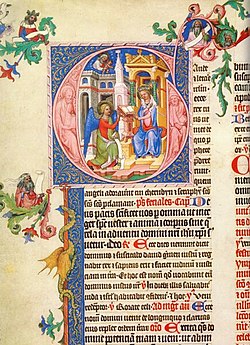
Liber viaticus

Liber viaticus is a breviary made sometime in the 1350s, at the latest in 1364, for Bishop John of Neumarkt. This is an illuminated manuscript of 319 sheets in relatively good condition preserved to this day (not the original binding) and deposited in the National Museum Library, Prague (sign. XIII A 12).