Location Image

Église Saint-Étienne de Prague

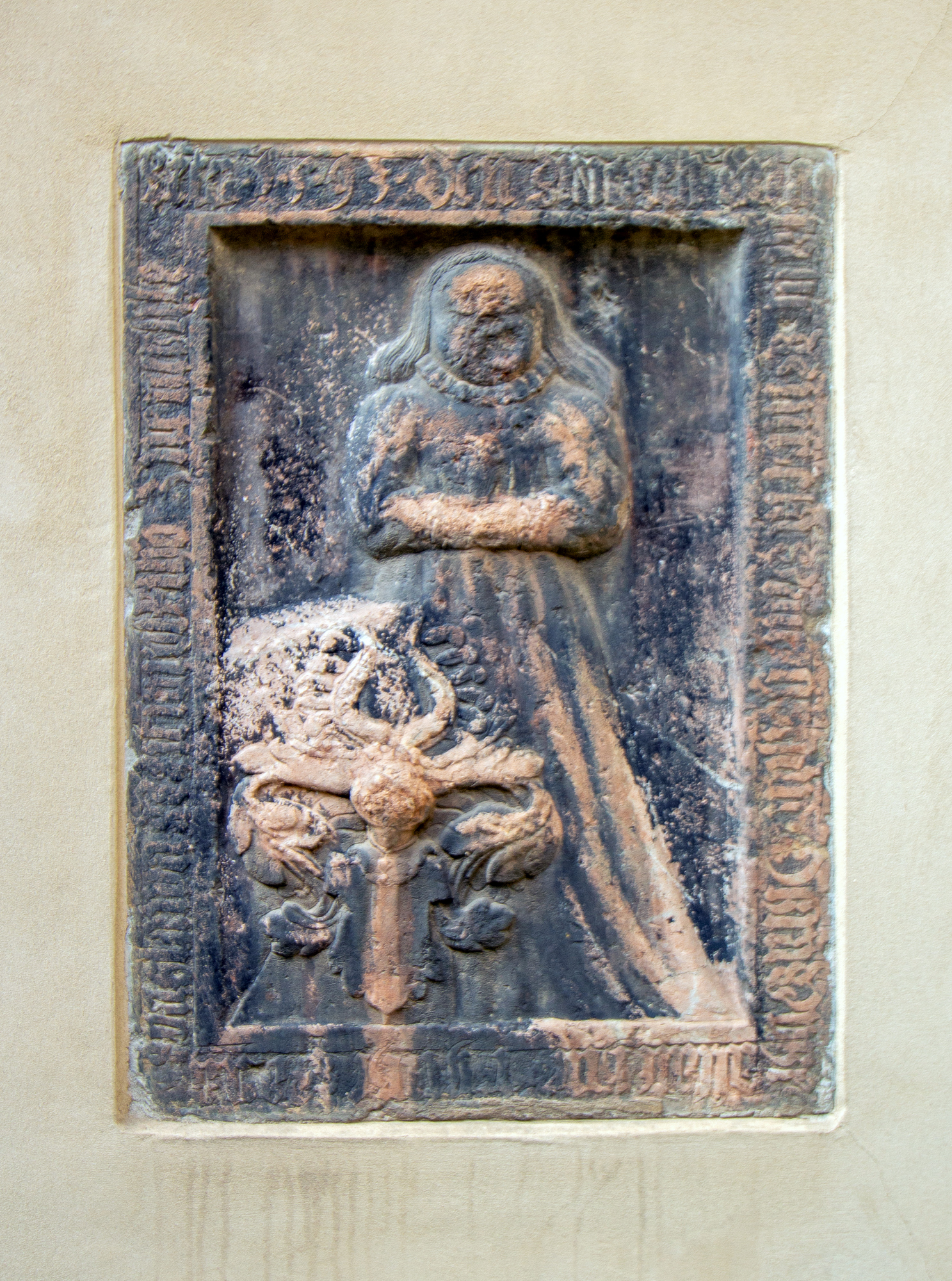
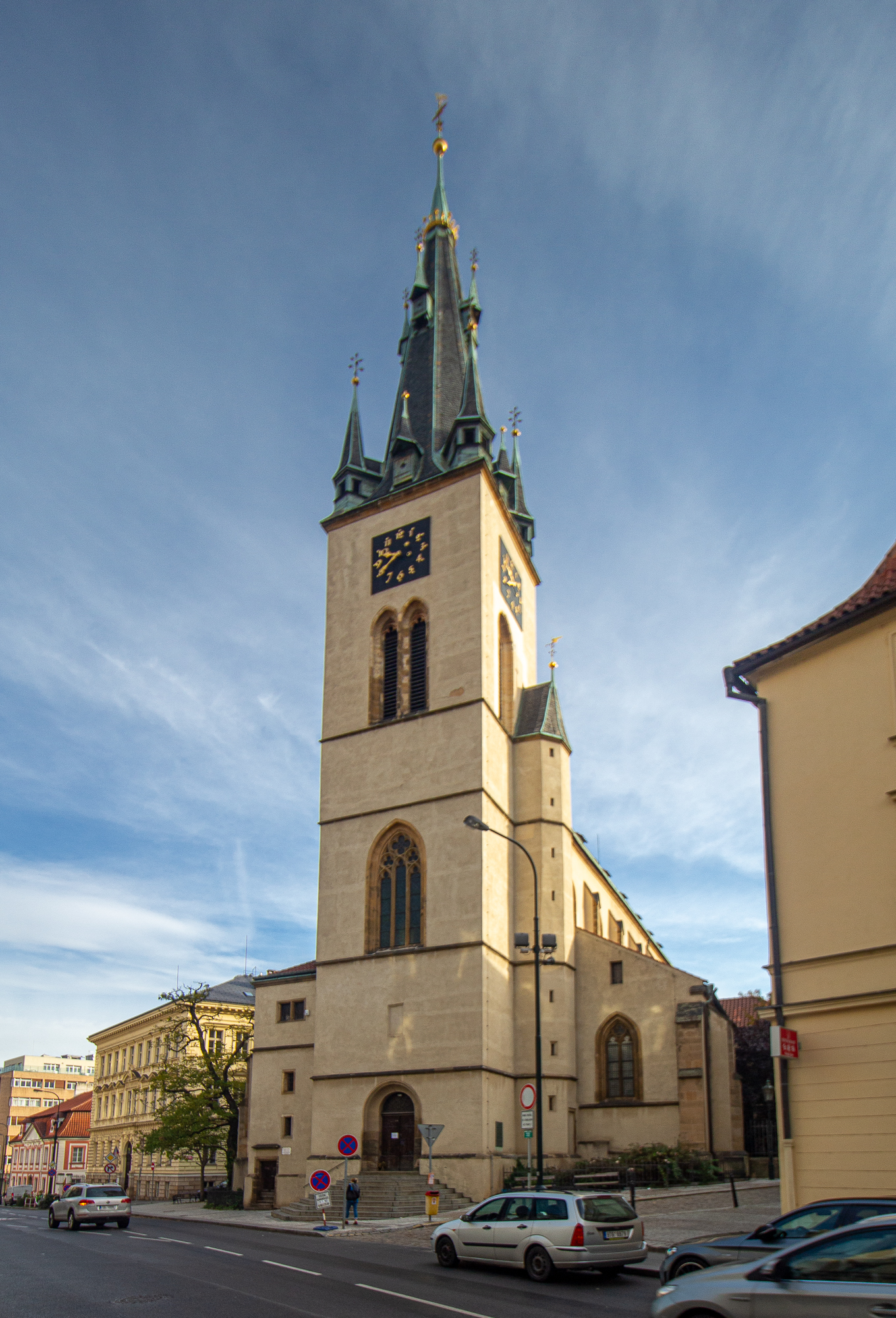
L'église Saint-Étienne de Prague-Nové Město (en tchèque : Kostel svatého Štěpána) est une église catholique romaine située à Prague 2. C'est une église gothique du XIVe siècle, située près de la rotonde romane Saint-Longin. L'église était dédiée à St-Etienne et la rotonde fut ensuite consacrée à Saint Longin.
1. Histoire

L'Église Saint-Etienne a été fondée au milieu du XIVe siècle par Charles IV dans le nouveau quartier pragois de Nové Město. L'église a été construite entre 1351 et 1401, époque à laquelle Maître Jiří est mentionné comme le principal bâtisseur. L'achèvement de la tour ouest est daté de 1401, date à laquelle toute l'église avait déjà été construite. Un presbytère baroque (dans l'angle sud-ouest), une école, un clocher en bois (reconstruit en pierre au début du XVIIe siècle), la chapelle de Tous les Saints et la chapelle de Jérusalem furent construits sur la propriété. Elle a été modifiée dans les années 1874-1879, au cours desquelles de nouveaux remplages furent créés dans le presbytère, de nouvelles fenêtres dans la nef principale, la façade et dans les nefs latérales, ainsi que les flèches du toit, par Josef Mocker, un restaurateur bien connu de l'époque.

1. Intérieur

L'espace intérieur est dominé par l'imposant maître-autel baroque en bois, avec le tableau La lapidation de saint Étienne et le tableau dans le prolongement de la Sainte Trinité de Matěj Zimprecht de 1669. L'autel est encadré par des sculptures de saint Venceslas, sainte Ludmila, de la Vierge, de saint Jean l'Évangéliste agenouillé et de sainte Marie-Madeleine. Les murs de l’église sont pourvus de peintures murales gothiques, qui sont datées d'après 1450. Dans l’église est enterré le plus célèbre sculpteur baroque tchèque, Matthias Bernard Braun.

1. Tour clocher

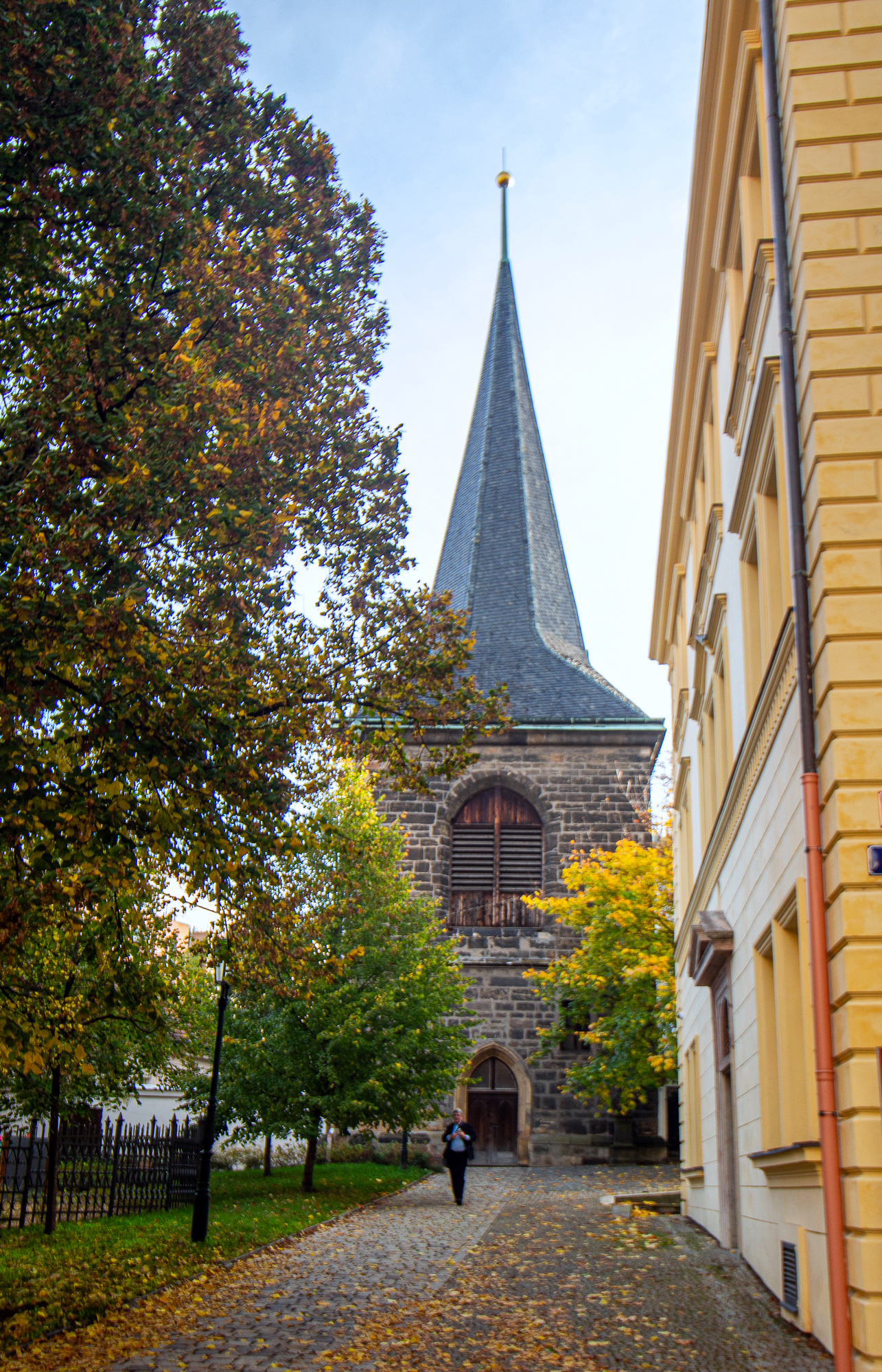
Dans la zone de l'ancien cimetière, se trouve une tour indépendante faisant office de beffroi. Il a été construit sur le site d'un ancien bâtiment en bois dans les années 1600-1604. Les cloches furent réquisitionnées pour faire des canons pendant les deux guerres mondiales, à l'exception d'une seule datant de 1490.

1. Mariages

Le compositeur Antonín Dvořák et plus tard également son gendre, le compositeur et violoniste Josef Suk, qui épousa la fille de Dvořák, Otília, se marièrent à l'église le 29 août 1849 en présence de Bedřich Smetana et Miroslav Tyrš.

1. Références


1. Littérature

http://www.digitalniknihovna.cz/mlp/view/uuid:533352b0-1482-11de-bdac-0030487be43a?page=uuid:b6d70330-1233-11de-8b6a-0030487be43a http://www.digitalniknihovna.cz/mlp/view/uuid:31b861f0-ea9b-11dc-b4ab-000d606f5dc6?page=uuid:71f845d0-eaa2-11dc-a680-000d606f5dc6 LÍBAL Dobroslav. Les églises gothiques de Prague. Prague : Antonín Kovanda Praha KALINA KOŤÁTKO et PAVEL Jiří. Prague 1310–1419, chapitres sur le gothique flamboyant. Prague : Libri, 2004. BAŤKOVÁ Růžena. Monuments artistiques de Prague 2. - Nové Město, Vyšehrad. Prague : Academia, 1998. 840 pages. RYBÁR Ctibor. Les rues et les maisons de la ville de Prague. Prague : Victoria Pub., 1995. 540 pages. DAVID Petr. 111 monuments et curiosités de Prague. Prague : Kartografie Praha, 2001. 350 pages.

1. = Liens externes =

Site officiel Ressource relative à l'architecture : MonumNet

Site officiel de l'église Saint-Étienne (en tchèque) Portail de l’architecture chrétienne Portail de Prague

Nearby Places View Menu
Location Image
53 m

St. Longin's Rotunda

St. Longin's Rotunda (Prague, Na Rybníčku) (Czech: Rotunda svatého Longina) is one of the few preserved romanesque rotundas in Prague, in the Czech Republic. It was founded in the 12th century as a parish church for a village called "Rybníček" which was there before the founding of the Prague New Town in the middle of the 14th century. Originally, it was a Pagan temple before the arrival of Christianity, when it was transformed into a Catholic chapel. Up until the 14th century, it was consecrated to St Stephen, before Charles IV founded the New Town and changed the consecration to Saint Longinus, who was one of the men who took part in Jesus' crucifixion, and supposedly pierced the side of Jesus. Longinus came to deeply regret this action, causing him to desert the army and become a hermit, later leading to his arrest and execution. The rotunda was nearly demolished in the 19th century while the nearby street (Na Rybníčku) was being built, but it was saved by František Palacký.
Location Image
112 m

New Town, Prague

New Town (Czech: Nové Město) is a quarter in the city of Prague in the Czech Republic. New Town is the youngest and largest of the five independent (from the Middle Ages until 1784) towns that today comprise the historic center of modern Prague. New Town was founded in 1348 by Charles IV just outside the city walls to the east and south of the Old Town and encompassed an area of 7.5 km2; about three times the size of the Old Town. The population of Prague in 1378 was well over 40,000, perhaps as much as twice that, making it the 4th most populated city north of the Alps and, by area, the 3rd largest city in Europe. Although New Town can trace its current layout to its construction in the 14th century, only few churches and administrative buildings from this time survive. There are many secular and educational buildings in New Town, but also especially magnificent gothic and baroque churches. These nevertheless are not the main drawing points for tourists. New Town's most famous landmark is Wenceslas Square, which was originally built as a horsemarket and now functions as a center of commerce and tourism. In the 15th century, the Novoměstská radnice, or New Town Hall, was the site of the first of the three defenestrations of Prague.
Location Image
376 m

The Drama Club

The Drama Club (Czech: Činoherní klub) is a theatre located in Prague. The Drama Club was founded by Ladislav Smoček and Jaroslav Vostrý. The opening performance of Piknik took place on 3 March 1965. The actors in the 1970s and 1980s included Petr Čepek, Pavel Landovský, Josef Somr, Jiří Kodet, Jirina Trebicka, Libuše Šafránková and Josef Abrhám. On 19 November 1989, two days after the Velvet revolution, the Civic Forum was founded there. The Drama Club was awarded Alfréd Radok Award in category Theatre of the Year in 2002, and 2008. The current actors include Jaromír Dulava, Ivana Chýlková, Ondřej Vetchý and Petr Nárožný. Founder Jaroslav Vostry died on 18 March 2025.
Location Image
389 m

Almanac X Alcron Prague

The Almanac X Alcron Prague is a historic hotel opened in 1932 as the Hotel Alcron, located in the Czech capital of Prague on Štěpánská, just off Wenceslas Square.
Location Image
397 m

University of New York in Prague

The University of New York in Prague (UNYP) is a private higher education institution in Prague, Czech Republic. It was established in 1998 in cooperation with the State University of New York at New Paltz and Empire State University, both part of the State University of New York (SUNY). UNYP was recognized by the Czech Ministry of Education, Youth and Sports in 2001 on the basis of accreditation of its study programs in Business Administration and International European Relations. UNYP is a member of the British Accreditation Council for Independent Further and Higher Education. Originally located in the historic old town of Prague, on the corner of Mikovcova and Legerova streets, in 2014 UNYP moved to a new campus on Londýnská 41 in Vinohrady (Prague 2).