English
 Français

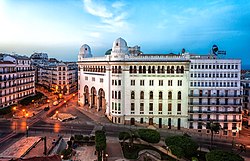
Alger (en arabe : الجزائر العاصمة, Al-Jazāʾir El ʿĀṣima, en berbère : ⵍⴷⵣⴰⵢⵔ ⵜⴰⵎⴰⵏⴰⵖⵜ, Ldzayer tamanaɣt ou Lezzayer tamanaɣt et Dzayer en arabe dialectal), surnommée El Bahdja (« la joyeuse »), El Mahrussa (« la bien-gardée ») ou El Beida (« la blanche ») ou même Alger la blanche, est la capitale de l'Algérie et en est la ville la plus peuplée. Située au bord de la mer Méditerranée, la ville d'Alger est en fait constituée de plusieurs communes de la wilaya d'Alger dont elle tire son nom en tant que chef-lieu mais n'a ni personnalité juridique, ni structure d'administration en propre. L'unité urbaine d'Alger comptait 2 481 788 habitants selon l'Office national des statistiques algérien d'après le dernier recensement de 2008. Avec 4,4 millions d'habitants selon le ministère des Affaires étrangères français, tandis que l'agglomération en comptait environ 6 727 806 habitants en 2010 suivant le classement des 100 plus grandes villes du monde par World Gazetteer et 7 796 923 habitants en 2020 selon Population Data, Alger serait d'après ces deux dernières sources la première agglomération du Maghreb et du littoral méditerranéen. Fondée au IVe siècle av. J.-C. comme comptoir par les Phéniciens, sous le nom d'Icosim, elle est occupée par les Romains qui la renomme Icosium, puis par les Vandales, les Byzantins et les Arabes, puis enfin au début du Moyen Âge par la tribu berbère des Beni-Mezghana, avant d'être récupérée en 1204 par la tribu arabe des Thaâliba qui règneront sur la région d'Alger jusqu'en 1516. C'est le souverain berbère de la dynastie ziride Bologhine ibn Ziri, au milieu du Xe siècle qui refondera l'Alger actuelle sur les ruines d'Icosium. El-Djazaïr est la transcription la plus courante en arabe littéraire, Dzeyer ou Ledzayer seront employés en arabe algerien jusque de nos jours. Elle ne prend son rôle de capitale de l'Algérie qu'à partir de la période de la régence d'Alger en 1515. Elle est alors une des cités les plus importantes de la mer Méditerranée entre le XVIe siècle et le début du XIXe siècle, pratiquant régulièrement le corso, et à laquelle les puissances maritimes non musulmanes versent un impôt pour le passage de leur flotte. Son rôle de capitale du pays sera confirmé lors de la colonisation française où elle devient le siège du gouverneur général de l'Algérie. Alger fut la capitale de la France libre de 1942 à 1944. Depuis l'indépendance du pays à la suite de la guerre d'Algérie, en 1962, Alger est devenue capitale de l’État algérien. Elle abrite le siège des institutions politiques du pays en plus de tenir un rôle de premier plan économiquement.
Nearby Places View Menu
Hacène Harcha Arena
Battle of Algiers (1956–1957)

Icosium

Government Palace (Algiers)