Académie nationale des beaux-arts d'Argentine

L'Académie nationale de Beaux-Arts (Academia Nacional de Bellas Artes) a comme finalité de contribuer au développement des beaux-arts dans toutes ses branches : arts visuels, musique, architecture et urbanisme, histoire et critique d'art, et action culturelle. L'Académie réalise des études et des recherches et divulgue ses résultats ; elle formule des plans d'action culturelle et conseille les gouvernements à divers niveaux ainsi qu'à des institutions culturelles publiques ou privées. Elle a été créée à Buenos Aires (Argentine) par arrêté du 1er juillet 1936 avec un groupe d'intellectuels et de personnalités de la culture.

1. Gouvernance


1. Patrimoine culturel


1. Membres

L'Académie compte trente-cinq académiciens ainsi que des académiciens émérites, correspondants et délégués.

1. Anciens académiciens

Parmi les académiciens morts figurent :

des architectes Mario Roberto Álvarez, Mario Buschiazzo, Alejandro Bustillo, Raúl Schurjin, Charles Le Corbusier, Oscar Niemeyer, Martín Noel, Clorindo Testa, Marina Waisman et Amancio Williams ;

des peintres Héctor Basaldúa, Antonio Berni, Guillermo Butler, Horace Butler, Juan Carlos Castagnino, Pie Collivadino, Carlos de la Cárcova, Emilio Pettoruti, Diego Rivera, Luis Seoane, Rufino Tamayo, Jorge Soto Acebal, Nicolás García Uriburu et Lin Spilimbergo ;

des musiciens Juan José Castro, Gerardo Gandini, Alberto Ginastera, Carlos López Buchardo, Federico Moreno Torroba, Héctor Panizza, Domingo Santa Cruz Wilson, Valdo Sciammarella, Heitor Villa-Lobos et Alberto Williams ;

des écrivains Enrique Larreta, André Malraux, Manuel Mujica Láinez et José León Pagano ;

des critiques d'art Cayetano Córdova Iturburu, Jorge D'Urbano, Osvaldo Svanascini et Guillermo Whitelow ;

des philosophes Benedetto Croce ;

des historiens de l'art Bonifacio del Carril, Francisco d'Aparicio ;

des sculpteurs Carlos de la Mota, José Fioravanti, Rogelio Yrurtia et José Luis Zorrilla de San Martín ;

des scénographes Raúl Soldi.

1. Notes et références


1. Liens externes

(es) Site officiel

Portail de l’Argentine Portail de la culture

Nearby Places View Menu
Location Image
53 m

National Museum of Decorative Arts, Buenos Aires

The National Museum of Decorative Arts is an art museum in Recoleta, Buenos Aires, Argentina.
Location Image
73 m

Avenida del Libertador (Buenos Aires)

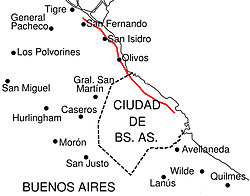
Avenida del Libertador is one of the principal thoroughfares in Buenos Aires, Argentina, and in points north, extending 25 km (16 mi) from the Retiro District of Buenos Aires (where it continues as Avenida Leandro N. Alem) to the northern suburb of San Fernando.
Location Image
153 m

Argentine Automobile Club building

The Argentine Automobile Club building its national headquarters of ACA located in Palermo neighborhood in Buenos Aires. The building is designed in the Rationalist style by local architect Antonio U. Vilar and collaborators Alejandro Bustillo, was completed in 1942. on Buenos Aires' Avenida del Libertador. The building and its automobile museum are Palermo neighborhood landmarks.
Location Image
170 m

Argentine Automobile Club

The Argentine Automobile Club (Spanish: Automóvil Club Argentino, ACA) is Argentina's largest automobile association. It was founded on June 11, 1904, by Dalmiro Varela Castex, who in 1892 had imported the country's first registered automobile, a Daimler, and in 1894 its second (a De Dion-Bouton). The ACA oversaw the first recorded Argentine auto racing event, in 1906, and became a member of the International Automotive Federation in 1926. It began to develop of national network of service stations following a 1936 agreement with the state oil concern, YPF. Offering its membership cartographic, roadside assistance, insurance and other services, the ACA was inducted into the International Tourism Alliance in 1952. Its national headquarters, designed in the Rationalist style by local architect Antonio U. Vilar and collaborators Alejandro Bustillo, was completed in 1942 on Buenos Aires' Avenida del Libertador. The building and its automobile museum are Palermo neighborhood landmarks. In 1954, the club sponsored the Mil Kilometros de la Ciudad de Buenos Aires, inviting cars from the Sports Car Club of America, including one driven by Carroll Shelby. Rally Argentina
Location Image
228 m

San Martín National Institute

The San Martín National Institute (Instituto Nacional Sanmartiniano) is a cultural foundation in Buenos Aires dedicated to the legacy of General José de San Martín, the Liberator of Argentina, Chile, and Peru.