

 English
 Français
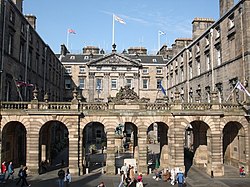
Hôtel de ville d'Édimbourg
L'Hôtel de Ville d'Édimbourg, ou Edinburgh City Chambers, à Édimbourg, en Écosse, est le lieu de réunion du conseil municipal de la ville d’Édimbourg et de ses prédécesseurs, Edinburgh Corporation et Edinburgh District Council .
1. Histoire et Description
Le bâtiment actuel a été construit à l'origine sous le nom de Royal Exchange entre 1753 et 1751 selon les plans de John Adam, avec des modifications détaillées apportées par John Fergus . La Bourse a été ouverte en 1760 par Lord Provost George Drummond. La Bourse n'a cependant jamais été appréciée par les marchands, pour qui elle a été construite. Ceux ci ont persisté à se réunir à la Mercat Cross ou, plutôt, à l'endroit où elle se trouvait avant son retrait en 1756 . Le conseil municipal prit possession du côté nord en 1811 comme City Chambers et en 1893, acheta l'ensemble du bâtiment. La "Grande Pierre de Guerre", située dans l'arcade de High Street, commémore les habitants du bourg royal ayant perdu la vie lors de la Première Guerre mondiale. Le monument fut dévoilé par le prince Henry le jour de l'armistice en 1927 et une nouvelle inscription commémorative fut ajoutée après la Seconde Guerre mondiale. La majeure partie de l'intérieur et toutes les grandes salles du conseil datent de 1875 à 1890 et sont l'œuvre de l'architecte municipal de l'époque, Robert Morham. Il a également construit l'aile nord-ouest en 1898 et l'arcade en arches donnant sur la cour en 1901. Les ailes est et ouest sur le Royal Mile ont été construites par le futur architecte de la ville, Ebenezer James MacRae, dans les années 1930. Les City Chambers et la statue d'Alexandre et de Bucéphale (dans la cour) sont des Monuments classés de catégorie A par Historic Scotland.
1. Bâtiments importants
Les City Chambers font partie d'un groupe classé de bâtiments de liste A, qui sont :
Nos 2–11 Parliament Square - Cours suprêmes d'Ecosse Bibliothèque des avocats Bibliothèque de sceaux Parliament Hall 1 place du Parlement Cathédrale Saint-Gilles Statue de Charles II Lothian Chambers Queensberry Memorial Mercat Cross
1. Références


1. Articles connexes
Hôtel de ville de Glasgow
1. Liens externes
Ressource relative aux beaux-arts : Art UK (lieux d'art)
Portail de l’architecture et de l’urbanisme Portail du bâtiment et des travaux publics Portail de l’Écosse Portail des monuments classés au Royaume-Uni
Nearby Places View Menu

Writers' Museum
Lady Stair's House

Lady Stair's Close

Gladstone's Land
