

 English
 Français

Edificio Prourban
L'Edificio Prourban est un gratte-ciel situé à l'extrémité nord de L'Avenida 9 de Julio, et l'Avenida del Libertador, dans le quartier de Retiro à Buenos Aires en Argentine. Ce fut, dans les années 1980, un des monuments les plus connus de la ville, en raison de sa forme cylindrique distinctive, qui lui a valu le surnom de "El Rulero".
1. Liens externes
Edificio Prourban sur CTBUH
Portail des gratte-ciel Portail de Buenos Aires
Nearby Places View Menu
146 m
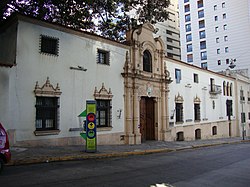
Museo de Arte Hispanoamericano Isaac Fernández Blanco
The Museo de Arte Hispanoamericano Isaac Fernández Blanco is a museum of art located in the Retiro ward of Buenos Aires, Argentina.

215 m
Four Seasons Hotel Buenos Aires
The Four Seasons Hotel Buenos Aires is a luxury hotel in the Retiro neighborhood of Buenos Aires, Argentina.

263 m
Hotel Casa Lucia
The Hotel Casa Lucia is a five star hotel in the Retiro section of Buenos Aires.
319 m
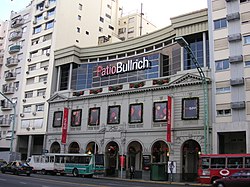
Patio Bullrich
Patio Bullrich is a shopping center located in the Retiro neighborhood of Buenos Aires, Argentina. The building was originally an auction house owned by the Bullrich family, where cattle and pieces of art were auctioned. The then-disused house was refurbished by Grupo IRSA, preserving its original architecture and elements. Under the name "Patio Bullrich", the mall was inaugurated in August 1988.

326 m
Pereda Palace
The Pereda Palace is an old manor located in front of the Plazoleta Carlos Pellegrini, at the beginning of Avenida Alvear, in Buenos Aires, at number 1130 Arroyo St. It was built by the doctor and large farmer (122.000 hectares) Celedonio Tomás Pereda (1860–1941) and his wife María Justina Girado (1865–1942), member of a family of landowners as she was the granddaughter of Juan Elías Girado (1794–1858), owner of the ″Estancia San Juan″ (250.000 hectares). The building is currently the residence of the Ambassador of Brazil in Buenos Aires and headquarters of the Cultural Space of the Embassy.
The remarkable urban group formed by the palace and its surroundings, like few places in Buenos Aires, reflect the strong influence exercised by French architecture in Argentina, especially during the first decades of the 20th century. They collaborate to reinforce the Parisian tonality of the place the irregular layout of the streets of the sector and the undoubted French image of several private residences, imposing and of admirable design.