

 English
 Français

Masjid Angullia, also known as Angullia Mosque, is a mosque in Singapore. It is a recognisable landmark of the Little India district, and a key symbol of the Indian Muslim community. The mosque was built on wakaf land donated by Gujarati businessman Mohamed Salleh Eusoofjee Angullia in 1890. Since 2014, the gatehouse of the original building has been gazetted as a Conserved Building by the Urban Redevelopment Authority of Singapore. Today, the mosque is frequented by Muslim workers and visitors of Little India as one of the two surviving mosques in the area, the other being Masjid Abdul Gaffoor.
1. History


1. = Indian settlement in the Colony of Singapore =
Early colonial Singapore was an attractive trading port for Indian Muslim merchants in the 19th century. The Serangoon Road area became an Indian settlement in the latter half of the century, housing many traders and labourers from India. By 1849, Muslims made up 78.5% of the settled Indian community at the time according to census data.
1. = Arrival of the Angullia family =
The Angullias were a prominent Gujarati Sunni Muslim merchant family in early Singapore. Ebrahim Mohamed Salleh Angullia was reported to have arrived from Rander, Gujarat, by steamship in 1837, and carried out business selling Indian-bought products in Singapore, returning periodically to his family in Gujarat. Ebrahim's son, Eusoof Ebrahim Angullia, continued his father's pattern through the 1850s to 60s, running his father's trading company in Singapore while never settling permanently. Eusoof's son, Mohamed Salleh Eusoofjee Angullia, broke the sojourning tradition set by his predecessors and emigrated to Singapore with his wife Miriam Beebee in 1870. The following year, Mohamed Salleh founded a trading company based in Singapore, M S E Angullia & Co., which flourished as a consignment agent for the regional trade of various commodities and raw materials, from spices to timber and cutlery. By 1900, Mohamed Salleh had accrued considerable wealth and established himself as a leading figure among the Indian Muslims in Singapore. M S E Angullia & Co. would branch out into real estate, buying various properties and plots of land, one of which along Serangoon Road became the site for the Angullia Mosque.
1. = Wakaf and building of the mosque =
According to the Islamic doctrine of waqf (Malay: wakaf), or the charitable endowment of wealth for religious and community-building purposes, it became a tradition for successful Indian Muslims in colonial Singapore to bequeath their assets towards wakafs, which contributed significantly to the local Indian Muslim culture and heritage. Mohamed Salleh Angullia, similarly, formed the M S E Angullia Wakaf, which included orders to build a mosque along Serangoon Road. Angullia Mosque was erected between 1890 and 1892, becoming one of the few places of worship in the area serving the Indian community. In 1970, the original mosque was rebuilt, with the new building able to serve 1,500 congregants. This building served the area until 2018, being earmarked for upgrading works and thus closing down. Under a S$6.35 million plan by the Majlis Ugama Islam Singapura (MUIS), which itself provided S$500,000 with the rest raised through donations, Angullia Mosque was demolished and rebuilt into a four-storey building which opened in 2020, expanding the prayer space to 2,500. The gatehouse of the original building, which was conserved by the Singapore government in 2014, was also restored during the upgrading works.
1. = Tablighi Jama'at and missionary work =
Angullia Mosque served as the Singapore headquarters for the South Asian Islamic missionary movement Tablighi Jama'at until its closure in 2018, after which the organisation relocated to Bencoolen Mosque. The organisation focused on preaching and forming a Muslim community in Singapore, and dawah or proselytising to non-Muslims.
1. Cultural legacy


1. = Gujarati heritage =
Today, Angullia Mosque stands as one of the only standing icons of the Gujarati Sunni Muslim community in Singapore. It is one of only two remaining mosques of Gujarati origin, the other being the Shia Al-Burhani Mosque of the Dawoodi Bohras. Recognising the significance and contributions of this minor community, the current building, opened in 2020, sports features of Islamic architecture from Rander, Gujarat, paying homage to Mohamed Salleh Angullia's native town.
1. = Indian identity in Singapore =
In the 1980s, the Serangoon Road area was named Little India, acknowledging its Indian settler heritage. With Angullia Mosque falling into the district, it has become a part of the Singaporean public's conception of Indian identity.
1. See also
Islam in Singapore List of mosques in Singapore
1. References


1. External links
Official website of Masjid Angullia
Nearby Places View Menu

Collapse of Hotel New World

Mahatma Gandhi Memorial Hall
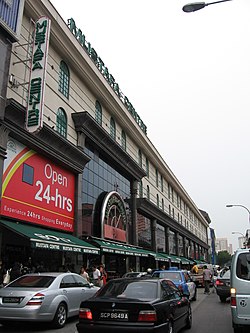
Mustafa Centre
