Bromborough Dock was situated on the River Mersey at Bromborough, on the Wirral Peninsula, England. Owned by the manufacturer Lever Brothers (and its successor Unilever), it served the company's factory at Port Sunlight. The facility was once the largest private dock in the world.

Consent for its construction was given by the Bromborough Dock Act 1923 (13 & 14 Geo. 5. c. lxxii). Officially opened on 17 April 1931, it replaced a smaller dock and wharf built at Bromborough Pool in 1895. Located at the mouth of the Pool, the new dock allowed for larger ocean-going vessels to berth. The dock was provided with a link to the Birkenhead Railway as part of the Lever Brothers private railway network, which remained fully operational until 1969. The dock handled a wide variety of cargoes during its lifetime, including: paper, timber, animal and plant oils and fats (resin, tallow, palm oil and copra). Lever Brothers used its own fleet of barges and coasters to transport goods to and from other docks on the River Mersey and to the company's other factory site at Warrington via the Manchester Ship Canal. Other tenants on the Lever industrial estate also made use of the dock's facilities.

During the Second World War, Bromborough Dock was utilised as an alternative shipping berth to Liverpool and Birkenhead Docks, which were very congested and often damaged by enemy action. It was also used for the construction of Maunsell army forts, offshore anti-aircraft towers which were placed in Liverpool Bay.

By the 1980s, a gradual decline in goods traffic precipitated the decision to close the dock. This occurred following the passing of the Bromborough Dock Act 1986 (c. xviii) in September 1986. Most of the site was used for landfill between 1991 and 2006. Since the cessation of waste disposal operations, the area has been landscaped into a public park called Port Sunlight River Park which opened in August 2014.

Nearby Places View Menu
Location Image
1.4 km

Cast Iron Shore

The Cast Iron Shore (colloquially known as "the Cazzy") was a name given to the banks of the Mersey in south Liverpool due to the presence of an iron foundry. The Cast Iron Shore is mentioned in the Beatles' song "Glass Onion".
Location Image
1.5 km

International Garden Festival

The International Garden Festival was a garden festival recognised by the International Association of Horticultural producers (AIPH) and the Bureau International des Expositions (BIE), which was held in Liverpool, England from 2 May to 14 October 1984. It was the first such event held in Britain, and became the model for several others held during the 1980s and early 1990s. The aim was to revitalise tourism and the city of Liverpool which had suffered cutbacks, and the idea came from Conservative Environment Minister Michael Heseltine. The festival was hugely popular, attracting 3,380,000 visitors.
Location Image
1.5 km

Otterspool Tower

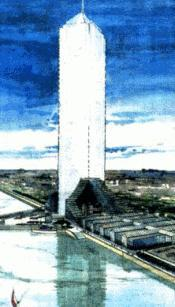
Otterspool Tower is a name commonly given to a supertall skyscraper that was proposed in Liverpool, United Kingdom. Developers, Wiggins Group, first touted the idea in 1995 before moving forward with the proposal in 1998. Also dubbed the "Scousescraper", the building was set to be 305 m (1,000 ft) high and would have become the tallest building in Europe at the time. It was never built. Part of a £750 million regeneration vision of the former Festival Gardens site, the "grandiose" tower was planned to be predominantly leisure based, including such features as a 2,500 bed five-star hotel, a theme park and a giant waterfall. However, following negative reception, the plans were ultimately confirmed scrapped in late 1999; the developers subsequently claimed the proposal had only ever been made to "test the water", rather than being a truly serious concept.
Location Image
1.6 km

Otterspool Promenade

Otterspool Promenade is a riverside walk and accompanying area of parkland in the Aigburth and Grassendale districts of Liverpool, England. The promenade runs along the bank of the River Mersey from just north of Garston Docks to Otterspool Park. A narrower footpath and cycling lane continue north along the riverbank to the city centre, ending at the Albert Dock. The promenade adjoins the former private parkland estates of Cressington Park, Fulwood Park and Grassendale Park. It is notable for the excellent views it gives of shipping in the Mersey and over the river to the Wirral. Opened in 1950, it was built by landscaping a site that had been used for disposal of household waste, and for spoil from excavation of the Queensway tunnel under the Mersey in the 1920s. The stated desire of the local authorities was, "Firstly... provide a place where the citizens of Liverpool can enjoy their leisure in pleasant surroundings on the banks of the Mersey estuary. Secondly... for providing a large area where the essential need to the community for the disposal of its refuse could be met economically and by the use of hygienic and up-to-date methods." Renovations of the promenade were undertaken in 2006 and 2007, including the creation of a children's playground. The renovations were opened in 2007 with a plaque commemorating Liverpool's 800th anniversary. After several years of campaigning by skateboarders, rollerbladers, and BMXers, the promenade had a concrete skate park installed, which was completed in May 2015. To the north of the promenade on the riverbank was the 1984 International Garden Festival site. Toward the end of the Otterpool promenade stands the Sitting Bull sculpture by Dhruva Mistry, commissioned for the 1984 International Garden Festival.