


Le Memorial to the Engine Room Heroes of the « Titanic » (« Mémorial aux héros de salle des machines du Titanic ») est un mémorial dédié aux opérateurs qui sont restés à leur poste en salle des machines pendant le naufrage du Titanic. Il est situé sur la St. Nicholas Place de Pier Head, à Liverpool, en Angleterre.
Book your tour near
Memorial to the Engine Room Heroes of the Titanic
Book Now
4.3
in partnership with
GetYourGuide.com
Gallery

Sponsored
Location
2 explorers visited this place

0 m
The Memorial to Heroes of the Marine Engine Room is a Grade II* listed granite monument located on St Nicholas Place, at the Pier Head, in Liverpool, England.
89 m
The George's Basin was a dock on the River Mersey, England, within the Port of Liverpool. The basin surface covered 3 acres and was surrounded by George's Dock to the south, Prince's Dock to the north and the Mersey to the west.
Used as a berth for commercial shipping and as a dry dock for vessel repairs, the mouth of the basin was sealable with floodgates.
The basin was filled in 1874. In 1899, the adjoining George's Dock was filled in and the site was used to create what is now the Pier Head. This provided one central place for Liverpool Docks' offices, which had been scattered across different sites.
By March 2009 work was completed on a £22 million extension of the Leeds and Liverpool Canal on the site of the former basin. The canal extension provides a further 1.4 miles of navigable waterway.

140 m
The Port of Liverpool is the enclosed 7.5-mile dock system that runs from Brunswick Dock in Liverpool to Seaforth Dock, Seaforth, on the east side of the River Mersey and the Birkenhead Docks between Birkenhead and Wallasey on the west side of the river.
In 2023, the Port of Liverpool was the UK’s fourth busiest container port, handling around 900,000 TEUs of cargo each year, equivalent to over 30 million tonnes of freight per annum. It handles a wide variety of cargo, including containers, bulk cargoes such as coal, grain and animal feed, and roll-on/roll-off cargoes such as cars, trucks and recycled metals. The port is also home to one of the largest cruise terminals in the UK which handles approximately 200,000 passengers and over 100 cruise ships each year.
The port has significant links to North America and the rest of Europe via the Irish Sea and Atlantic Ocean. It is the most significant port in the UK for transatlantic trade. The port's history spans over 800 years and at its peak in the 19th century, it was the second most important port in the British Empire. In 2016, the port was extended by the building of an in-river container terminal at Seaforth Dock, named Liverpool2. The terminal can berth two 14,000 container Post-Panamax ships.
Garston Docks, which are in the city of Liverpool, are not a part of the Port of Liverpool. The working docks are operated by Mersey Docks and Harbour Company, while the docks to the south of the Pier Head are operated by the Canal & River Trust, the successor to former operator British Waterways.

142 m
The Liverpool Canal Link is an English waterway link that connects the Leeds and Liverpool Canal, at the Liverpool Pier Head, to the city's South Docks. It cost £22m and was opened in March 2009. The new link adds 1.4 miles of navigable waterway to the canal system.
156 m
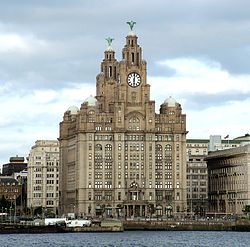
The Royal Liver Building is a Grade I listed building in Liverpool, England. It is located at the Pier Head and along with the neighbouring Cunard Building and Port of Liverpool Building is one of Liverpool's Three Graces, which line the city's waterfront. It was also part of Liverpool's formerly UNESCO-designated World Heritage Maritime Mercantile City.
Opened in 1911, the building was the purpose-built home of the Royal Liver Assurance group, which had been set up in the city in 1850 to provide locals with assistance related to losing a wage-earning relative. One of the first buildings in the world to be built using reinforced concrete, the Royal Liver Building stands at 98.2 m tall to the top of the spires, 103.7 m to the top of the birds and 50.9 m to the main roof. Upon completion, it became the tallest building in Europe; a title which it held for 29 years until it was surpassed by Terrazza Martini Tower in 1940.
The Royal Liver Building is one of the most recognisable landmarks in the city of Liverpool with its two fabled Liver birds, which watch over the city and the sea.
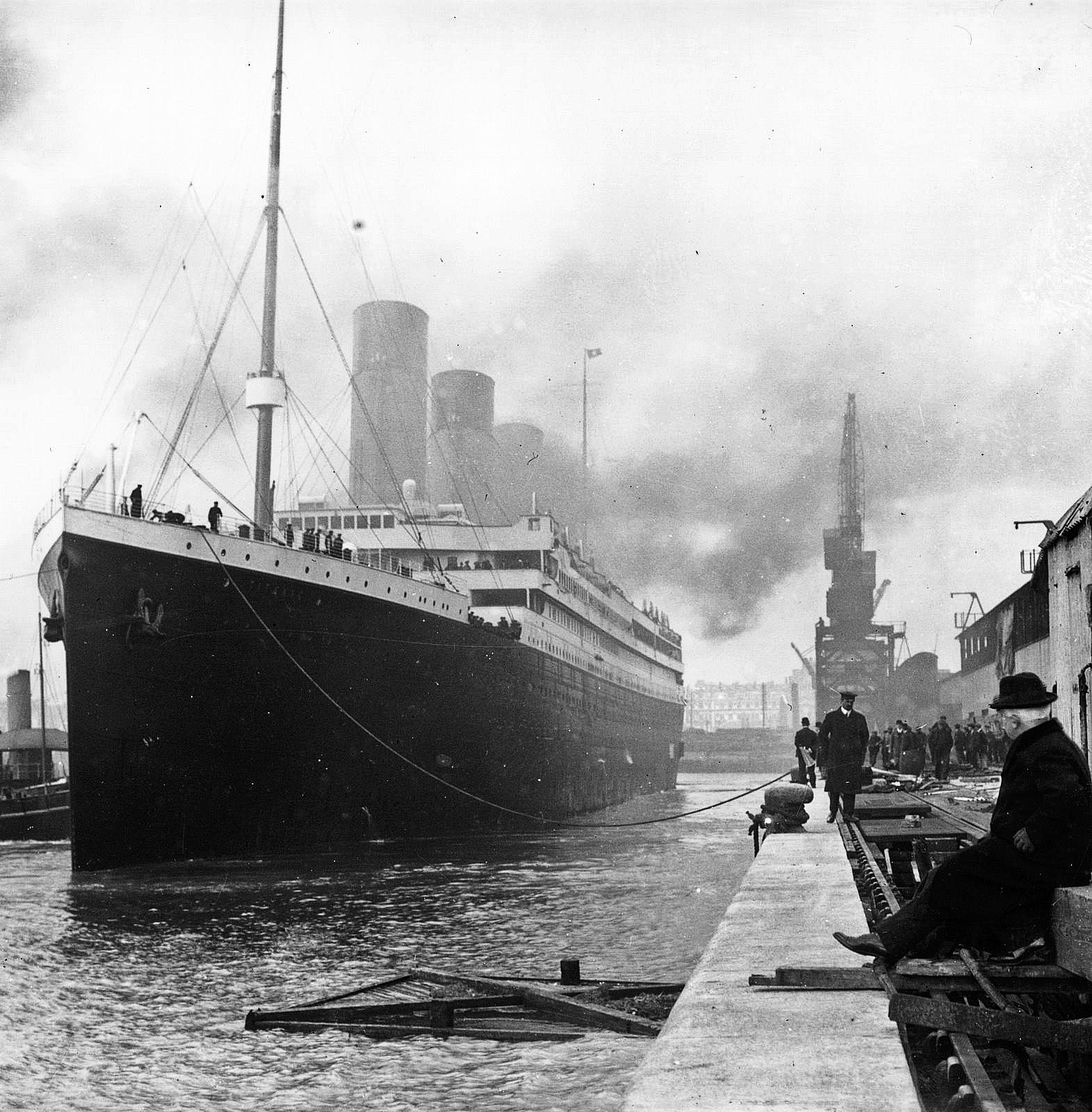
Le RMS Titanic était propriété par la White Star Line qui a été fondée à Liverpool en 1840. Le monument de granite a été conçu par Goscombe John et construit vers 1916.
