

 English
 Français
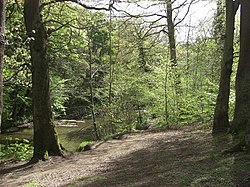
Plessey Woods is a country park situated on the north bank of the River Blyth, in Northumberland. The park is accessed from the A192 in the village of Hartford Bridge, north of Cramlington and south west of Bedlington. In 2016 charity Leading Link opened a youth-run Art Trail around Plessey Woods. Around the trail there are wooden owls and painted snakes, including hobbit doors in the trees near the river bank. The park extends over 100 acres (0.40 km2) of woodland, meadows and riverside, with a 1½ mile route circumnavigating these habitats and many smaller routes from this loop. Free parking (for up to an hour) is available on site, as is a visitor centre with toilets and shop.
Nearby Places View Menu

1.5 km
Nedderton
Nedderton is a village in Northumberland, England about 4 miles (6 km) southeast of Morpeth, just off the A192 road.
2.3 km
Cramlington Aerodrome
Cramlington Aerodrome was a military airfield established in Northumberland during the First World War. It became a civil airfield serving the Tyneside area of north-east England and operated until 1935, when it was replaced by Woolsington Airport, now known as Newcastle International Airport.

2.5 km
St Benet Biscop Catholic Academy
St. Benet Biscop Catholic Academy (formerly S. Benet Biscop Catholic High School) is a Roman Catholic high school in Bedlington, Northumberland, England. It is the only Catholic high school in the county.
2.7 km
Bedlington Ironworks
Bedlington Ironworks, in Blyth Dene, Northumberland, England, operated between 1736 and 1867. It is most remembered as the place where wrought iron rails were invented by John Birkinshaw in 1820, which triggered the railway age, with their first major use being in the Stockton and Darlington Railway opened in 1825, about 45 miles (72 km) to the south.
Blyth Dene, near Bedlington, was an idyllic location next to the River Blyth which had all the right ingredients for an ironworks at the time: there were nodules of ironstone in the coal-laden banks of the river, there was plenty of wood for the traditional approach of charcoal making, water for driving the hammers, and the port of Blyth was only two miles downriver for shipping of the products. At the time, a Shropshire man, Abraham Darby had started a revolution in ironmaking by using coke instead of charcoal. The Bedlington ironworks originally consisted of two elements – a mill in Bebside and a furnace at Bedlington Mill