

 English
 Français

Cresswell Pele Tower
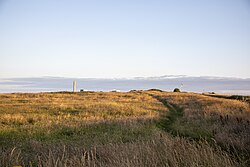
Cresswell Pele Tower is in the village of Cresswell, situated overlooking the coast approximately 4 miles (6 km) to the north of Ashington, Northumberland, England. The tower is a Grade II* listed building and a Scheduled Ancient Monument. It was removed from Historic England's Heritage at Risk register after an extensive renovation completed in 2021, which included the addition of a brand-new wooden-framed roof.
Nearby Places View Menu

285 m
Cresswell, Northumberland
Cresswell is a village in Northumberland, England. It is about 4 miles (6 km) to the north of Ashington, on the North Sea coast.

294 m
Cresswell Lifeboat Station
Cresswell Lifeboat Station was located at Cresswell, a village approximately 20 miles (32 km) north-west of Newcastle-upon-Tyne, in the county of Northumberland.
A lifeboat was first stationed at Cresswell by the Royal National Lifeboat Institution (RNLI) in 1875.
After operating for 69 years, Cresswell Lifeboat Station was closed in 1944.
1.1 km
Cresswell radar station
Cresswell radar station (also known as RAF Cresswell), was a Chain Home Low (later a Chain Home Extra Low) Second World War radar site at Cresswell, in Northumberland, England. The radar site was south of the village of Cresswell on the road towards Lynemouth and each site occupied a different side of the road. The site was opened by early 1940 and was staffed by Royal Air Force personnel from No. 60 Group, who were accommodated at Lynemouth instead of being billeted at the radar site. Cresswell radar site was known to be poorly located as it did not have enough of a significant elevation above sea level to provide sufficient warning of approaching aircraft. Since closure c. 1945, both sites have been demolished and nothing remains of either site.

1.8 km
Lynemouth
Lynemouth is a village in Northumberland, England, 3 miles (5 km) northeast of Ashington, close to the village of Ellington to the north west. It was built close to coal mines, including Lynemouth Colliery.
Lynemouth and the surrounding industrial area featured in the 1985 docudrama Seacoal about the seacoalers who made a living from collecting waste coal from the beach. A series of photographs in the Henri Cartier-Bresson Award–winning book In Flagrante (1988) by Chris Killip shows the work and life of the seacoalers; more were published in 2011 in the book Seacoal.
To the south of the village is the former Alcan Lynemouth Aluminium Smelter, now closed, and Lynemouth Power Station.