

 English
 Français

19 The Shambles is a historic building in York, England. A Grade II listed building, located on The Shambles, it dates to the early 17th century, but it was refronted in the 18th century and renovated in the 19th and 20th centuries. The storefront is made of red brick in a Flemish bond, with plain brick stringing at the middle and upper floors. Internally on the ground floor, part of a 17th-century Arabesque frieze survives. As of 2025, the building is occupied by Florian Poirot Cafe.
Nearby Places View Menu
9 m
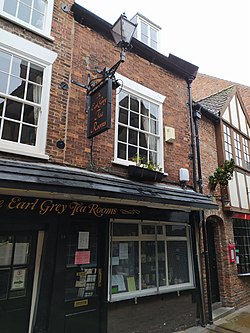
14 The Shambles
14 The Shambles is a historic building in York, England. Grade II* listed, part of the structure dates to the early 19th century, but also features parts of an earlier structure. An alteration and extension was made in the 20th century.
As of 2020, the building and its neighbour No. 13 were occupied by The Earl Grey Tea Rooms.

17 m
20 The Shambles
20 The Shambles is a historic building in York, England. A Grade II listed building, part of the structure dates to the early 18th century, with alterations made in both the 19th and 20th centuries.
As of 2025, the building was occupied by Hebden Tea Experience.

18 m
13 The Shambles
13 The Shambles is a historic building in York, England. A Grade II* listed building, located on The Shambles, the building dates to the early 17th century, but it was refronted in the 18th century and renovated in the 19th and 20th centuries.
The timber supports that ran down to a counter and the canopy of the original open stall are now incorporated into today's façade.
As of 2020, the building is occupied by The Earl Grey Tea Rooms.

18 m
The Shambles
The Shambles is a historic street in York, England, featuring preserved medieval buildings, some dating back as far as the 14th century. The street is narrow, with many timber-framed buildings with jettied floors that overhang the street by several feet. It was once known as the Great Flesh Shambles, a name reflecting its historical use as a butchers' street. The word shambles derives from Old English sċeamol (“bench, stall”), referring to market or butcher’s stalls; the association with meat is historical rather than etymological. In 1885, thirty-one butchers' shops were located along the street but none remain today.