
Les tunnels Williamson sont une série de vastes fouilles souterraines situées dans le quartier d'Edge Hill à Liverpool, en Angleterre. On pense qu’ils ont été créés sous la direction du marchand de tabac, propriétaire foncier et philanthrope Joseph Williamson entre 1810 et 1840. Bien que communément décrits comme des « tunnels », la majorité comprend des voûtes en brique ou en pierre au-dessus des excavations dans le grès sous-jacent. Le but des travaux reste flou et fait l'objet de nombreuses spéculations ; les suggestions incluent l'exploitation de carrières commerciales, un désir philanthropique de créer des emplois et les propres intérêts excentriques de Williamson. Après avoir été progressivement comblés de décombres et de déblais à la fin du XIXe et au début du XXe siècle, ils sont restés en grande partie inaccessibles jusqu'à ce que des fouilles archéologiques soient menées en 1995. Depuis lors, des bénévoles ont redécouvert et fouillé un vaste réseau de tunnels, de chambres et de vides sur plusieurs sites, avec des sections ouvertes au public. Des visites guidées sont disponibles au Williamson Tunnels Heritage Centre et aux Friends of Williamson's Tunnels, et les bénévoles continuent de découvrir de nouvelles sections.

Nearby Places View Menu
Location Image
117 m

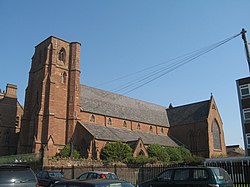
St Anne's Church, Edge Hill

St Anne's Church is in Overbury Street, Edge Hill, Liverpool, Merseyside, England. It is an active Roman Catholic parish church in the Archdiocese of Liverpool. In 1999 its parish was combined with that of the Church of St Bernard. The church is recorded in the National Heritage List for England as a designated Grade II listed building.
248 m

The Old Stableyard, Liverpool

The Old Stableyard is a brownfield site located on Smithdown Lane in the Edge Hill area of Liverpool, England. It was once one of the main stableyards for Liverpool Corporation, but is now a development site and partly redeveloped as the location of The Williamson Tunnels Heritage Centre.
Location Image
266 m

Williamson Tunnels

The Williamson Tunnels are a series of extensive subterranean excavations in the Edge Hill area of Liverpool, England. They are thought to have been created under the direction of tobacco merchant, landowner and philanthropist Joseph Williamson between 1810 and 1840. Although popularly described as "tunnels", the majority comprise brick or stone vaulting over excavations in the underlying sandstone. The purpose of the works remains unclear and remains a subject of heavy speculation; suggestions include commercial quarrying, a philanthropic desire to provide employment, and Williamson's own eccentric interests. After being gradually infilled with rubble and spoil during the late 19th and early 20th centuries, they remained largely inaccessible until archaeological investigations were carried out in 1995. Since then volunteers have rediscovered and excavated an extensive network of tunnels, chambers and voids across several sites, with sections open to the public. Guided tours are available at the Williamson Tunnels Heritage Centre and the Friends of Williamson's Tunnels, and volunteers continue to uncover new sections.
334 m

Edge Hill railway works

Edge Hill railway works was built by the Liverpool and Manchester Railway around 1830 at Edge Hill, Liverpool. A second was built in 1839 by the Grand Junction Railway adjacent to it.
Location Image
392 m

Crown Street railway station

Crown Street railway station was the Liverpool terminus railway station of the Liverpool and Manchester Railway in Liverpool, England, it opened on 15 September 1830. The station was one of the world's first on an inter-city passenger railway in which all services were operated by mechanical traction. The station was only used for passengers for six years before being replaced by Lime Street which was closer to Liverpool City centre. The station was demolished as the site was converted into a coal and goods yard which remained in use until 1972. The location of the station is now a park with little trace of any railway facilities.