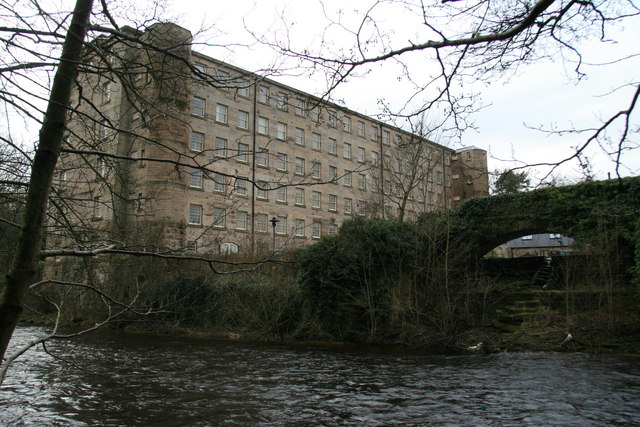
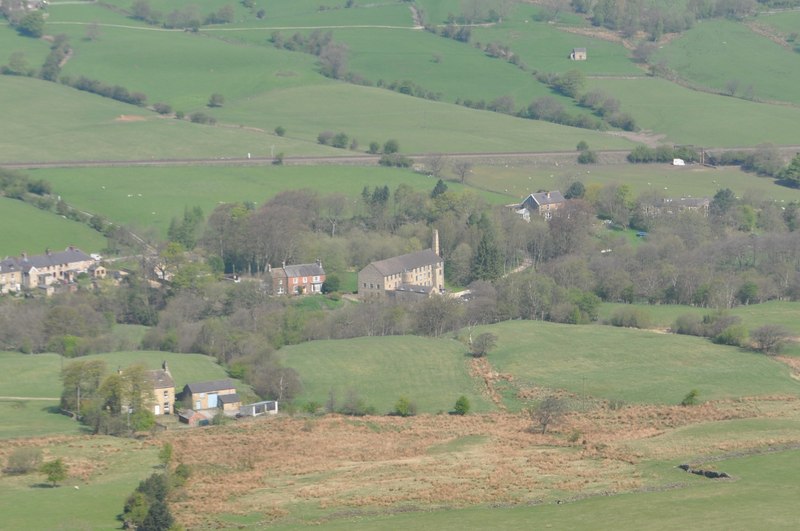
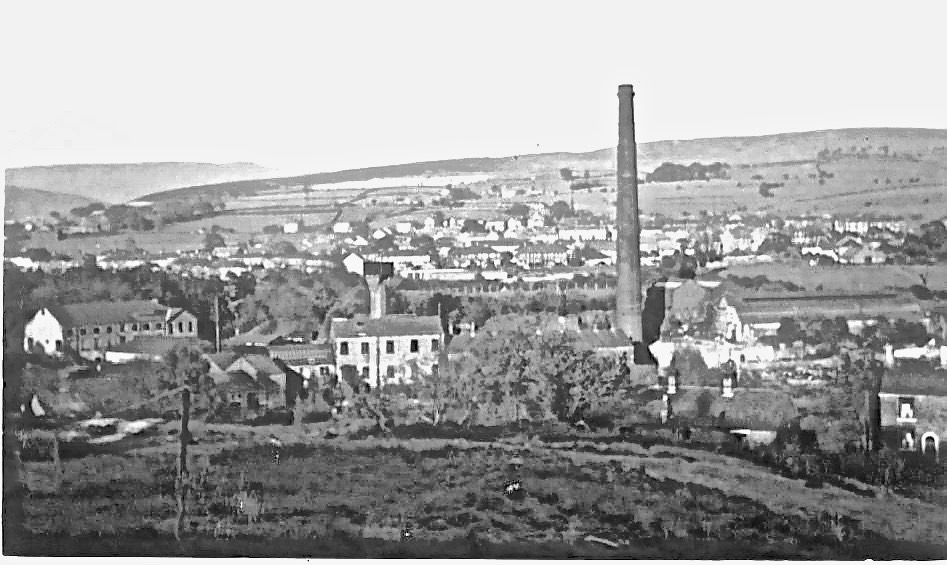
This is a list of the cotton and other textile mills in Derbyshire, England. The first mills were built in the 1760s in the Derwent Valley by Arkwright and Strutt, and were powered by the water of the River Derwent. The abundance of water from the River Etherow and its tributaries led to mills being built in Longdendale and Glossopdale, and similarly along the River Wye in Millers Dale. As the industry developed, the mills changed hands, were demolished, were converted to use steam, or consolidated into larger units. They changed their names and their functions. Water-powered mills were smaller than the later steam-powered mills found in Greater Manchester. Parts of Derbyshire have been subsumed into Stockport.
Nearby Places View Menu
Location Image
254 m

Newtown, Derbyshire

Newtown is an area of the town of New Mills, in the High Peak borough of Derbyshire, England. It is situated to the south-west of New Mills town centre, on the road towards Disley. The area lies beside the county boundary between Cheshire and Derbyshire.
Location Image
286 m

New Mills Newtown railway station

New Mills Newtown railway station serves the Newtown area of New Mills, in Derbyshire, England. It is located 14+1⁄4 miles (22.9 km) south east of Manchester Piccadilly on the Buxton line. It also serves as an interchange with the Hope Valley Line, with New Mills Central being 15 minutes' walk away across the Goyt Valley.
Location Image
324 m

New Mills Central railway station

New Mills Central railway station serves the town of New Mills in Derbyshire, England. It is on the Hope Valley Line between Manchester Piccadilly and Sheffield, 12+3⁄4 miles (20.5 km) east of the former. The town is also served by New Mills Newtown station, which is on the Buxton to Stockport and Manchester line.
Location Image
372 m

Torr Vale Mill

Torr Vale Mill is a Grade II* listed former cotton mill located in New Mills, Derbyshire, England, on a small rocky outcrop at the bottom of the Torrs gorge in a bend of the River Goyt. The mill was built in the late 1780s by Daniel Strafford and was known as Strafford's Mill. It was powered by two waterwheels to spin and weave cotton. It was rebuilt in 1856 and a steam engine was added. It continued to be driven by steam and water till the 1940s when electricity took over. It was still in use producing towelling products until December 2000, the longest continuous period of cotton production in the UK. Since 1998 there have been various plans by the new owner, Chemquip Ltd., to renovate and develop the mill. This is now well underway and the new events floor has been used extensively by the community for a wide range of events. The Torr Vale Mill Preservation Trust in May 2001 and The Princes Regeneration Trust has also been seeking a solution. In 2000 Torr Vale Mill was depicted on Royal Mail postage stamps to commemorate the Millennium Walkway in the Torrs Gorge. From this walkway, on the opposite side of the Gorge, dramatic views of the Mill may be had. In 2001 a fire destroyed one of the buildings of the mill. The mill remains in a lamentable state and, though now better secured, is at risk of further fire and vandalism. In 2010, Chad Bevan, a New Mills resident, won the Munro Trophy in the Derbyshire Open Arts Competition for his painting of the decaying Torr Vale Mill, the title being 'Lowes Mill'. The Mill is on the English Heritage Heritage at Risk Register of Listed Buildings at risk through disuse and disrepair. The local Heritage Centre Trust is actively engaged in trying to secure the future of this abandoned building.