

 English
 Français

Skipsea Brough
Skipsea Brough is a hamlet in the East Riding of Yorkshire, England. It is situated approximately 5 miles (8 km) north of Hornsea on the B1249 road. It forms part of the civil parish of Skipsea.
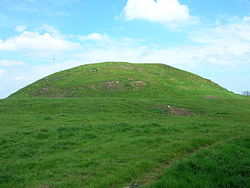
Skipsea Brough is the location of Skipsea Castle which was built about 1086. The motte-and-bailey castle's buildings have since been destroyed, however, impressive earthworks still remain. In 2016 it was reported that the castle was itself built on top of a large Iron Age mound.
Nearby Places View Menu
383 m
Skipsea Castle
Skipsea Castle was a Norman motte and bailey castle near the village of Skipsea, East Riding of Yorkshire, England. Built around 1086 by Drogo de la Beuvrière, apparently on the remains of an Iron Age mound, it was designed to secure the newly conquered region, defend against any potential Danish invasion and control the trade route across the region leading to the North Sea. The motte and the bailey were separated by Skipsea Mere, an artificial lake that was linked to the sea during the medieval period via a navigable channel. The village of Skipsea grew up beside the castle church, and the fortified town of Skipsea Brough was built alongside the castle around 1160 to capitalise on the potential trade.
In 1221 the castle's owner, William de Forz, the Count of Aumale, rebelled against Henry III; the fortification was captured by royalist forces and the King ordered it to be destroyed. The remains of the castle had little value by the end of the 14th century and Skipsea Brough failed to attract many inhabitants. The castle passed into the control of the state in the early 20th century and various archaeological investigations were carried out between 1987 and 2001. In the 21st century, Skipsea Castle is managed by English Heritage and open to visitors.

415 m
Church of All Saints, Skipsea
The Church of All Saints, is the church for the village and parish of Skipsea, in the East Riding of Yorkshire, England. The church dates back to the late 11th/early 12th century and was the religious house tied to Skipsea Castle, which lay just to the west in Skipsea Brough. A causeway, to the north of the church, used to link it with the castle motte across what was Skipsea Bail Mere. The village continued developing long after the castle had been demolished c. 1221, and the church became the house of worship for Skipsea.
The church is partly Norman, but mostly Perpendicular in its architectural style, and the tower still shows evidence of being constructed from cobbles; stones which were quarried from the beaches in Holderness. The church is now a grade I listed structure and underwent several renovations in the 19th century. All Saints is at the west end of Skipsea, on the road which connects the village with Beeford.
688 m
Skipsea
Skipsea is a village and civil parish on the North Sea coast of the East Riding of Yorkshire, England. It is situated approximately 10 miles (16 km) south of Bridlington and 6 miles (9.7 km) north of Hornsea on the B1242 road at its junction with the B1249 road.
The civil parish is formed by the village of Skipsea and the hamlets of Skipsea Brough and Dringhoe. According to the 2011 UK census, Skipsea parish had a population of 693, an increase on the 2001 UK census figure of 633.
From the medieval era until the 19th century Skipsea was part of Dickering Wapentake. Between 1894 and 1974 Skipsea was a part of the Bridlington Rural District, in the East Riding of Yorkshire. Between 1974 and 1996 it was part of the Borough of North Wolds (later Borough of East Yorkshire), in the county of Humberside.
Just to the west of the village, in Skipsea Brough, lies Skipsea Castle. Built in 1086, the motte-and-bailey style castle has since been destroyed; however impressive earthworks remain. The coast near Skipsea, just over 0.6 miles (1 km) to the east, is the fastest eroding coastline in northern Europe.

1.1 km
Dringhoe
Dringhoe is a hamlet in the East Riding of Yorkshire, England. It is situated approximately 5.5 miles (9 km) north of Hornsea on the B1249 road to the west of Skipsea Brough.
It forms part of the civil parish of Skipsea.
The name Dringhoe derives from the Old English dreng meaning a 'free tenant' and the Old Norse haugr meaning 'mound or hill'.