

 English
 Français
South Pelaw
South Pelaw is a village in County Durham, in England. It is situated immediately to the north of Chester-le-Street.
1. See also
Pelaw
1. References
Nearby Places View Menu
587 m
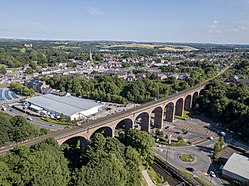
Chester Burn Viaduct
Chester Burn viaduct is a railway viaduct in Chester-le-Street, County Durham, England. It is an imposing structure, dominating the marketplace and north end of the town. It carries the East Coast Main Line, the main railway from Newcastle to London. Chester-le-Street station on that line is just south of the viaduct. It is a Grade II listed structure.
588 m
Chester-le-Street Rural District
Chester-le-Street was a rural district in County Durham, England from 1894 to 1974. [1] It surrounded the urban district of Chester-le-Street.
The district was split in 1974, under the Local Government Act 1972, with the bulk going to the new Chester-le-Street district. Part of the parishes of Birtley, Harraton and South Biddick went to the Metropolitan Borough of Sunderland, in Tyne and Wear, and Lamesley and the rest of Birtley parish went to the Metropolitan Borough of Gateshead.

588 m
Chester-le-Street (district)
Chester-le-Street was a local government district in County Durham, England. Its council was based in Chester-le-Street. Other places in the district included Great Lumley and Sacriston.
824 m
Chester-le-Street
Chester-le-Street () is a market town in County Durham, England. It is located around 6 miles (10 kilometres) north of Durham and is close to Newcastle. The town holds markets on Saturdays. In 2021, the town had a population of 23,555.
The town's history is ancient; records date to a Roman-built fort called Concangis. The Roman fort is the Chester (from the Latin castra) of the town's name; the Street refers to the paved Roman road that ran north–south through the town. The parish church of St Mary and St Cuthbert is where the body of St Cuthbert remained for 112 years (from 883 to 995 AD), before being transferred to Durham Cathedral.
An Old English translation of the Gospels was made in the 10th century: a word-for-word gloss of the Latin Vulgate text, inserted between the lines by Aldred the Scribe, who was Provost of Chester-le-Street.