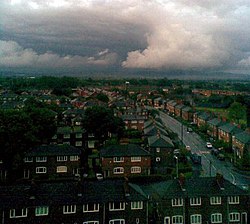
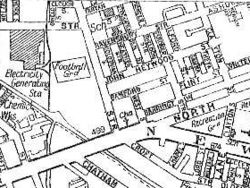
Newton Heath is an area of Manchester, England, 2.8 miles (4.5 km) north-east of Manchester city centre and with a population of 9,883. Historically part of Lancashire, Newton was formerly a farming area, but adopted the factory system following the Industrial Revolution. The principal industry in the area became engineering, although many were employed in the mining and textiles industries in the thriving areas of Clayton Vale and Bradford. Newton included what is now Miles Platting and it stretched to Failsworth. It was bounded by brooks and rivers on all four sides – the River Medlock, Moston Brook, Newton Brook and Shooters Brook. With the creation of Miles Platting the remainder of Newton became known as Newton Heath. Manchester United has strong links with the area, having been formed from the Newton Heath Lancashire and Yorkshire Railway Football Club.

Lieux à Proximité Voir Menu
Location Image
1.1 km

North Road (stade)

North Road était un stade de football et de cricket à Manchester, Angleterre. Il a été le premier terrain à domicile du Manchester United Football Club – alors connu sous le nom de Newton Heath Lancashire & Yorkshire Railway Football Club – de la fondation du club en 1878 à 1893, lorsqu'il a déménagé pour le nouveau terrain de Bank Street, situé à Clayton (en).
Location Image
1.7 km

Bank Street (stade)

Bank Street, aussi connu sous le nom de Bank Lane était un stade polyvalent à Manchester, Angleterre. Aujourd’hui, le Vélodrome de Manchester se situe sur ce lieu, tout près de l’Etihad Stadium.
Location Image
1.7 km

Vélodrome de Manchester

Le vélodrome de Manchester est un vélodrome situé à Manchester, en Angleterre.
Location Image
1.8 km

Hapurhey

Hapurhey est une localité de la banlieue de Manchester, dans le Grand Manchester en Angleterre.
Location Image
1.9 km

Broadhurst Park

Broadhurst Park est un stade de football basé à Moston près de Manchester, en Angleterre. Ce stade est la résidence du FC United of Manchester et du Moston Juniors FC. Il est connu sous le nom du projet qui a permis sa construction, le Moston Community Stadium, jusqu'à ce qu'il soit officiellement baptisé en 2014.