

 English
 Français

Worsley New Hall
Worsley New Hall is a former mansion and gardens by the Bridgewater Canal in Worsley, Greater Manchester, England, 8 miles (13 km) west of Manchester. The gardens were renovated by the Royal Horticultural Society and opened as RHS Garden Bridgewater in 2021.
Nearby Places View Menu

106 m
RHS Garden Bridgewater
RHS Garden Bridgewater is the Royal Horticultural Society's fifth public display garden. It is located in the village of Worsley in Salford, Greater Manchester, England.
800 m
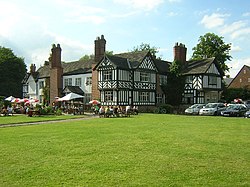
Worsley Old Hall
Worsley Old Hall is a public house and restaurant in Worsley, Greater Manchester, England. It is recorded in the National Heritage List for England as a designated Grade II listed building.
942 m
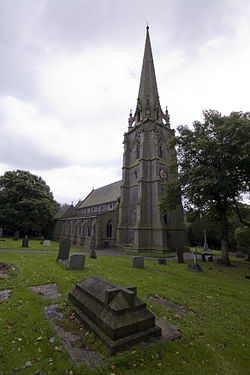
St Mark's Church, Worsley
St Mark's Church is an active Anglican parish church in Worsley, Greater Manchester, England. It is part of a team ministry along with St Mary's in Ellenbrook and St Andrew in Boothstown. The church is in the Eccles deanery, the archdeaconry of Salford and the diocese of Manchester. The church was granted Grade I Listed status in 1966.

1.0 km
Boothstown Mines Rescue Station
Boothstown Mines Rescue Station which served the collieries of the Lancashire and Cheshire Coal Owners on the Lancashire Coalfield opened in November 1933 on a site in Boothstown, close to the East Lancashire Road. The mines rescue station is Grade II listed and at the centre of a conservation area. It replaced mines rescue stations at Howe Bridge, Denton, St Helens and Burnley.
The rescue station and its associated buildings were designed by Bradshaw, Gass and Hope of Bolton. A two-storey building which fronts onto Ellenbrook Road contained a garage, shower rooms, laboratory, oxygen and equipment storage areas and offices, A board room and aviary for the station's canaries were located on the first floor. At the rear, a single-storey section contained U-shaped training galleries representing underground workings. Observation halls overlooked the galleries so that training taking place in the galleries could be inspected. The galleries could be filled with smoke or heated to simulate the conditions that might be encountered in an emergency. A chimney exhausted the fumes and smoke after the training had concluded.
The permanent staff consisted of a superintendent, two instructors and two teams of six rescuers. They lived on site in a development of seven pairs of semi-detached houses and a superintendent's house with allotments, parking, and recreation areas. The site had underground air raid shelters.
Since its closure, the station has been converted to residential use.