

 English
 Français
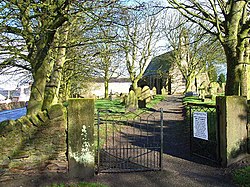
Esh (Royaume-Uni)
Esh est une ville et une paroisse civile située dans le comté de Durham. En 2011, sa population était de 4 984 habitants.
Nearby Places View Menu

0 m
Esh, County Durham
Esh is a village and civil parish situated around five miles north-west of Durham in County Durham, England.
The central area of the village contains a stone cross, which probably replaced a former market cross. This is locally known as St Cuthberts Cross and bears the inscription I. H. S., and the date 1687. Esh is a rural village, nestled between a number of working farms; it has two primary schools, a pub and two churches, St Michael and All Angels (C of E) and St. Michael's (Roman Catholic).

532 m
Quebec, County Durham
Quebec is a small village in County Durham, in North East England. Once a coal mining village, it is situated 6 miles (10 km) west of the city of Durham, and close to the villages of Esh, Cornsay Colliery, Esh Winning and Langley Park.
The village has a tearoom, a hotel (Hamsteels Hall), St John the Baptist Church, a village hall, a playground and a used car dealership.

2.0 km
Cornsay Colliery
Cornsay Colliery is a village in County Durham, England. It is situated a few miles to the west of Durham, close to Cornsay, Quebec and Esh Winning.

2.3 km
Esh Winning
Esh Winning is a village, and location of a former colliery, in County Durham, England. It is situated in the Deerness Valley 5 miles (8 km) to the west of Durham.

2.4 km
Waterhouses railway station (Durham)
Waterhouses railway station, on the Deerness Valley Railway, south of the village of Esh Winning in County Durham, England, was opened on 1 November 1877 by the North Eastern Railway. The station served as the passenger terminus of the line, although goods wagons continued to East Hedley Hope and Waterhouses collieries.
In 1914 Connie Lewcock, who led the local suffragettes, assisted by miner Joss Craddock, burnt down the railway building at Esh Winning. She describes how she planned the event in an interview with the historian, Brian Harrison, recorded in 1976 as part of his Suffrage Interviews project, titled Oral evidence on the suffragette and suffragist movements: the Brian Harrison interviews. Lewcock had designed a system that gave her an alibi for the time the building was alight. The building burnt down but the Police could not make formal charges as she had witnesses who could testify that she was with them at the time of the fire. Lewcock became a popular politician and she was appointed an OBE in the New Years Honours List in 1966.
The station closed to passengers on 29 October 1951, and freight on 28 December 1964.
The stone and timber built station was demolished and the site is now a park. The trackbed now forms part of the Deerness Valley Railway Path.