

 English
 Français

Philadelphia Power Station
Philadelphia Power Station is a defunct coal-fired power station situated between the villages of Philadelphia and Newbottle, 1.5 mi (2.4 km) north of Houghton-le-Spring in Tyne and Wear, North East England.
Nearby Places View Menu
252 m
1815 Philadelphia train accident
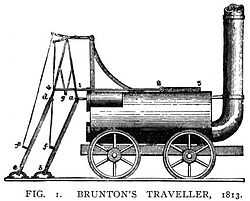
The 1815 Philadelphia train accident occurred on 31 July 1815, in Philadelphia, County Durham, England, when an early experimental railway locomotive, Brunton's Mechanical Traveller, suffered a boiler explosion. This engine, also known as the Steam Horse, ran on four wheels but was pushed by mechanical feet. This was both the first recorded boiler explosion and the first railway accident causing major loss of life with at least 13 people killed (sources differ).
The accident is not included in many texts because it was on an industrial waggonway or plateway, rather than a public railway. Nevertheless, it predated William Huskisson's fatal accident at Parkside by 15 years, and the death toll was not exceeded by any railway accident until 1842 worldwide (see Versailles rail accident), and 1861 in the UK (Clayton Tunnel). It also killed more people than any other UK railway boiler explosion of all time, though 26 were killed in a 1912 boiler explosion in San Antonio, USA.
Most boiler explosions caused severe mechanical damage but often only the locomotive crew suffered physically; however, Brunton's locomotive was surrounded at the time by a crowd of curious sightseers, who formed the majority of the victims. The first high-pressure steam locomotive, Trevithick's Penydarren engine, had only appeared 11 years earlier in 1804, and engineering understanding of the forces and safety risks involved was still primitive.

393 m
Philadelphia, Tyne and Wear
Philadelphia is a village in the City of Sunderland, England. It lies on the A182 road between Newbottle and Shiney Row. It is named after the American city of Philadelphia.

517 m
Newbottle, Tyne and Wear
Newbottle is a village in the Sunderland district, in Tyne and Wear, England. The village is situated between Durham 8 miles (13 km) and Sunderland is 5 miles (8.0 km). It was historically a part of County Durham.
1.1 km
Shiney Row
Shiney Row is a village in Houghton-le-Spring, Tyne and Wear, England. One of the most notable people who was born in Shiney Row is Sir George Elliot, 1st Baronet, owner of the factory that produced the first Transatlantic telegraph cable.