

 English
 Français
Nether Silton
Nether Silton est un village et une paroisse civile du Yorkshire du Nord, en Angleterre.
Nearby Places View Menu
20 m
Nether Silton
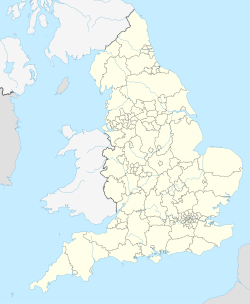
Nether Silton is a village and civil parish in the county of North Yorkshire, England. It lies 6 miles (9.7 km) east of Northallerton, on the border of the North York Moors national park. During 1870–72 Nether Silton was described as, "a chapelry in Leake parish, N. R. Yorkshire; 6½ miles E of Northallerton r. station. Post town, Thirsk. Real property, £1,702. Pop. 178. Houses, 45." by John Marius Wilson, Imperial Gazetteer of England and Wales.
The name Silton derives from the Old Norse personal name Sylfa or the Old English scelf meaning 'shelf', and the Old English tūn meaning 'settlement'.

55 m
All Saints' Church, Nether Silton
All Saints' Church is an Anglican church in Nether Silton, a village in North Yorkshire, in England.
Until 1933, Nether Silton lay within the parish of St Mary's Church, Leake. A chapel of ease in Nether Silton was first recorded in 1786, while the current church was built in 1812. Some of the stones are substantially older, but their origin is unknown. The church was extended in 1873, and was grade II listed in 1970.
The church is built of stone, with a Welsh slate roof and stone coping. It consists of a nave, a north porch and a chancel. On the west gable is a chamfered bellcote surmounted by a short obelisk. Inside, there is a Norman tub font, with thick cable moulding below the rim. The origin of the font is uncertain but it may have been moved from the church in Leake.

795 m
St Mary's Church, Over Silton
St Mary's Church is the parish church of Over Silton, a village in North Yorkshire, in England.
The oldest part of the church is the nave, including the south doorway and chancel arch, which date from the 12th century. The chancel was enlarged in the 14th century, many of the windows were rebuilt, and the porch was also added. The bellcote was added in the 15th century. A vestry was added on the north side in the 19th century. The building was grade II* listed in 1970.
The church is built of stone with roofs of stone slate and Welsh slate. It consists of a nave with an embattled parapet, a south porch, and a chancel with a north vestry. At the west end is a tall wide gabled bellcote, and a window with a pointed arch and two lights. The porch is gabled and has a doorway with a chamfered surround and a pointed arch. The inner doorway is Norman, and has one order of shafts, scalloped capitals, and an arch with chevrons and roll moulding. Inside, there is a 17th-century font and painted 18th-century royal arms. The original 12th-century door has been hung on the wall.

1.0 km
Over Silton
Over Silton is a village and civil parish in the county of North Yorkshire, England, about 6 miles (9.7 km) east of Northallerton and on the border of the North York Moors. The population taken at the 2011 Census was less than 100, and so detailed information is included in the civil parish of Nether Silton. The population was estimated to be 70 at the time of the 2011 census by North Yorkshire County Council. This had dropped to 60 by 2015.

1.9 km
Kepwick Mill
Kepwick Mill is a historic building in Kepwick, a village in North Yorkshire, in England. The mill was Grade II listed in 1990.
The watermill lies on Sorrow Beck, probably on the same site as the manorial mill recorded in 1379. The current building dates from the late 18th century, with a two-storey extension to the south in 1882. It was used to grind corn for many years, but has more recently been converted into offices.
The mill is built of stone, and has a slate roof with stone coping and kneelers. At the south end are two storeys, beyond which is a gabled cross wing with two storeys and an attic, and at the northeast is a pair of stepped buttresses. Most of the windows are horizontally-sliding sashes. On the south front is a diamond-shaped plaque inscribed "E.W. 1882". There is a large iron and wood waterwheel on the west front, and the corn grinding machinery survives in what is now the reception area.