


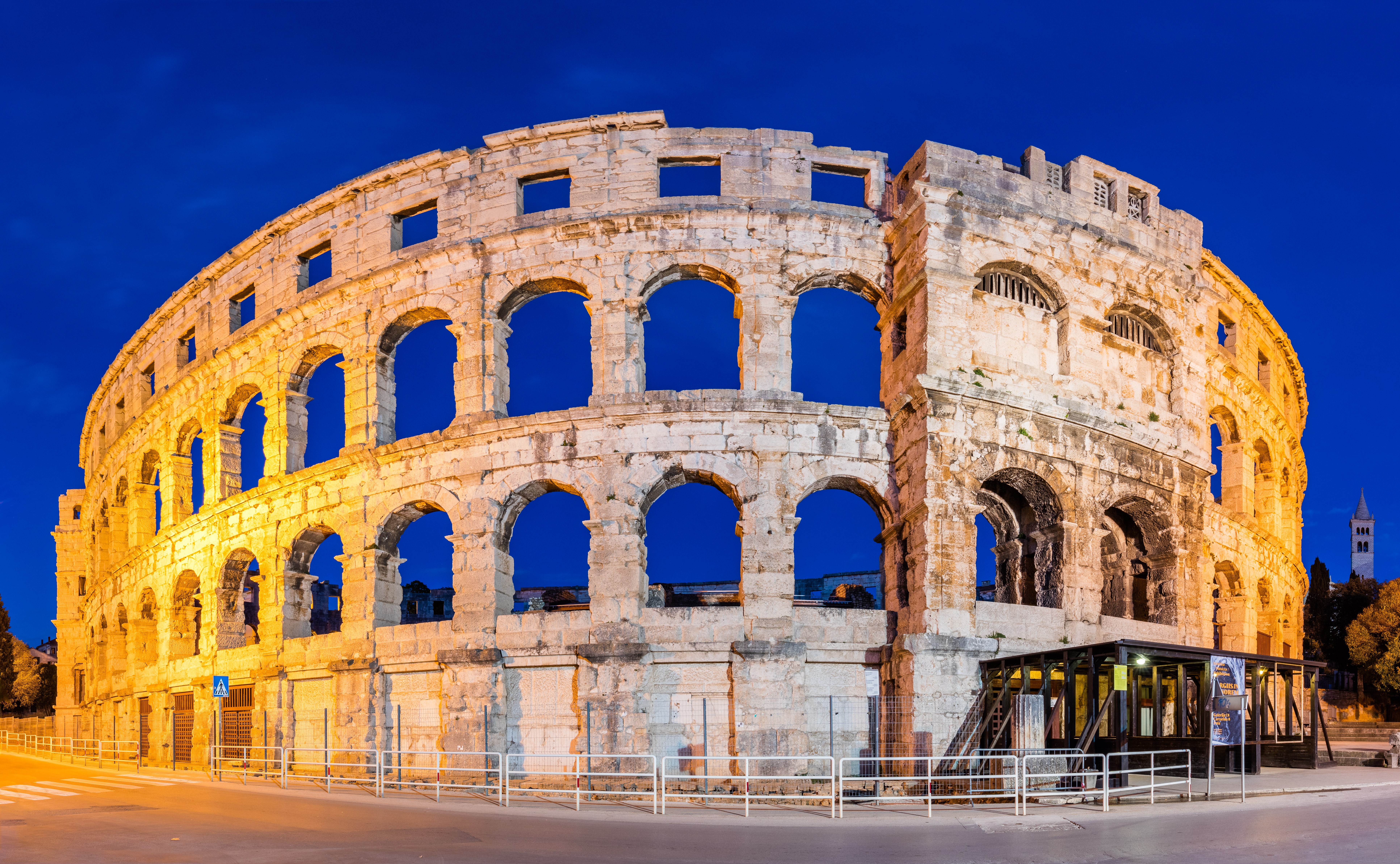
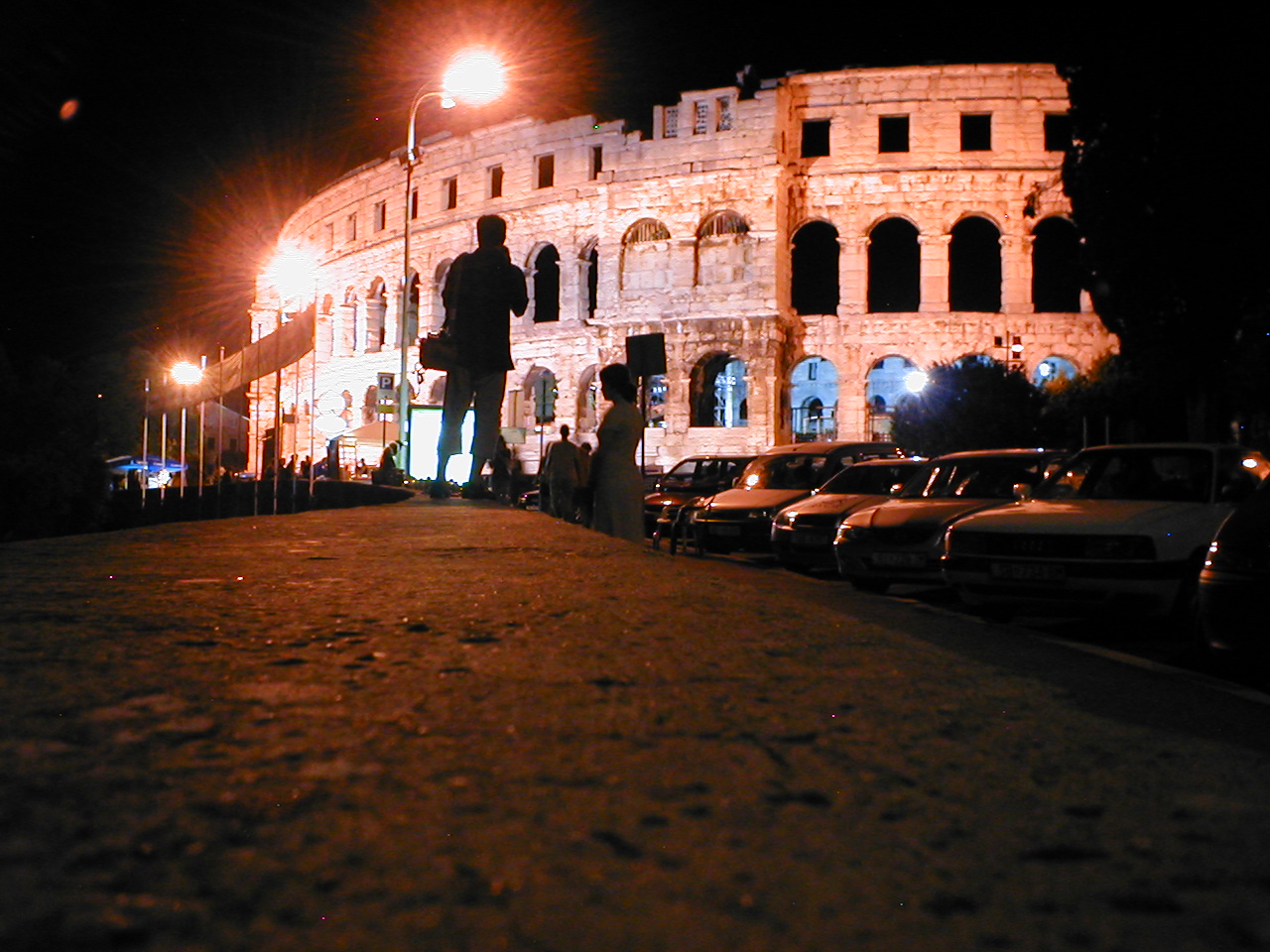
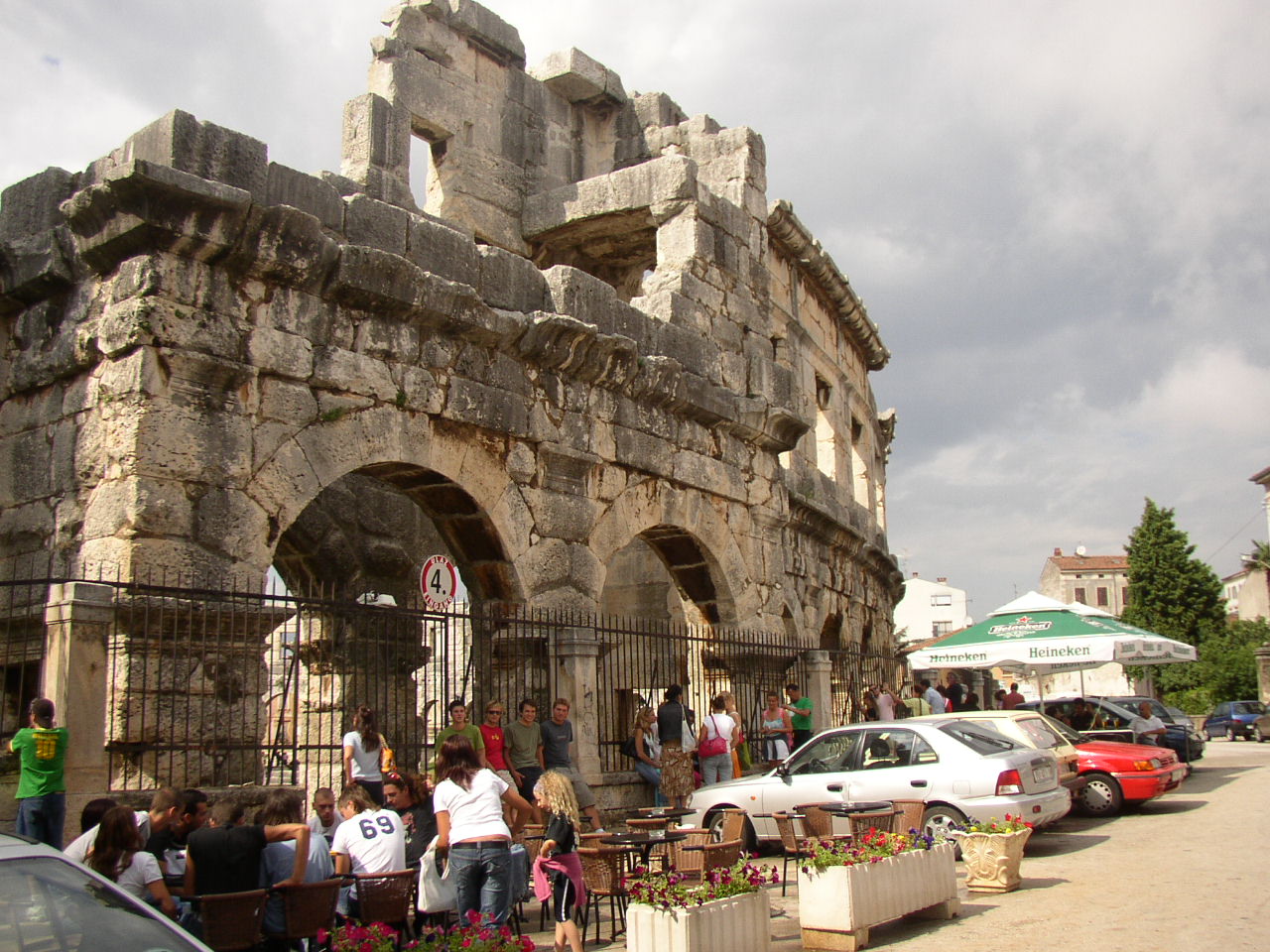
L'amphithéâtre de Pula ou colisée de Pula, est un amphithéâtre romain dans un état de conservation exceptionnel, situé à Pula, en Istrie (Croatie).
Gallery






Sponsored
Location
1 explorer visited this place

43 m
The Pula Film Festival is an annual Croatian film festival, established in 1954. It is held in a Roman amphitheater known as the Pula Arena. The Pula Film Festival is the largest and oldest Croatian film festival and is usually held in the summer, in July or August.
Apart from film screenings open to the public, the annual Croatian film industry awards are also traditionally presented at the festival. The awards presented at the festival are the main national film awards in the country.
The festival was originally started in 1954 and within a few years it became the centerpiece event of the Yugoslav film industry, with the first national awards being presented in 1957. This lasted until 1991, when the festival was cancelled due to the breakup of Yugoslavia, only to resume in 1992 as the Croatian film awards festival. It has been held every year since.

43 m
The Amphitheatre in Pula, better known as the Pula Arena, is a Roman amphitheatre located in Pula, west Croatia. Constructed between 27 BC and AD 68, during the reigns of Emperors Augustus and Vespasian, the arena is one of the best-preserved ancient Roman amphitheatres in the world and the only remaining example to retain its entire circular wall structure. Originally built outside the city walls, the arena once accommodated up to 23,000 spectators and served as the main venue for gladiatorial contests, animal hunts, and other forms of public entertainment typical of the Roman Empire.
The structure is built from local limestone and measures approximately 132 by 105 metres, with a height of 32 metres at its highest point. It features a complex system of subterranean passages, gates, and towers that were once used to manage performers, animals, and stage machinery. The arena’s architectural design reflects a blend of Roman engineering precision and adaptation to the Adriatic coastal landscape, offering panoramic views over Pula’s harbour.
After the fall of the Western Roman Empire, the amphitheatre gradually lost its original function and was used for various purposes, including as a fortress, quarry, and pasture ground. Systematic preservation efforts began in the 19th century, when the arena became recognized as a cultural monument of exceptional historical value. Today, it stands as one of Croatia’s most iconic landmarks and a symbol of Pula’s ancient heritage.
In modern times, the Pula Arena has been transformed into a vibrant cultural venue, hosting numerous events such as the Pula Film Festival, concerts, opera performances, and theatrical productions. Its remarkable state of preservation, historical significance, and continuous use make it a rare example of an ancient monument seamlessly integrated into the fabric of contemporary cultural life. The site attracts hundreds of thousands of visitors annually and is considered one of the best-preserved and most impressive Roman amphitheatres still in existence, and country's best-preserved ancient monument. The amphitheatre was depicted on the reverse of the Croatian 10 kuna banknote, issued in 1993, 1995, 2001 and 2004.

334 m
The Dvojna vrata is a Roman city gate located in Pula, Croatia. It was built during the late 2nd century. Porta Gemina is a double arched gate. It was one of the ten city gates of Pula, standing at the north side of the capitol.

496 m
The Pula Cathedral or fully the Cathedral of the Assumption of the Blessed Virgin Mary is a co-cathedral in Pula, Croatia. Along with the Euphrasian Basilica it is one of the two official seats of the Roman Catholic Diocese of Poreč and Pula. The church is located on the south side of the Pula bay at the foot of the hill with the 17th century Venetian fort. The site of the present-day church has been used for religious worship since ancient Roman times and the first Christian churches on the site were built in the late 4th and early 5th century AD. These had gone through a series of enlargements and reconstructions over the ages.

504 m
Pula, also known as Pola, its Italian name, is the largest city in Istria County, western Croatia, and the seventh-largest city in the country, situated at the southern tip of the Istrian peninsula in western Croatia, with a population of 52,220 in 2021. It is known for its multitude of ancient Roman buildings, the most famous of which is the Pula Arena, one of the best preserved Roman amphitheaters. The city has a long tradition of wine making, fishing, shipbuilding, and tourism. It was the administrative centre of Istria from ancient Roman times until superseded by Pazin in 1991
