


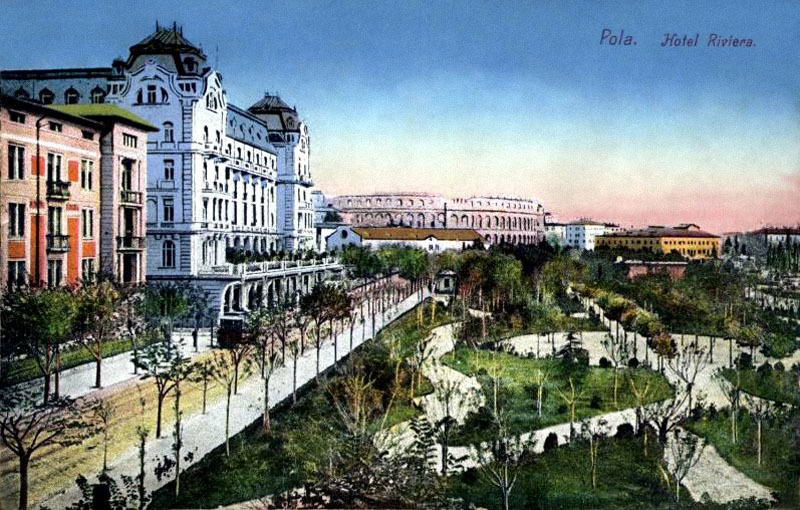
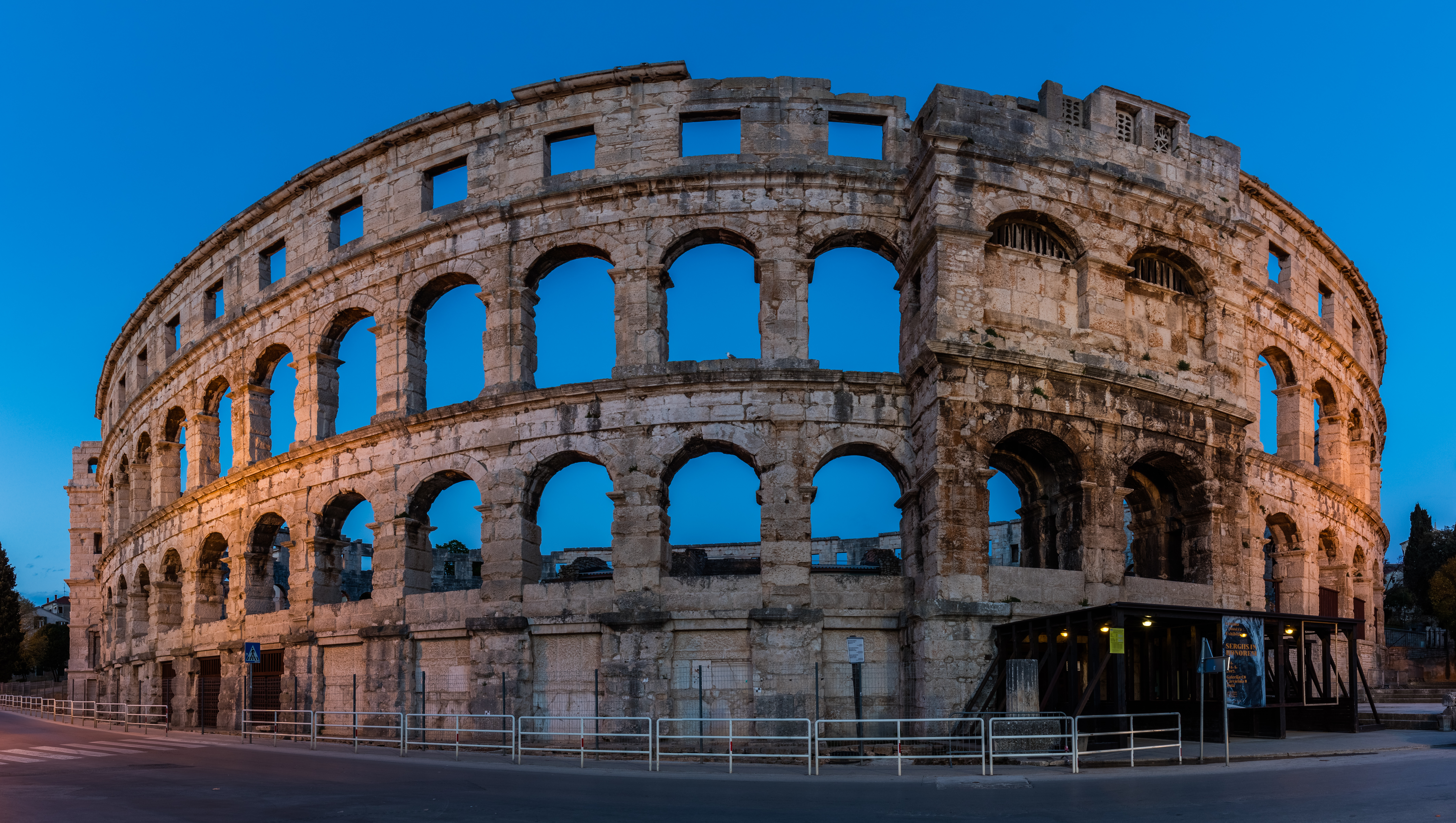
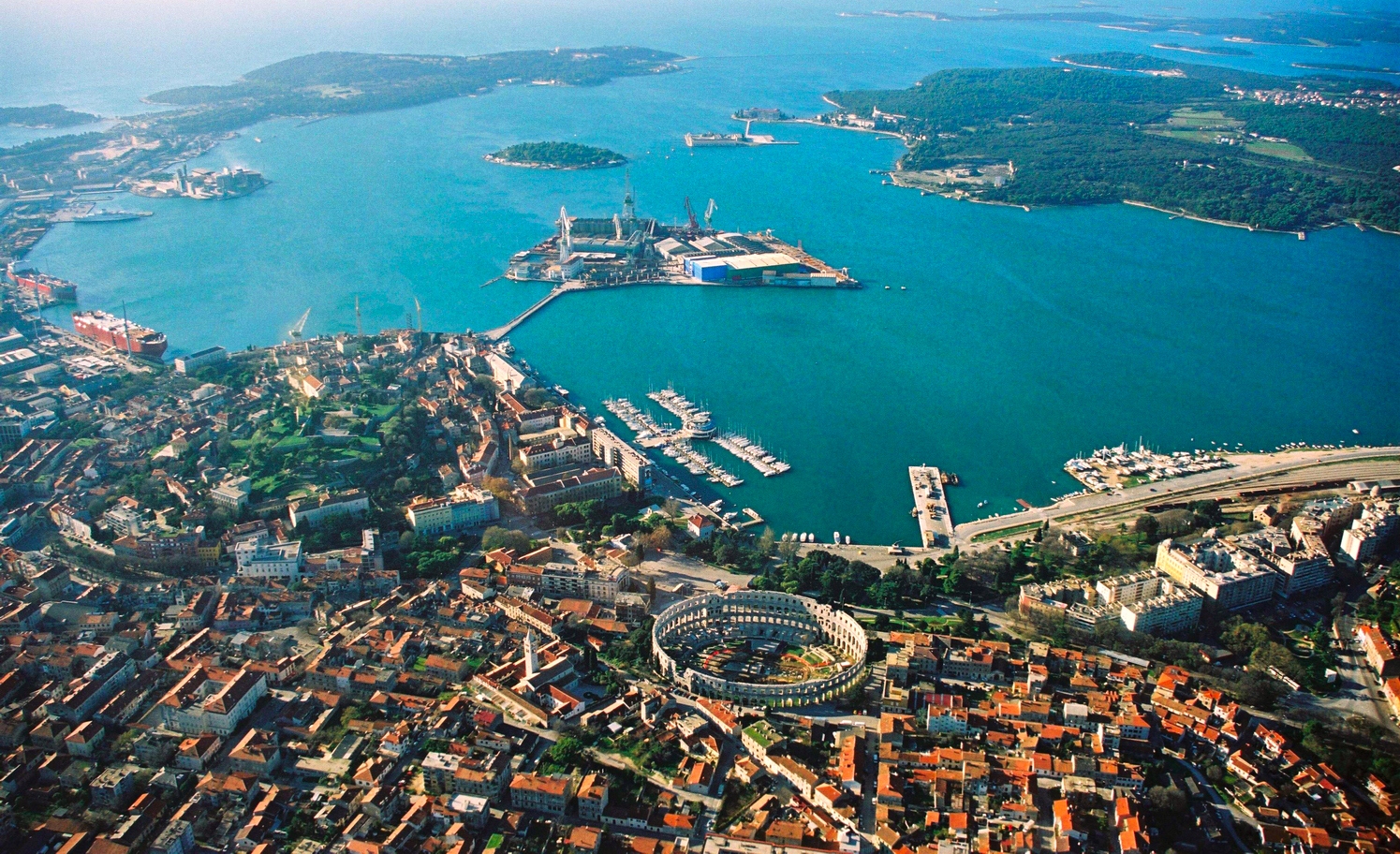
Pula, also known as Pola, its Italian name, is the largest city in Istria County, western Croatia, and the seventh-largest city in the country, situated at the southern tip of the Istrian peninsula in western Croatia, with a population of 52,220 in 2021. It is known for its multitude of ancient Roman buildings, the most famous of which is the Pula Arena, one of the best preserved Roman amphitheaters.
Gallery














Sponsored
Location
1 explorer visited this place

158 m
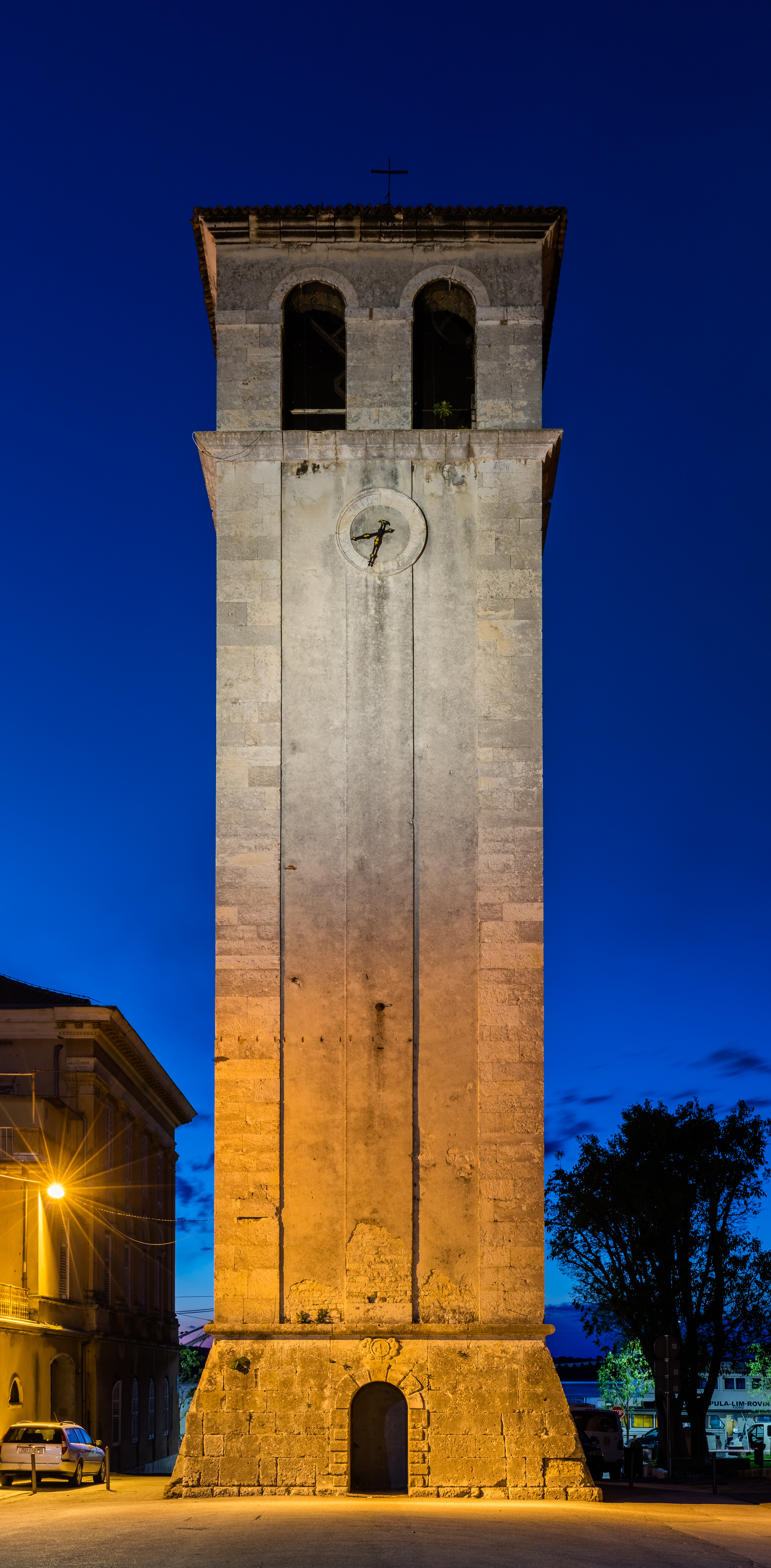
The Monastery and Church of St. Francis in Pula, Croatia, are located on the western slope of the Pula hill, halfway between the Forum and the medieval fortress at the top, on the site where previously was the early Christian complex of St. John the Baptist.
The Franciscans came to Pula immediately after St. Francis founded the Franciscan Order, with the consent of Pope Innocent III, in 1209.
The church, in the late Romanesque style and with Gothic adornments, was built in 1314. Completed by the architect Jakov Puljanin, it was designed in accordance with the rules issued in Narbonne in 1260, including a typical rectangular floor plan of the church with a square sanctuary, a single-walled bell tower, a cloister and a monastery with rooms for the friars, a capitular hall, a refectory and a sacristy that connects the monastery with the choir.
The church is simple and strict in form, as befits a church of the begging order. The fine treatment of the stone blocks from which the walls were built evidences the skill of the masters who participated in the construction. On the main altar is a large wooden, gilded polyptych from the middle of the 15th century, created under the influence of the Vivarini school. It is one of the most valuable works of wooden Gothic sculpture in Istria. In the central field is a high relief of the Virgin with Christ, and on the side and in the row above the relief are a total of 12 saintly figures. The polyptych ends with carved Gothic phials. The monastery has a cloister with early Renaissance pillars, built in the 15th century. Next to the church is a Gothic cloister with Renaissance adaptations; in the cloister and in front of the entrance to the church there is a lapidarium of medieval monuments and a collection of copies of wall paintings from Istria. This Romanesque church is adorned with a "portal decorated with floral motifs."
The Franciscan complex presents a mix of Gothic forms and the Mediterranean tradition of construction.
In the church of St. Francis in Pula are the remains of Blessed Otto, who, according to some sources, came to Pula around 1235, on the occasion of the founding of the monastery there. He died in Pula in 1241, and numerous healings attributed to him are recorded in many books and martyrologies of the Franciscan order. In Pula, the veneration of Blessed Otto continues today.

178 m
The Pula Cathedral or fully the Cathedral of the Assumption of the Blessed Virgin Mary is a co-cathedral in Pula, Croatia. Along with the Euphrasian Basilica it is one of the two official seats of the Roman Catholic Diocese of Poreč and Pula. The church is located on the south side of the Pula bay at the foot of the hill with the 17th century Venetian fort. The site of the present-day church has been used for religious worship since ancient Roman times and the first Christian churches on the site were built in the late 4th and early 5th century AD. These had gone through a series of enlargements and reconstructions over the ages.

187 m
The Dvojna vrata is a Roman city gate located in Pula, Croatia. It was built during the late 2nd century. Porta Gemina is a double arched gate. It was one of the ten city gates of Pula, standing at the north side of the capitol.

244 m
Arch of the Sergii is an Ancient Roman triumphal arch located in Pula, Croatia. The arch commemorates three members of the Sergii family, specifically Lucius Sergius Lepidus, a tribune serving in the twenty-ninth legion that participated in the Battle of Actium and disbanded in 27 BC. This suggests an approximate date of construction: 29–27 BC. The arch stood behind the original naval gate of the early Roman colony. The Sergii were a powerful family of officials in the colony and retained their power for centuries.

294 m
The Basilica of Santa Maria del Canneto, or Santa Maria Formosa, was a sixth-century Byzantine church. It was erected in Pola under the patronage of Maximianus, bishop of Ravenna. The structure was damaged at the time of the Venetian sack of Pola in 1243, and building material was subsequently taken from the ruins and primarily incorporated into the Marciana Library and the Basilica of Saint Mark in Venice. Of the large, triple-nave church, comparable in splendour to the Euphrasian Basilica in Parenzo, only one of the lateral chapels survives. It constitutes the sole construction in Pola dating to the Byzantine period.
Book your tour near
Pula
→
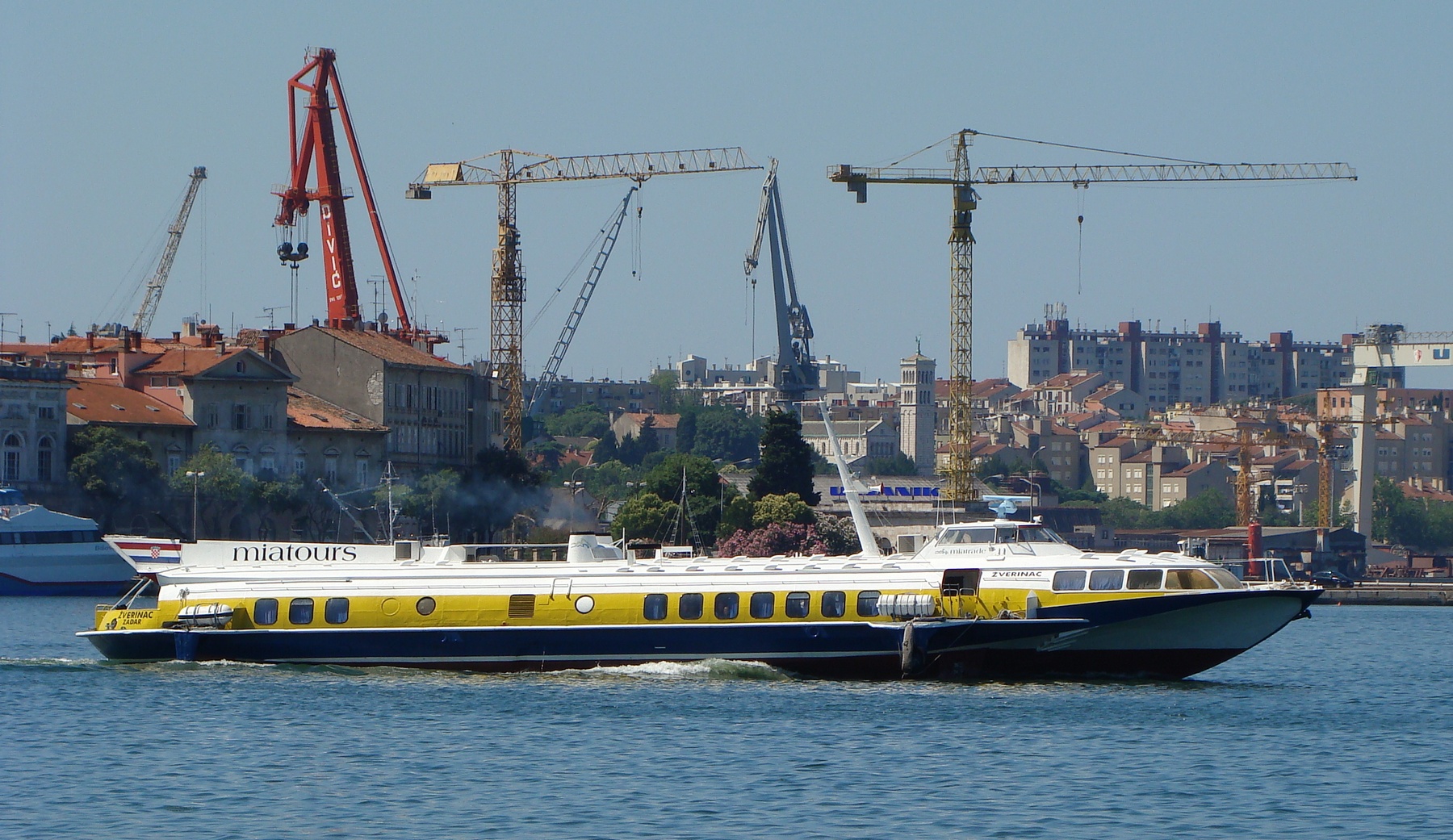
The city has a long tradition of wine making, fishing, shipbuilding, and tourism. It was the administrative centre of Istria from ancient Roman times until superseded by Pazin in 1991