


Wakefield Kirkgate is one of two railway stations in Wakefield, West Yorkshire, England. Unlike nearby Wakefield Westgate, Kirkgate is unstaffed. It is managed by Northern Trains, but also served by Grand Central and TransPennine Express. The station is on the Hallam, Calder Valley, Pontefract and Huddersfield lines, with a limited number of services to London King's Cross.

Location
4 explorers visited this place


History
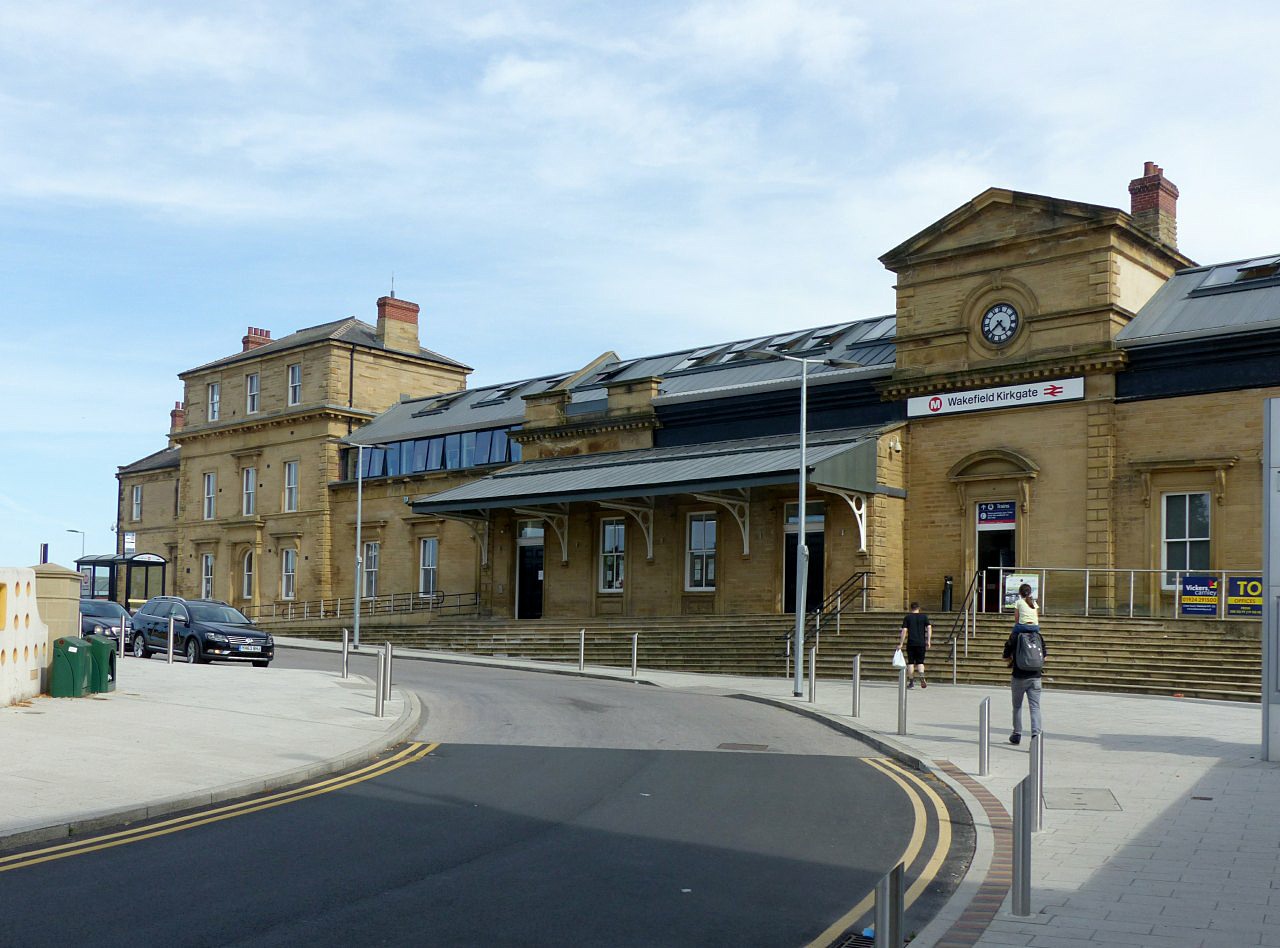
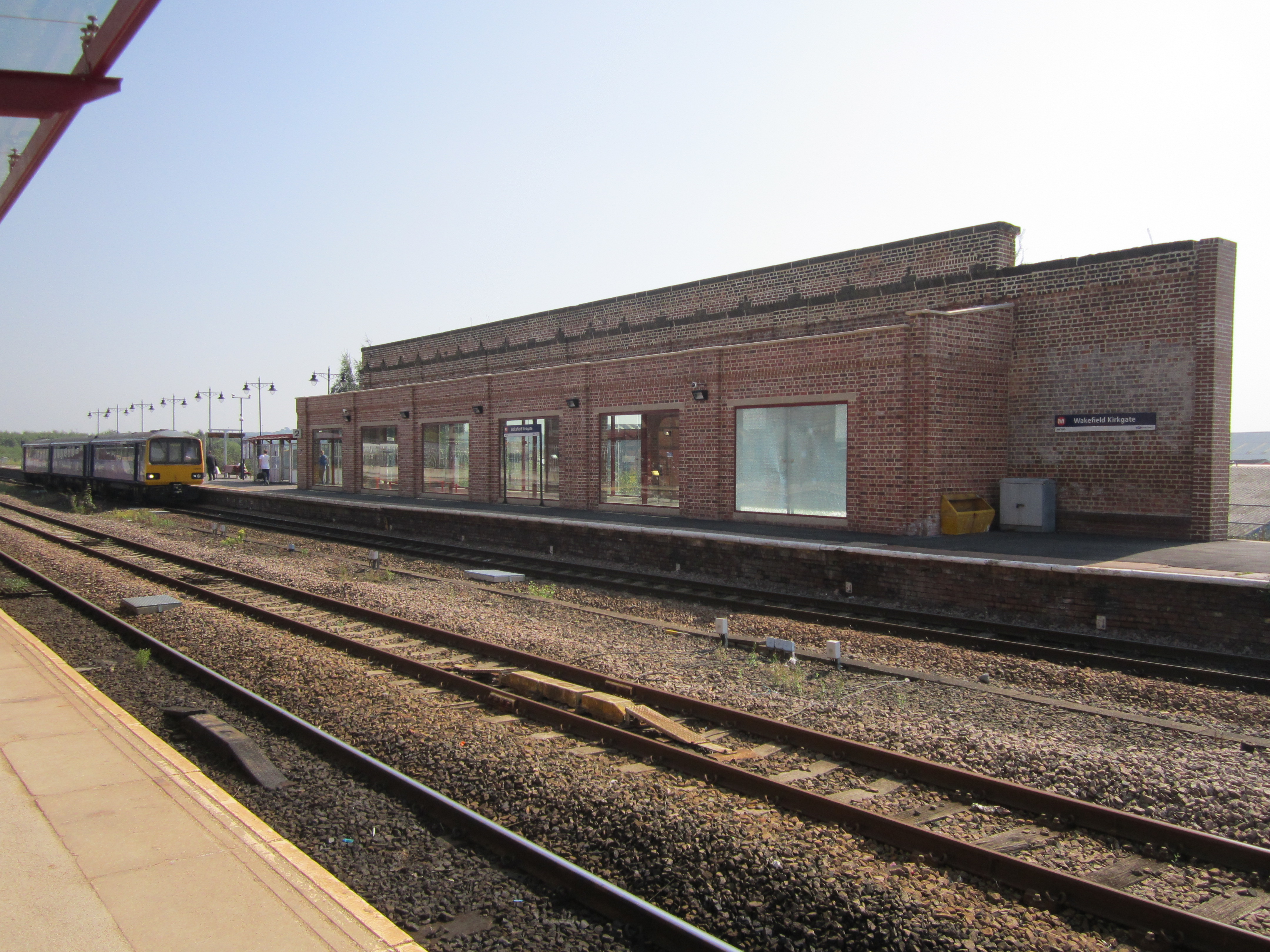
The original Kirkgate station opened by the Manchester and Leeds Railway in 1840; it was the only station in Wakefield until Westgate was opened in 1867. The station building dates from 1854 and is named after the nearby Kirkgate street. Some demolition work took place in 1972, removing buildings on the island platform and the roof with its original ironwork canopy which covered the whole station. A wall remains as evidence of these buildings. After this, Kirkgate was listed in 1979. Since Westgate developed as Wakefield's main railway station, Kirkgate was neglected for many years and deteriorated until it was in a poor state of repair. In January 2008, the former goods warehouse was demolished to make way for a depot for Network Rail. In October 2008, part of the station wall collapsed, destroying a parked car. The station is unstaffed and, despite the presence of CCTV, it suffered from crime. A rape, a serious assault and several robberies took place there. In July 2009, Kirkgate station was visited by Secretary of State for Transport, Lord Adonis, who dubbed it "the worst medium-large station in Britain." Local consensus was that the state of its facilities discouraged its use.
Refurbishment 2013–15
Following a campaign supported by the Wakefield Express newspaper, plans to redevelop the station were formulated. In July 2011, Wakefield Council was asked to decide upon a £500,000 grant to the environmental regeneration charity Groundwork UK as part of its £4 million Kirkgate project in which new life would be breathed into the area. The proposal was approved and funds raised in March 2013. The work was carried out in two phases between 2013 and 2015. Work completed by June 2013 included the following items:
Removal of life-expired and unused canopies Refurbishment and reglazing of the Leeds-bound canopy Creation of new entrances to the subway Installation of electronic information screens on the platforms and entrance hall. A second phase of work, completed in September 2015, included
Units for new businesses Café Retail outlet Exhibition spaces Meeting rooms for community and local business Accommodation for Groundwork Wakefield. Grand Central opened a first class lounge for its customers in April 2017.
Passenger Usage
Historically, figures for annual passenger usage at Kirkgate were comparatively low, with only 769 tickets sold to/from the station in the 2006/07 financial year. However this was because most tickets are bought to "Wakefield Stations", and it was hard to determine the true use of Wakefield Westgate and Kirkgate as separate entities. Following changes in the way the statistics are collected, Kirkgate's usage figure increased significantly to a value which more accurately reflects its true usage. In 2022/23, 508,000 journeys to and from the station were estimated along with 82,000 interchanges.
Layout
The station has three platforms:
Platform 1: Served by northbound Northern Trains services to Leeds and Castleford, and also by services to and from York. Platform 2: Served by southbound Northern Trains services towards Barnsley, Meadowhall Interchange, Sheffield, Lincoln and Nottingham. The newly introduced TransPennine Express service to Manchester Piccadilly, via Huddersfield, also calls at this platform four times each day. Platform 3: Served by north-eastbound Northern Trains services towards Knottingley, westbound to Wakefield Westgate and Leeds. Several Grand Central services run each day eastbound towards London King's Cross (which then begin a southbound journey after Doncaster) and westbound towards Bradford Interchange via Halifax. The island platform consisting of platforms 2 and 3, is linked to platform 1 and the station building by a newly refurbished subway, featuring better lighting and new bright white paint. Art panels were added to the subway in February 2017, and a brass band rendition of Jerusalem plays in the background.
Current
The station is served by three train operating companies: Northern Trains:
Hallam Line: Three trains per hour to Leeds and to Sheffield Two of these are express services that continue from Sheffield to Nottingham and Lincoln alternately The third is a stopping service that in the Leeds direction runs via Castleford On Sundays, the service to/from Lincoln do not run and the stopping services are reduced to two-hourly. There is one Sunday morning service on this route that continues to Carlisle, via Skipton and Settle. Pontefract Line: One train per hour to Leeds and to Knottingley, via Pontefract Monkhill There is a two-hourly service on Sundays. This provides a rail link to Wakefield Westgate. TransPennine Express:
One train per hour in each direction to York and to Manchester Piccadilly, via Huddersfield. Grand Central:
Four trains per day in each direction between Bradford Interchange and London King's Cross. London-bound trains travel via Doncaster and those to Bradford go via Mirfield and the Caldervale Line.
Summer Specials
During the summer, excursion trains using heritage rolling stock run through the station: the Scarborough Spa Express on alternate Thursdays and The Dalesman to Carlisle, running over the Settle-Carlisle line on occasional Mondays and Tuesdays. These services are hauled by diesel locomotives through West Yorkshire and changed to steam haulage part way along the routes, usually at Hellifield.
See also
Listed buildings in Wakefield Wakefield Westgate railway station
