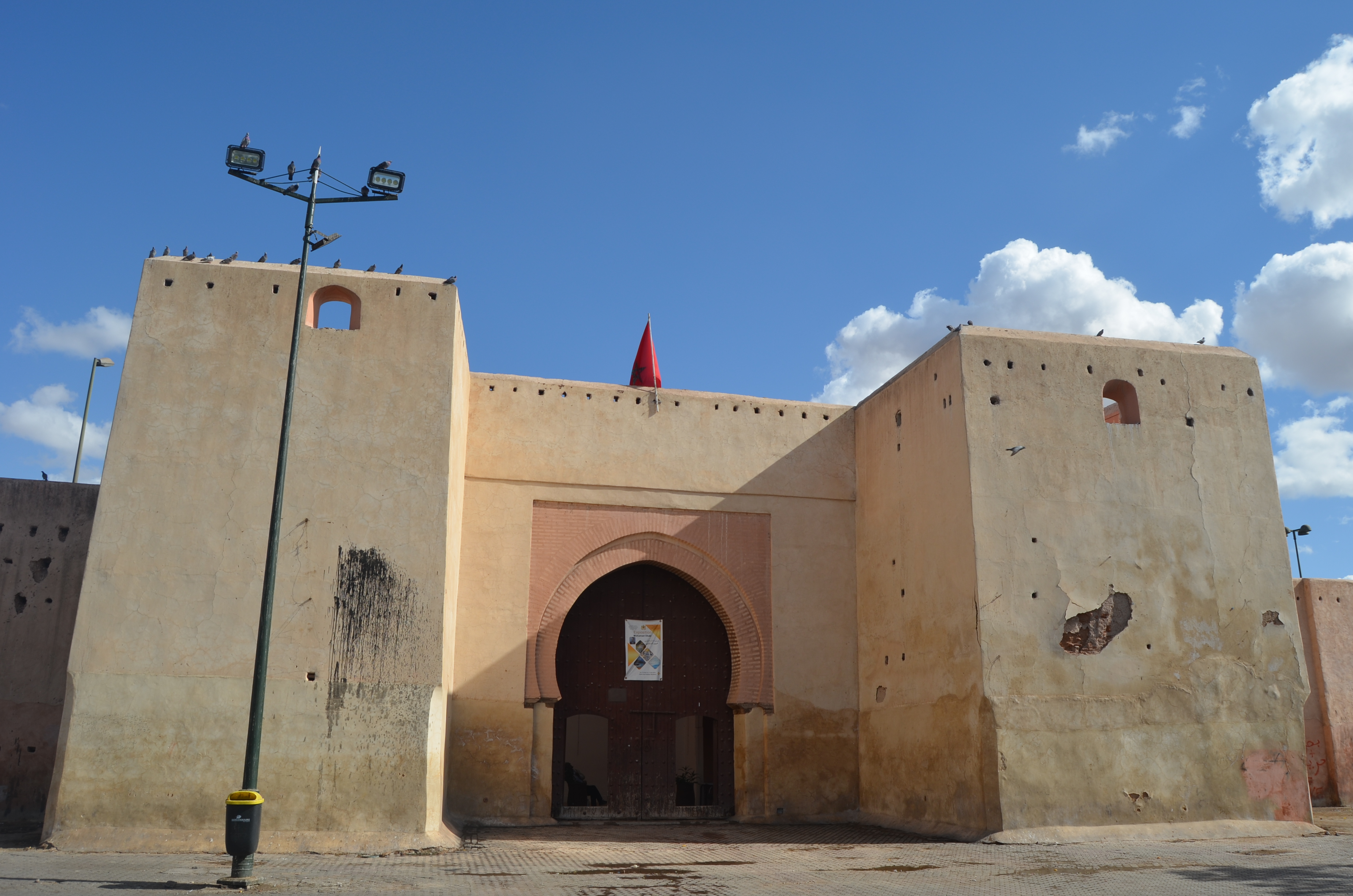
Bab Doukkala (Arabic: باب دكالة, lit. 'gate of the Doukkala') is the main northwestern gate of the medina (historic walled city) of Marrakesh, Morocco.

1. Description

The gate dates back to around 1126 CE when the Almoravid emir Ali ibn Yusuf built the first walls of the city. Doukkala, was that of both a Berber tribe and of a region between Marrakesh and Casablanca today. Unlike many other gates of the city, it has not been subject to major modifications (at least in its floor plan) and retains its original sophisticated bent entrance design from the Almoravid period. The passage inside the gate bends at a straight angle twice: one enters from the west, turns south, then turns east before emerging into the city. Today the gate is flanked by other simple openings in the wall to allow for easy circulation. The city's main intercity bus terminal is also located just outside and slightly north of Bab Doukkala gate.

1. References
Lieux à Proximité Voir Menu
Location Image
440 m

Bab Doukkala Mosque

The Bab Doukkala Mosque (Arabic: مسجد باب دكالة) or Mosque of Bab Doukkala is a mosque in Marrakesh, Morocco. It is named after the nearby western city gate, Bab Doukkala. It was built in the 16th century during the Saadian period. It is also known as the al-Hurra Mosque ("Mosque of the Free One"), in reference to its founder, Massa'uda al-Wizkitiya. Like the contemporary Mouassine Mosque to the southeast, it was built as a Friday mosque for what was a newly redevelopped neighbourhood at the time. It formed the main element in a larger religious-charitable complex that also included a madrasa, a hammam, a library, a fountain, and more.
Location Image
678 m

Dar el Bacha

Dar el Bacha (Arabic: دار الباشا, lit. 'House of the Pasha') is a palace situated in the old medina of Marrakesh, Morocco. It currently houses the Museum of Confluences.
Location Image
730 m

Zawiya of Sidi Muhammad Ben Sliman al-Jazuli

The Zawiya of Sidi Muhammad Ben Sliman al-Jazuli is a zawiya (Islamic Sufi religious complex) in Marrakesh, Morocco. It is centered around the tomb of Muhammad al-Jazuli, a 15th-century Muslim scholar and Sufi saint who is one of the Seven Saints of Marrakesh. The complex was established around 1523–4, when the Saadian ruler Ahmad al-'Araj transferred al-Jazuli's body here. It was subsequently restored and modified in later periods. The complex consists mainly of a mosque and a mausoleum chamber, with other smaller elements including an ablutions facility, a street fountain, a hospice, a residence, and a school room. A small cemetery next to the complex contains the tombs of Ahmad al-'Araj and other members of his family.
Location Image
931 m

Zawiya of Sidi Bel Abbes

The Zawiya of Sidi Bel Abbes (Arabic: زاوية سيدي بلعباس) is a zawiya (Islamic Sufi religious complex) in Marrakesh, Morocco. The complex is centered around the mausoleum of Abu al-Abbas al-Sabti (or Sidi Bel Abbes), a Sufi teacher who died in 1204. He is the most venerated of the Seven Saints of Marrakesh, generally considered the "patron saint" of the city. The zawiya's architecture dates in part to the late Saadian period (early 17th century) but has been modified and restored multiple times during the Alawi period from the late 17th to 19th centuries. The complex includes many buildings of various functions arranged around two courtyards or plazas. The most important elements include the saint's mausoleum and a mosque, along with a madrasa, an asylum/hospice, and other facilities.