
Ford Estate (known as Ford locally) is a suburb in the south of Sunderland, in the county of Tyne and Wear, England. The suburb is divided into two areas: High Ford borders the estate of Pennywell. Low Ford, to the east, borders the suburb of Pallion. Much like the neighbouring estate of Pennywell, Ford Estate is currently undergoing large levels of urban regeneration with private housing now standing in the place of the homes people were forcibly evicted from. At the heart of the area once stood Ford Hall (after which the area is named), the childhood home of General Havelock, and a road is named after him near the site as well as a few public houses outside the suburb. The house was demolished in the middle of the twentieth century and was rebuilt as a retirement home. Most of the houses in Ford Estate were built in the 1930s and 1940s, and most of the street names begin with the letter F, and also contain the word ford in them, examples of this are Falmouth Road, Fordham Road, Fordfield Road and Falkland Road. Residents also have access to the nearby Pallion Metro Station which is located in Pallion.

Lieux à Proximité Voir Menu
2.2 km

Bishopwearmouth

Bishopwearmouth est un quartier de Sunderland, ville du Nord-Est de l'Angleterre.
Location Image
2.5 km

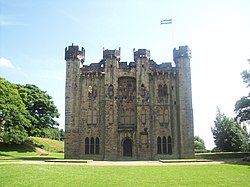
Château de Hylton

Le château de Hylton est un château en pierre, actuellement en ruine, situé près de Sunderland dans le Tyne and Wear en Angleterre. Construit à l'origine en bois, par un des baron Hylton, juste après la conquête normande de l'Angleterre. Il est reconstruit en pierre de la fin du XIVe jusqu'au début du XVe siècle. Le château a ensuite subi d'importantes modifications aux XVIIIe et XIXe siècles. Il sert divers usages après la fin de la maison Hylton en 1746, le bâtiment a été négligé puis est devenu une école en 1840, avant appartenir à une société houillère au XXe siècle, pour enfin être pris en charge par l'État en 1950, pour enfin appartenir aujourd'hui à l'English Heritage, organisme public chargé du patrimoine historique. Le château est réputé hanté par le Cauld Lad of Hylton.
Location Image
2.6 km

Cité de Sunderland

La Cité de Sunderland (en anglais : City of Sunderland) est un district du Tyne and Wear, en Angleterre. Elle a le statut de district métropolitain et de cité (city). Elle porte le nom de sa principale ville, Sunderland, et couvre un territoire comprenant les villes de Hetton-le-Hole, Houghton-le-Spring, Washington, ainsi que des villages suburbains. Le district a été créé en 1974 sous le nom de District métropolitain de Sunderland (Metropolitan Borough of Sunderland) par le Local Government Act 1972. Il est issu de la fusion de quatre anciens districts du comté de Durham. Il a reçu le statut de cité en 1992, à l'occasion du 40e anniversaire de l'accession au trône de la reine Élisabeth II. Au recensement de 2001, la cité de Sunderland comptait 280 807 habitants, dont une majorité réside à Sunderland.
Location Image
2.6 km

Stadium of Light

Le Stadium of Light est le stade de football du Sunderland AFC. Ce stade de 48 353 places est inauguré en 1997, par le prince Andrew, duc d'York, à l'occasion d'une rencontre entre le Sunderland AFC et l'Ajax Amsterdam.
Location Image
2.7 km

Pont de Wearmouth

Le pont de Wearmouth (en anglais : Wearmouth Bridge) est un pont en arc traversant la rivière Wear à Sunderland. C'est le dernier pont sur le fleuve avant son embouchure avec la mer du Nord. Le pont ferroviaire de Monkwearmouth (en) se situe en amont.