

 English
 Français
Buckton Castle
Buckton Castle was a medieval enclosure castle near Carrbrook in Stalybridge, a town in Tameside, Greater Manchester, England. Historically part of Cheshire, it was surrounded by a 2.8-metre-wide (9 ft) stone curtain wall and a ditch 10 metres (33 ft) wide and 6 metres (20 ft) deep. Buckton is one of the earliest stone castles in North West England and survives only as buried remains overgrown with heather and peat. It was most likely built and demolished in the 12th century. The earliest surviving record of the site dates from 1360, by which time it was already derelict. The few finds retrieved during archaeological investigations indicate that Buckton Castle may not have been completed. In the 16th century, the site may have been used as a beacon during the Pilgrimage of Grace. In the 18th century, the castle attracted treasure hunters following rumours that gold and silver had been discovered at Buckton. The site was later used as an anti-aircraft decoy during the Second World War. Between 1996 and 2010, Buckton Castle was investigated by archaeologists as part of the Tameside Archaeology Survey, first by the University of Manchester Archaeological Unit and later by the University of Salford's Centre for Applied Archaeology. The project involved community archaeology, with more than 60 volunteers taking part. The castle, close to Buckton Vale Quarry, is a scheduled monument.
Lieux à Proximité Voir Menu

Château de Buckton

Hartshead Pike
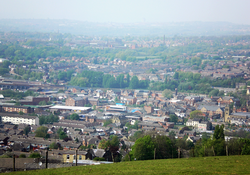
Stalybridge

Dovestone Reservoir
