Location Image

Thornhill railway station (Scotland)

Thornhill is a closed station. It served the country town of Thornhill in Dumfries and Galloway. The station site is a mile or so from the town. Four miles north of Thornhill is Drumlanrig Castle, home to the Duke of Buccleuch and Queensberry. The Glasgow and South Western main line rail route between Kilmarnock and Dumfries is forced to make a long detour to the east of Thornhill and through a long tunnel, rather than the more logical route nearer Thornhill town centre and up the Nith Valley, so as not to be seen from the Buccleuch estate. The distance of the station from Thornhill may be one reason that passenger use was light and stopping services ended in 1965. There was formerly a busy livestock market near to the station, which eventually closed around 2001. In 2014, Dumfries and Galloway Council proposed creating a funding application to reopen the station.

Lieux à Proximité Voir Menu
Location Image
1.7 km

Thornhill (Dumfries and Galloway)

Thornhill est une ville située dans le Dumfries and Galloway, en Écosse.
Location Image
2.4 km

Carronbridge

Carronbridge est un village situé dans le Dumfries and Galloway, en Écosse.
Location Image
4.2 km

Closeburn (Dumfries and Galloway)

Closeburn est un village situé dans le Dumfries and Galloway, en Écosse.
Location Image
4.6 km

Penpont

Penpont est un village situé dans le Dumfries and Galloway, en Écosse.
Location Image
4.7 km

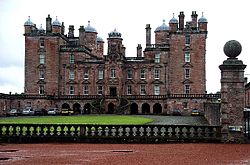
Château de Drumlanrig

Le château de Drumlanrig est un château écossais situé dans le district de Dumfries and Galloway et classé dans la liste des monuments historiques du Royaume-Uni. Il est la propriété du duc de Buccleuch. Le bâtiment, construit entre 1679 et 1689 en grès rose, est typique de l'architecture Renaissance de la fin du XVIIe siècle. Il a été édifié à l'emplacement d'une ancienne forteresse appartenant aux Douglas et surplombant Nith Valley. Le château actuel dispose de 120 pièces, 17 tourelles et quatre tours. Il abrite une des deux versions originales du tableau La Madone aux fuseaux peint par Léonard de Vinci et son atelier, volé en 2003, mais retrouvé et restitué en 2007.