Star Carr is a Mesolithic archaeological site in North Yorkshire, England. It is around five miles (8 km) south of Scarborough. It is generally regarded as the most important and informative Mesolithic site in Great Britain. The site was occupied during the early Mesolithic archaeological period, which coincided with the preboreal and boreal climatic periods. Though the ice age had ended and temperatures were close to modern averages, sea levels had not yet risen sufficiently to separate Britain from continental Europe. Highlights among the finds include Britain's oldest structure, 21 red deer stag skull-caps that may have been headdresses and nearly 200 projectile, or harpoon, points made of red deer antler. These organic materials were preserved due to having been buried in waterlogged peat. Normally all that remains on Mesolithic sites are stone tools. Excavation of the site began in 1948, a year after artefacts were first noticed by John Moore, an amateur archaeologist. The site is most famous for some of the extremely rare artefacts discovered during the original excavations but its importance has been reinforced by new understandings of the nature and extent of the Mesolithic archaeology in the area and reinterpretations of the original material.

Lieux à Proximité Voir Menu
Location Image
16 m

Star Carr

Star Carr est un site préhistorique du Mésolithique situé près de Scarborough, dans le Yorkshire du Nord, en Angleterre. Il a été occupé par une population de chasseurs-cueilleurs au IXe millénaire av. J.-C..
Location Image
2.3 km

Willerby (Yorkshire du Nord)

Willerby est un village et une paroisse civile du Yorkshire du Nord, en Angleterre.
Location Image
2.8 km

Folkton

Folkton est un village et une paroisse civile du Yorkshire du Nord, en Angleterre.
Location Image
2.9 km

Seamer (Scarborough)

Seamer est un village et une paroisse civile du Yorkshire du Nord, en Angleterre.
Location Image
3.2 km

RRH Staxton Wold

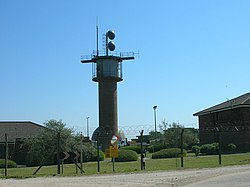
RRH Staxton Wold est une station radar de la Royal Air Force située vers Scarborough dans le North Yorkshire, en Angleterre. Le site actuel dispose d'une fonction d'alerte précoce depuis le IIIe siècle, il était alors le site d'une balise d'avertissement. Il a été sélectionné pour accueillir une station radar en 1937; les travaux de construction n'ont commencé qu'en décembre 1938, des retards dans l'acquisition du site ayant eu lieu lorsque les propriétaires ont résisté à la vente (l'achat ayant lieu avant la seconde guerre mondiale, le gouvernement a eu plus de mal à invoquer l'effort de guerre pour se porter acquéreur des terrains). Le site est devenu pleinement opérationnel en avril 1939, il est maintenant le seul des postes originaux encore en service. Il pourrait donc s’agir de la plus ancienne station radar toujours en activité. Aujourd'hui, le site est intégré au sein du système de surveillance et de contrôle de l'air du Royaume-Uni (UKASACS). Le radar de Staxton Wold est aujourd'hui un Lockheed Martin TPS77 qui devait fonctionner dès septembre 2013, mais qui ne fut pleinement opérationnel qu'à partir de 2015. En septembre 2017, le radar AN/TPS-77 basé à Staxton Wold aurait été transféré au RRH Saxa Vord.