Location Image

Greater Manchester

Greater Manchester is a metropolitan and ceremonial county in North West England. It borders Lancashire to the north, West Yorkshire and Derbyshire to the east, Cheshire to the south, and Merseyside to the west. Its largest settlement is the city of Manchester. The county has an area of 1,276 km2 (493 sq mi) and is highly urbanised, with an estimated population of 3,009,664 in 2024. Manchester is located in the centre of the county, with the city of Salford immediately adjacent to the west. Other large settlements include Rochdale in the north-east, Stockport in the south-east, Sale in the south-west, Wigan in the far north-west, and Bolton in the north-west. The majority of the county's settlements are part of the Greater Manchester Built-up Area, which extends into Cheshire and Merseyside and is the second most populous urban area in the United Kingdom. For local government purposes the county comprises ten metropolitan boroughs: Manchester, Salford, Bolton, Bury, Oldham, Rochdale, Stockport, Tameside, Trafford and Wigan. The borough councils collaborate through the Greater Manchester Combined Authority. Greater Manchester was created on 1 April 1974 from parts of north-east Cheshire, south-east Lancashire, and a small part of the West Riding of Yorkshire. The centre and south-west of Greater Manchester are lowlands, similar to the West Lancashire Coastal Plain to the north-west and the Cheshire Plain to the south-west. The north and east are part of the Pennines: the West Pennine Moors in the northwest, the South Pennines in the northeast and the Peak District in the east. Most of the county's rivers rise in the Pennines and are tributaries of the Mersey and Irwell, the latter of which is itself a tributary of the Mersey. The county is connected to the Mersey Estuary by the Manchester Ship Canal, which for its entire length within Greater Manchester consists of canalised sections of the Mersey and Irwell. What is now Greater Manchester was largely rural until the Industrial Revolution, when the region underwent rapid industrialisation. The area's towns and cities became major centres for the manufacture of cotton textiles, aided by the exploitation of the Lancashire coalfield. The region was also an engineering and scientific centre, leading to achievements such as the first inter-city railway. Following deindustrialisation in the mid-20th century the county has emerged as a major centre for the service sector, media and digital industries. It is also recognised for its contributions to guitar and dance music, and for its football teams.

Lieux à Proximité Voir Menu
Location Image
0 m

Grand Manchester

Le Grand Manchester (en anglais : Greater Manchester) est un comté métropolitain situé en Angleterre du Nord-Ouest qui comporte une population totale de 2,8 millions d'habitants. Il comprend une des plus importantes aires urbaines du Royaume-Uni. Il s'étend sur 1 276 km2 autour de Manchester et comprend les districts de Bolton, Bury, Oldham, Rochdale, Stockport, Tameside, Trafford, Wigan, ainsi que la ville de Salford. Depuis 2011, il est administré par l'autorité combinée du Grand Manchester.
Location Image
661 m

Pendlebury

Pendlebury est une ville située dans la Cité de Salford, dans le Grand Manchester en Angleterre. Sa population en 2011 était de 13 069 habitants.
Location Image
1.4 km

Victoria Park (Swinton)

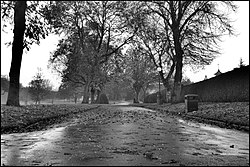
Victoria Park est un parc situé à Swinton, dans le Grand Manchester. Situé sur Manchester Road (A6), Swinton, il a ouvert ses portes en tant que parc public en 1897. Victoria Park est composé des terrains de Swinton Old Hall; la salle elle-même a été démolie en 1993. Disposant de courts de tennis et de deux terrains de boules, Victoria Park abrite un Kiosque à musique Victorien classé Grade II construit pour célébrer le 60e anniversaire du règne de la reine Victoria; le kiosque à musique étant construit autour de 1897. Swinton et Pendlebury reçurent leur charte d'incorporation en tant que Borough municipal d'Edward Stanley, 18e comte de Derby, lors d'une cérémonie à Victoria Park le 29 septembre 1934. Victoria Park a reçu trois Green Flag Awards. Le programme Green Flag est une norme nationale pour les parcs publics et les espaces verts qui vise à élever les normes dans l'ensemble du Royaume-Uni. Ce prix met le Victoria Park aux côtés de la jetée de Brighton, du zoo de Londres, d'Alton Towers et du Norfolk Broads.
Location Image
1.8 km

The Willows

The Willows est un stade de rugby anglais de 11 363 places. Il est le stade officiel de l'équipe de rugby à XIII des Salford City Reds. Ce club évolue au sein du championnat européen de rugby à XIII : la Super League. Le stade se situe dans la ville de Salford dans le comté du Grand Manchester en Angleterre.
2.2 km

Wat Charoenbhavana

Wat Charoenbhavana, Manchester - également connu en anglais comme le Centre de Méditation bouddhiste du Nord-Ouest, établi le 8 février 2004, est le premier temple bouddhiste thaïlandais dans le nord-ouest de l'Angleterre. Il est situé dans une ancienne usine de rail pour rideau de Salford. Le temple a été nommé Wat Charoenbhavana (Manchester) par la communauté thaïlandaise (littéralement « le temple pour la pratique de la méditation ») et a été consacré, avec la bénédiction du très vénérable Phrarajbhavanavimol, à la tête de la mission bouddhiste thaïlandaise en Angleterre. Le temple a été accepté comme lieu officiel de culte religieux (no.81212) le 4 juin 2004 avec l’aide du Forum de culture Thaï d’Angleterre. À l’origine, le temple n'avait pas d’image de Bouddha. L’image de Bouddha de huit pieds qui a la place d'honneur dans la pièce principale du sanctuaire a été sauvée d'un bord de route à Cardiff. Le temple gère une variété de services pastoraux pour la communauté bouddhiste à Manchester et marque la plupart des événements du calendrier bouddhiste thaïlandais. Une variété de cours du soir sur le bouddhisme et de méditation sont présentés durant les jours de semaine et des cours de langue thaïe la fin de semaine.