28–32 Coppergate is a historic building in the city centre of York, in England. The rear part of the timber-framed building originated as a five-bay hall house, built in the 15th century. It may be the building recorded as having been built by William Alne, Member of Parliament for York, in about 1420. However, the City of York Council note that, due to its size and unusual layout, it may have been constructed as an inn. The ground floor of the house was open, probably for use as a shop, while on the first floor the two south-eastern bays formed a single hall, open to the roof, while the third bay had a third storey. The fourth and fifth bays were later demolished, and their form is not known. In front of the hall house, facing on to Coppergate, is a row of three three-storey tenements. These also date from the 15th century, and have shops on the ground floor and accommodation above. Each floor was jettied. The first floor of No. 32 extends out to the line of its second floor; this may be a later change, but the City of York Council argues that it acted as a porch, and would have been in the centre of the facade of the original building. In the 17th century, a floor was inserted into the hall, to make this part of the building three-storeyed, and fireplaces were also added. The building was further altered in about 1800. Originally, each shop had its own entrance, and there were pointed shop windows, but the current shopfronts date from the 19th century. No. 28 was restored in 1988, and then No. 30 was restored in 1994. On the first floor are a couple of fragments of 17th-century painted wall plaster. Some decorative plasterwork and fireplaces of this date also survive. The building was Grade II* listed in 1954, with a note that it was an "apparently rare building type of which few other examples were known nationally", although 41–45 Goodramgate represents a more complete example in the same city. It is currently divided into two shops, one of which is the haberdashery Duttons for Buttons.

Lieux à Proximité Voir Menu
Location Image
39 m

Jorvik Viking Centre

Le Jorvik Viking Centre est un musée et une attraction touristique à York, en Angleterre. Via un circuit de petites voitures équipées de haut-parleurs, les spectateurs peuvent notamment contempler des mannequins et des dioramas grandeur nature illustrant la vie des Vikings dans la ville à l'époque où elle était la capitale du royaume viking de Jórvík.
Location Image
142 m

The Shambles

The Shambles est une rue médiévale d'York en Angleterre.
Location Image
149 m

Fairfax House

Fairfax House est une maison de ville géorgienne située au n° 27, Castlegate, York, Angleterre, près de la tour Clifford et du Musée du château d'York. Elle est probablement construite au début des années 1740 pour un marchand local et en 1759, est achetée par Charles Gregory Fairfax, 9e vicomte Fairfax d'Emley, qui fait en sorte que l'intérieur soit remodelé par John Carr (architecte). Après la mort du vicomte en 1772, la maison est vendue et passe par la suite dans plusieurs familles locales avant de devenir un Gentleman's Club, une Building Society et un cinéma. La propriété est achetée par York Civic Trust dans les années 1980 et entièrement restaurée à son ancienne grandeur. Fairfax House est maintenant un musée ouvert au public et un bâtiment classé Grade I.
Location Image
190 m

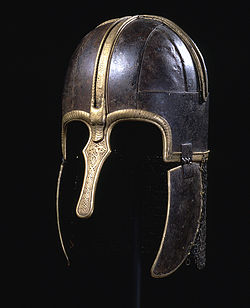
Casque de Coppergate

Le casque de Coppergate (Coppergate Helmet) ou casque d'York (York Helmet) est un casque anglo-saxon du VIIIe siècle retrouvé à York en 1982. Il est exposé au Yorkshire Museum.
Location Image
196 m

Yorkshire

Le Yorkshire /ˈjɔːk.ʃə(ɹ)/ (en français : comté d’York) est un comté traditionnel d'Angleterre. Ce comté est le plus vaste du Royaume-Uni et est administrativement divisé entre quatre comtés cérémoniaux : le Yorkshire du Nord, le Yorkshire de l'Ouest, le Yorkshire du Sud et le Yorkshire de l'Est. Malgré cela, le Yorkshire est toujours considéré comme une entité culturelle et géographique unique. La géographie du Yorkshire se caractérise par les grandes étendues protégées des Yorkshire Dales et des North York Moors, bien qu'il abrite également les grands centres urbains de Leeds et Sheffield, qui comptent parmi les plus peuplés d'Angleterre. La rose blanche est son emblème. Le comté même possède son propre hymne régional non officiel, écrit en 1876 : On Ilkla Moor Baht 'at, qui signifie dans le dialecte d'anglais local « Sur Ilkley Moor sans un chapeau ».