Location Image

Rotherham child sexual exploitation scandal

From the late 1980s until 2013, group-based child sexual exploitation affected an estimated 1,400 girls, commonly from care home backgrounds, in the town of Rotherham, South Yorkshire, England. Between 1997 and 2013, girls were abused by grooming gangs of predominantly Pakistani men. Researcher Angie Heal, who was hired by local officials and warned them about child exploitation occurring between 2002 and 2007, has since described it as the "biggest child protection scandal in UK history". In July 2025 investigations were being carried out into allegations that police officers had also raped child victims. Evidence of the abuse was first noted in the early 1990s, when care home managers investigated reports that children in their care were being picked up by taxi drivers. From at least 2001, multiple reports passed names of alleged perpetrators, several from one family, to the police and Rotherham Council. The first group conviction took place in 2010, when five British-Pakistani men were convicted of sexual offences against girls aged 12–16. From January 2011, The Times covered the issue, discovering that the abuse had been known by local authorities for over ten years. Following these reports, alongside the 2012 trial of the Rochdale child sex abuse ring, the House of Commons Home Affairs Committee conducted hearings and published its recommendations in six reports. Alexis Jay led an independent inquiry, known as the Jay report, which found multiple failings of the police and local authorities. Girls would be regularly taken in taxis to be abused, and were gang raped, forced to watch rape, threatened, and trafficked to other towns. The pregnancies, miscarriages, and terminations which resulted, caused further trauma to the victims. Most victims were White British girls but British Asian girls were also targeted. British Asian girls may have feared social isolation and dishonour had they reported their experiences. Failure to address the abuse has been linked to factors such as fear of racism allegations due to the perpetrators' ethnicity; sexist attitudes towards the mostly working-class victims; lack of a child-centred focus; a desire to protect the town's reputation; and lack of training and resources. Following the Jay report, Rotherham Council's chief executive, its director of children's services, as well as the Police and Crime Commissioner for South Yorkshire Police all resigned. The Independent Police Complaints Commission and the National Crime Agency both opened inquiries. The Rotherham Council was also investigated, and found to be "not fit for purpose". Nineteen men and two women were convicted in 2016 and 2017 of sexual offences in the town dating back to the late 1980s.

Lieux à Proximité Voir Menu
Location Image
177 m

District métropolitain de Rotherham

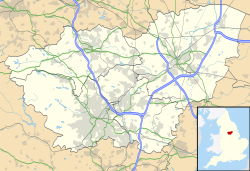
Le district métropolitain de Rotherham (Metropolitan Borough of Rotherham en anglais) est un district métropolitain du Yorkshire du Sud, en Angleterre. Il porte le nom de sa principale ville, Rotherham, et comprend également les villes de Maltby, Rawmarsh, Swinton et Wath-upon-Dearne.
Location Image
516 m

New York Stadium

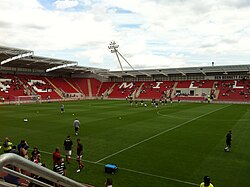
Le New York Stadium est un stade de football anglais situé à Rotherham dans le Yorkshire du Sud. C'est le stade du club de troisième division Rotherham United.
Location Image
1.1 km

Masbrough

Masbrough est une banlieue de Rotherham, dans le Yorkshire du Sud, en Angleterre. Cette banlieue (brough) située à l'ouest de Rotherham et sur la rive gauche de Don prit son nom au milieu de la révolution industrielle. Faisant historiquement partie de la West Riding of Yorkshire, Masbrough se trouve dans le District métropolitain de Rotherham, au centre-ville à 0,8 km à l'ouest du centre-ville de Rotherham. Une partie de ses terres au nord se trouve aujourd'hui dans le manoir de Kimberworth, l'autre banlieue ouest de Rotherham (on notera que Masbrough n'a été citée dans l'étude Domesday Book de 1086).
Location Image
1.2 km

Rotherham

Rotherham est une ville du Royaume-Uni, située dans le nord-est de l'Angleterre, appartenant au comté de Yorkshire. Elle compte 255 000 habitants (agglomération comprise, chiffres de 1997), ce qui la place au 26e rang des agglomérations anglaises. Depuis les années 1980, elle est le théâtre de l'affaire des viols collectifs de Rotherham. Rotherham a un passé important en tant que ville charbonnière ainsi que comme un contributeur majeur à l'industrie sidérurgique. Les industries traditionnelles comprenaient la fabrication du verre et la minoterie. La région environnant Rotherham est de nature plutôt urbaine, au relief doux, principalement constituée de collines peu élevées.
Location Image
2.4 km

Magna Science Adventure Centre

Le Magna Science Adventure Centre est un musée pédagogique principalement destiné aux enfants, situé dans le district de Templeborough (en) à Rotherham, en Angleterre. Il ouvre en avril 2001 dans les locaux de l'ancienne aciérie de Steel, Peech and Tozer (en). Les principales expositions sont réparties en quatre pavillons : la Terre, l'Air, le Feu et l'Eau. Le musée possède une aire de jeux extérieure appelée Sci-Tek et une aire de jeux aquatique appelée Aqua-Tek. Le site, long d'environ 500 m et haut de neuf étages, est souvent utilisé pour des mises en scène, des conférences et des concerts. Il accueille en moyenne 120 000 visiteurs par an. En 2006, le musée remporte le Enjoy England Gold Award for Business Tourism. Toutes les heures, l'attraction « The Big Melt » (« La Grande Fonte ») montre aux visiteurs le procédé de fabrication de l'acier dans le four à arc électrique de l'ancienne usine jusqu'à sa fermeture en 1993. En 2001, le Magna Science Adventure Centre reçoit le prix Stirling RIBA pour la reconversion innovante de l'espace de l'ancienne aciérie par les architectes Wilkinson Eyre, Mott MacDonald et Buro Happold. En l'an 50 ap. J.-C., ce lieu accueillait un camp romain.