

 English
 Français
Much Woolton (Liverpool ward)
Much Woolton is a historic area in Liverpool, located in Merseyside, England, and part of the Liverpool Wavertree parliamentary constituency. Much Woolton is bordered by the suburbs of Allerton to the south, Hunt's Cross to the southeast, and Childwall to the north. It was historically part of Lancashire before the creation of Merseyside. The area is known for its parks and landmarks such as the Church of St Peter and St Paul.
1. Overview
Much Woolton ward was an electoral division of Liverpool City Council covering the Woolton Village area, created in 1918 and abolished in the 1953 boundary review to merge into the expanded Woolton ward. Initially represented by a single councillor, its representation grew to two seats by 1920 and three seats by 1929, reflecting local population growth. Elections were suspended during World War II from 1939 to 1944 due to the conflict . Notable councillors included John Hinshaw, Robert Gladstone and Caroline Whiteley—the first woman to represent the ward . After abolition, Much Woolton’s territory formed part of Woolton ward (1953–2023) and, since 2023, falls within the new Much Woolton & Hunts Cross ward.
1. Elections


1. = 1919 =


1. = 1920 =


1. = 1921 =


1. = 1923 =


1. = 1924 =


1. = 1926 =


1. = 1927 =


1. = 1929 =


1. = 1930 =


1. = 1931 =


1. = 1932 =


1. = 1933 =


1. = 1934 =


1. = 1935 =


1. = 1936 =


1. = 1937 =


1. = 1938 =


1. = 1945 =


1. = 1946 =


1. = 1947 =


1. = 1949 =


1. = 1950 =


1. = 1951 =


1. = 1952 =
1918–1919 (1 seat): John Hinshaw (Conservative) served as the inaugural councillor, elected unopposed in both the 1918 and 1919 elections . 1920–1928 (2 seats): A second seat was added for the 1920 election, with Thomas Harrison (Conservative) joining John Hinshaw. Thereafter, representations included Robert Gladstone (National Liberal/Independent) alongside Harrison or John Reynolds (Conservative) in successive years . 1929 onwards (3 seats): A third councillor position was introduced in 1929; early holders included Charles Pethick (Conservative) alongside William Napier and John Reynolds. By 1932, Caroline Whiteley became the first woman to represent the ward, serving as an Independent councillor. No elections were held between 1939 and 1944 as a result of the Second World War, with sitting councillors’ terms extended under wartime legislation. Post‑war representation: After wartime suspension, Reginald Stewart (Conservative) held one of the three seats from 1945 until the ward’s abolition in 1952. Woolton ward (1953–2023): Covered an expanded area including former Much and Little Woolton, remaining a three‑member ward until 2023.
1. Historical and geography
The ward was officially established in 1918 to represent the Woolton Village area in the south‑east of Liverpool . Woolton Village itself stands approximately 2 miles north‑north‑east of Garston railway station and about 5 miles south‑east of Liverpool city centre, historically part of the Much Woolton township in the parish of Childwall, Lancashire. In its early years, Much Woolton ward covered the main thoroughfares and residential streets of the village, reflecting its role as a suburban district within the County Borough of Liverpool. The ward fell within the Liverpool Garston parliamentary constituency throughout its existence. The 1953 Liverpool City Council election implemented widespread boundary changes under the Local Government Act 1952, resulting in the deletion of several wards, including Much Woolton. In its place, Little Woolton and Much Woolton wards were combined to form the new Woolton ward, which elected three councillors from 7 May 1953.
1. References
Lieux à Proximité Voir Menu

12 Arnold Grove

251 Menlove Avenue
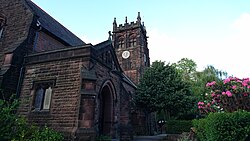
Église Saint-Pierre de Woolton

20 Forthlin Road
