

 English
 Français
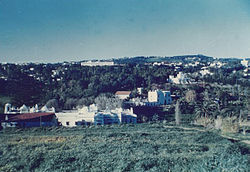
Hydra, Algiers
Hydra (Arabic: حيدرة), Located in the Bir Mourad Raïs district of Algiers, Algeria, Hydra is a well-known, affluent municipality and residential area. It is regarded as one of the wealthiest and most powerful neighborhoods in the nation and is situated atop the capital's heights. Lush greenery, winding hilly streets, and a distinctive fusion of contemporary luxury developments and Mediterranean villas from the colonial era define Hydra. The commune was created as a "garden city" during the French colonial era in order to provide a calm, elevated escape from the crowded lower Algiers Casbah and port areas. The majority of foreign embassies, including those of the US, France, and several European and Arab countries, are located there, making it Algeria's de facto diplomatic center. Due to the high-security, international atmosphere created by this diplomatic presence, Algerian business elite, high-ranking government officials, and expatriates prefer to live there. Hydra is an important commercial and economic hub in addition to being a desirable place to live. Many national and international companies, especially those in the energy, telecommunications, and finance industries, have their headquarters there. The area is also well-known for its lively, affluent way of life, with a high concentration of upscale shops, fine dining establishments, and hip cafes, especially in the vicinity of the Place de Hydra and the Sidi Yahia boulevard. Hydra retains its unique architectural character despite its quick modernization, striking a balance between the growth of modern glass-fronted office buildings and the preservation of its traditional white-washed villas.
1. History


1. = Early Origins and Ottoman Era =
The region that is now Hydra was mostly rural before the 19th century, with fertile plateaus and rocky, forested hills that overlooked the Bay of Algiers. The wealthy elite of the Casbah and Janissary leaders used the heights of Hydra as a summer retreat during the Ottoman era. To avoid the summer heat of the lower city, they constructed "djenanes"—stately villas encircled by gardens. The Château d'Hydra, an 18th-century palace that eventually gave the district its name and currently houses the local government, is one of the most well-known relics of this era.
1. = French Colonial Development =
Hydra was incorporated into the colonial urban plan after the French conquest in 1830. Urban planners envisioned the region as a "Cité-jardin" (Garden City) at the beginning of the 20th century. Hydra was built with broad, meandering roads that followed the topography, in contrast to the dense, Haussmann-style boulevards found in central Algiers (Alger-Centre). The neighborhood saw a boom in "Neo-Moorish" and Modernist villa construction between 1930 and 1950. High-ranking French administrators and the wealthy settlers known as the Grands Colons began to favor it as a place to live. Because they controlled the city's entry points, the heights of Hydra were strategically important during the Algerian War of Independence. Until 1962, the region was a strictly controlled European enclave.
1. = Post-Independence and Modern Era =
The population of Hydra changed quickly following Algeria's independence in 1962. The new Algerian government officials and the expanding diplomatic corps were housed in the French-owned villas. Hydra experienced a second metamorphosis by the 1990s and early 2000s. Once a peaceful residential haven, it is now a thriving business and commercial center. Hydra became the capital's economic center after residential villas were transformed into corporate offices and the Sidi Yahia commercial artery was built nearby. It continues to be Algeria's priciest real estate market today, signifying the nation's post-colonial modernization and assimilation into the international diplomatic community.
1. Education
Scuola Italiana Roma di Algeri, a private Italian international school, is in Hydra. It was formerly in another campus in Hydra. The École japonaise d'Alger (アルジェ日本人学校, Aruje Nihonjin Gakkō), a Japanese international school, was previously located in Hydra. It opened in 1977. The Japanese government designated the school on January 11, 1978 (Showa 53). In 1984 the school had 22 kindergarten students and 35 students in grades 1–9, in elementary and junior high school. It temporarily closed in 1993. The Japanese government certified it on January 12, 1994 (Heisei 6), and revoked the certification on March 29, 2002 (Heisei 14)
1. = Situation =
Hydra is about 6 km (3.7 mi) south west of Algiers city centre.
1. Notable people
Nahla El Fatiha Naili, Algerian sculptor.
1. References
Lieux à Proximité Voir Menu

Hydra (Alger)


Le Temps d'Algérie

El Adjwaa TV
