Dalgarnock, Dalgarno, Dalgarnoc was an ancient parish and a once considerably sized village in the Nithsdale area of Dumfries and Galloway, Scotland, south of Sanquhar and north of Dumfries that enclosed the parish of Closeburn but was annexed to Closeburn in 1606 following the Reformation, separated again in 1648 and finally re-united in 1697, as part of the process that established the Presbyterian Church of Scotland. It was a burgh of regality bordering the River Nith and Cample Water and held a popular market-tryst or fair from medieval times until 1601 when the Earl of Queensberry had them transferred to Thornhill, commemorated in song by Robert Burns, shortly before its demise and now only a remote churchyard remains at a once busy site.

Lieux à Proximité Voir Menu
Location Image
1.7 km

Thornhill (Dumfries and Galloway)

Thornhill est une ville située dans le Dumfries and Galloway, en Écosse.
Location Image
2.2 km

Closeburn (Dumfries and Galloway)

Closeburn est un village situé dans le Dumfries and Galloway, en Écosse.
Location Image
3.3 km

Penpont

Penpont est un village situé dans le Dumfries and Galloway, en Écosse.
Location Image
4.3 km

Carronbridge

Carronbridge est un village situé dans le Dumfries and Galloway, en Écosse.
Location Image
6.2 km

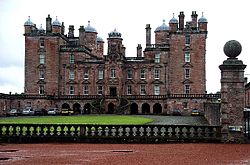
Château de Drumlanrig

Le château de Drumlanrig est un château écossais situé dans le district de Dumfries and Galloway et classé dans la liste des monuments historiques du Royaume-Uni. Il est la propriété du duc de Buccleuch. Le bâtiment, construit entre 1679 et 1689 en grès rose, est typique de l'architecture Renaissance de la fin du XVIIe siècle. Il a été édifié à l'emplacement d'une ancienne forteresse appartenant aux Douglas et surplombant Nith Valley. Le château actuel dispose de 120 pièces, 17 tourelles et quatre tours. Il abrite une des deux versions originales du tableau La Madone aux fuseaux peint par Léonard de Vinci et son atelier, volé en 2003, mais retrouvé et restitué en 2007.