

 English
 Français

Norton Priory
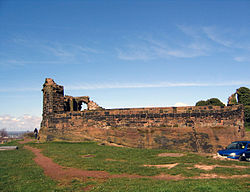
Norton Priory is a historic site in Norton, Runcorn, Cheshire, England, comprising the remains of an abbey complex dating from the 12th to 16th centuries, and an 18th-century country house; it is now a museum. The remains are a scheduled ancient monument and are recorded in the National Heritage List for England as a designated Grade I listed building. They are considered to be the most important monastic remains in Cheshire. The priory was established as an Augustinian foundation in the 12th century, and was raised to the status of an abbey in 1391. The abbey was closed in 1536, as part of the dissolution of the monasteries. Nine years later the surviving structures, together with the manor of Norton, were purchased by Sir Richard Brooke, who built a Tudor house on the site, incorporating part of the abbey. This was replaced in the 18th century by a Georgian house. The Brooke family left the house in 1921, and it was partially demolished in 1928. In 1966 the site was given in trust for the use of the general public. Excavation of the site began in 1971, and became the largest to be carried out by modern methods on any European monastic site. It revealed the foundations and lower parts of the walls of the monastery buildings and the abbey church. Important finds included: a Norman doorway; a finely carved arcade; a floor of mosaic tiles, the largest floor area of this type to be found in any modern excavation; the remains of the kiln where the tiles were fired; a bell casting pit used for casting the bell; and a large medieval statue of Saint Christopher. The priory was opened to the public as a visitor attraction in the 1970s. The 42-acre site, run by an independent charitable trust, includes a museum, the excavated ruins, and the surrounding garden and woodland. In 1984 the separate walled garden was redesigned and opened to the public. Norton Priory offers a programme of events, exhibitions, educational courses, and outreach projects. In August 2016, a larger and much extended museum opened.
Lieux à Proximité Voir Menu
Prieuré de Norton

Château de Halton
Runcorn
