85–89 Micklegate is a Grade II* listed mediaeval building in the city centre of York, England. The building was constructed in about 1500, in the grounds of Micklegate Priory and facing onto Micklegate, one of the main streets in York. The building does not appear on John Speed's generally accurate map of the city in 1610, which has led to an argument that it was constructed after this date; but stylistic features, such as the double-jettying on the front and the crown post roof, point to an earlier date, and Speed's omission may have been in order to show the buildings associated with the priory more clearly. It is likely that the building was constructed to be rented out and provide more income for the priory. Its division into three properties is original, and originally each property had a single room on each of the three floors. Stairs appear to have originally been in annexes at the back of the buildings, but about 1600 a wing was added at the back of No. 89, while in the 18th century one was added to No. 87. Around 1660, the building was rendered to improve its weatherproofing. From at least the early 18th century, the properties were occupied by butchers. The current ground floor shop windows are Victorian. The building was listed in 1954, but by 1967 it was in poor condition. It was restored by the Ings Property Company, the process including the removal of the external rendering, and it is now owned by the York Conservation Trust. The ground floor is used by shops, with apartments above.

Lieux à Proximité Voir Menu
Location Image
298 m

Gare d'York

La gare d'York est une gare ferroviaire du Royaume-Uni, située à York dans le nord de l'Angleterre.
Location Image
408 m

Guildhall (York)

Le Guildhall de York est un bâtiment du XVe siècle, édifice destiné à abriter des corporations ou guildes. En raison des graves dommages causés par une attaque aérienne allemande dans le cadre du Blitz, le bâtiment actuel est en grande partie une reconstruction moderne qui a ouvert ses portes en 1960. Le grand hall intérieur a survécu à l'attaque intacte, avec des panneaux et une histoire de la ville de York sur une fenêtre en verre. Le Guildhall a été le théâtre de nombreux événements de l'histoire britannique.
Location Image
428 m

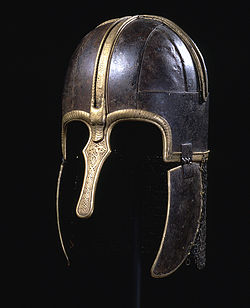
Casque de Coppergate

Le casque de Coppergate (Coppergate Helmet) ou casque d'York (York Helmet) est un casque anglo-saxon du VIIIe siècle retrouvé à York en 1982. Il est exposé au Yorkshire Museum.
Location Image
441 m

Yorkshire

Le Yorkshire /ˈjɔːk.ʃə(ɹ)/ (en français : comté d’York) est un comté traditionnel d'Angleterre. Ce comté est le plus vaste du Royaume-Uni et est administrativement divisé entre quatre comtés cérémoniaux : le Yorkshire du Nord, le Yorkshire de l'Ouest, le Yorkshire du Sud et le Yorkshire de l'Est. Malgré cela, le Yorkshire est toujours considéré comme une entité culturelle et géographique unique. La géographie du Yorkshire se caractérise par les grandes étendues protégées des Yorkshire Dales et des North York Moors, bien qu'il abrite également les grands centres urbains de Leeds et Sheffield, qui comptent parmi les plus peuplés d'Angleterre. La rose blanche est son emblème. Le comté même possède son propre hymne régional non officiel, écrit en 1876 : On Ilkla Moor Baht 'at, qui signifie dans le dialecte d'anglais local « Sur Ilkley Moor sans un chapeau ».
Location Image
529 m

Abbaye Sainte-Marie d'York

L’abbaye Sainte-Marie d’York est une ancienne abbaye de l’Ordre bénédictin, datée du XIe siècle, située dans la ville britannique d’York, dans le comté anglais du Yorkshire du Nord. Ses ruines se trouvent dans les jardins du Museum d’York.