

 English
 Français

Battery Park Underpass
The Battery Park Underpass is a vehicular tunnel at the southernmost tip of Manhattan, New York City, near the neighborhoods of South Ferry and Battery Park City. The tunnel connects FDR Drive, which runs along the east side of Manhattan Island, with the West Side Highway (New York State Route 9A, or NY 9A), which runs along the island's west side. Opened in 1951, it was the second section of FDR Drive to be completed. The underpass crosses beneath the Battery (formerly Battery Park) and the approach to the Brooklyn–Battery Tunnel.
1. History
The underpass started construction in 1949 and opened to the public on April 10, 1951. The underpass runs underneath the Battery, connecting the West Side Highway to the South Street Viaduct with two lanes of traffic in each direction. The project was completed shortly after the opening of the Brooklyn-Battery Tunnel in 1950, and provides direct access between the West Side Highway and FDR Drive. In 2005, during the reconstruction of NY 9A, the western end of the Battery Park Underpass was extended to the north by about 25 feet (7.6 m) to provide a U-turn lane and amenities for pedestrians and bicyclists. During Hurricane Sandy, the tunnel was filled with seawater and required major repairs.
1. = Plans for extension =
There have been three proposals to extend the tunnel north on the FDR Drive side.
In 1971, it was suggested that the South Street Viaduct be turned into a tunnel, essentially extending the underpass north to the Brooklyn Bridge In 2002, the Downtown Alliance, the local business improvement district, called for a 350-foot (105 m) extension to the underpass to create a plaza in front of the Battery Maritime Building. The estimated cost was $70 million. In 2005, Mayor Michael Bloomberg also called for an extension of the underpass near the Battery Maritime Building as part of a plan to rehabilitate the South Street Viaduct.
1. References


1. External links
FDR at NYCRoads.com
Lieux à Proximité Voir Menu

Castle Clinton National Monument

The Battery (Manhattan)
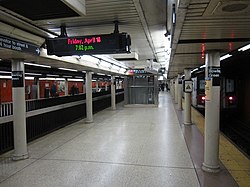
Bowling Green (métro de New York)

City Pier A
