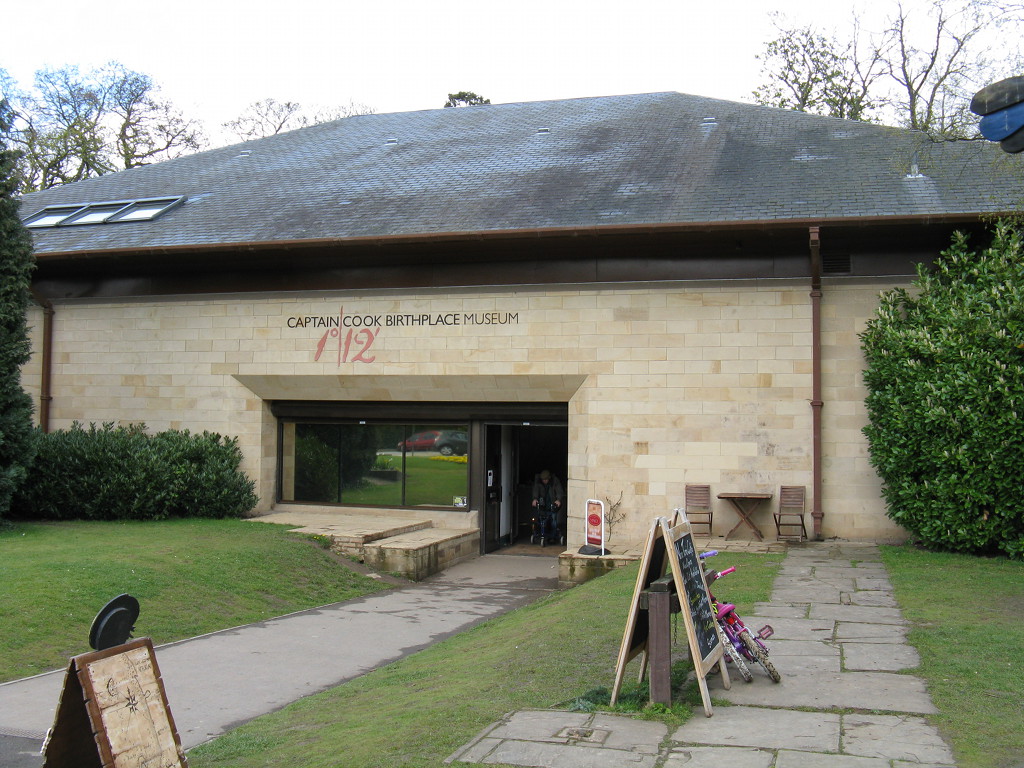
Captain Cook Birthplace Museum is a public museum located in Stewart Park in Marton, Middlesbrough within the borough of Middlesbrough and the ceremonial county of North Yorkshire, England. It is one of two institutions managed by Middlesbrough Council, along with the Dorman Museum. The museum opened on 28 October 1978, the 250th anniversary of the birth in the same spot of British naval explorer and circumnavigator Captain James Cook. It is a biographical museum that surveys Cook's life and journeys.

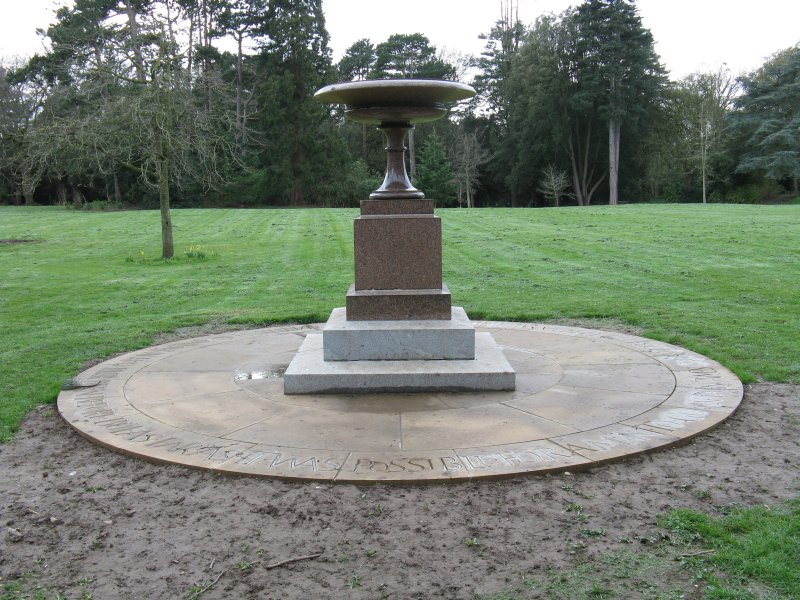
Prior to the museum's establishment, there was a granite urn in Stewart Park commemorating the grounds of Marton Hall, Cook's residence. The urn was erected in the 1850s by local industrialist and mayor Henry Bolckow. Marton Hall was destroyed by fire in 1960 during demolition, with only a stone loggia surviving. The museum itself comprises some of the modest Cook-related collections outside of the ownership of the major national and international collections. They include household items and a speculative reconstruction of Cook's birthplace cottage that was swept away amid the landscaping process for the Marton Lodge, home to the Rudd family, which stood here until 1793. There are a series of interactive displays and temporary travelling exhibitions as well as a cafe, gift shop, education suite and resources and archive room. A second major refurbishment was undertaken in 1998, which included the commission of two modern works of art by Turner Prize nominee Simon Patterson. The museum was reopened to the public by Sir David Attenborough. Outside the museum is an information board in deference to Marton's position as the starting point for the Captain Cook Country Tour, a product of the Cleveland-wide Captain Cook Tourism Association.

1. References


1. External links

Official website

Lieux à Proximité Voir Menu
Location Image
1.7 km

James Cook University Hospital

L'hôpital universitaire James Cook, également connu le nom James Cook University Hospital est un hôpital de référence tertiaire, un hôpital général de district et un important centre de traumatologie à Middlesbrough, dans le North Yorkshire, en Angleterre, situé sur l'A172 (Marton Road). Disposant de 1 024 lits, il couvre la plupart des spécialités et fait partie du South Tees Hospitals NHS Foundation Trust, avec l' hôpital Friarage de Northallerton.
Location Image
1.9 km

Cathédrale de Middlesbrough

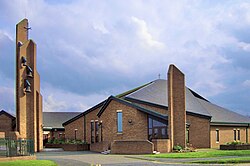
La cathédrale de Middlesbrough (en anglais : Middlesbrough Cathedral) ou cathédrale Sainte-Marie (Saint Mary's Cathedral), est une cathédrale catholique romaine située à Middlesbrough, Angleterre. Elle est le siège du diocèse de Middlesbrough, dans la province ecclésiastique de Liverpool. La cathédrale est un bâtiment moderne semblable à certains égards à la cathédrale catholique de Liverpool. Elle comprend le sanctuaire, la nef, la chapelle du Saint Sacrement, la sacristie, la salle paroissiale, le narthex (porche d'entrée) et le clocher. La première pierre a été bénie le dimanche 3 novembre 1985 par Augustin Harris, évêque de Middlesbrough. L'architecte d'origine était Frank Swainston, décédé juste après que le plan fut validé. Son assistant, Peter Fenton, a élaboré les plans détaillés et a conçu le mobilier.
Location Image
2.0 km

Nunthorpe

Nunthorpe est un village et une paroisse civile du Yorkshire du Nord, en Angleterre.
Location Image
4.0 km

Newby (Hambleton)

Newby est un village et une paroisse civile du Yorkshire du Nord, en Angleterre.
Location Image
4.1 km

Ayresome Park

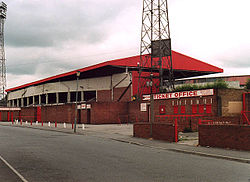
Ayresome Park était un stade de football localisé à Middlesbrough (Angleterre). C'était l'enceinte du club de Middlesbrough Football Club entre 1903 et 1995. Ce stade de 24 000 places fut inauguré le 1er septembre 1903 par un match Middlesbrough Football Club-Newcastle United Football Club. Le record d'affluence est de 53 802 spectateurs le 7 décembre 1904 pour un match de championnat Middlesbrough Football Club-Sunderland AFC. Le terrain avait été équipé d'un système d'éclairage pour les matchs en nocturne en octobre 1957. Middlesbrough Football Club fit ses adieux à ce stade le 30 avril 1995 à l'occasion d'un match face à Luton Town FC. L'attaquant de Middlesbrough John Hendrie inscrivit à cette occasion le dernier but marqué dans ce stade. Un match d'hommage à Steve Pears s'y déroula le 16 mai 1995 devant plus de 20 000 spectateurs. Middlesbrough Football Club évolue depuis lors au Riverside Stadium.