English
 Français

Thornhill, Dumfries and Galloway
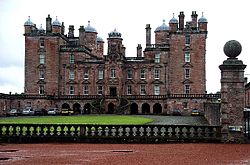
Thornhill (Scottish Gaelic: Bàrr na Driseig) is a village in the Mid Nithsdale area of Dumfries and Galloway, Scotland, south of Sanquhar and north of Dumfries on the main A76 road. Thornhill sits in the Nithsdale valley with the Carsphairn and Scaur range to the west and the Lowther hills to the east. It was initially a small village, planned and built in 1717 on the Queensberry Estate on the road linking Dumfries to Glasgow. The Earl of Queensberry initially named the village 'New Dalgarnock' however the name did not achieve popular approval. The village is primarily comprised a grid pattern with the main street of Drumlanrig Street (the A76), East and West Morton Streets, New Street, Townhead Street Station Road, Corstorphine road, and Gill Road (the A702). The village is near Drumlanrig Castle, a 17th-century turreted mansion once the ancient Douglas stronghold, now home to the Duke of Buccleuch and Queensberry. The grounds contain Tibbers Castle which was founded in the 12th or 13th century. The most recently published Census data from 2001 recorded the population at 1,512 inhabitants.
Lieux à Proximité Voir Menu

Thornhill (Dumfries and Galloway)


Closeburn (Dumfries and Galloway)