


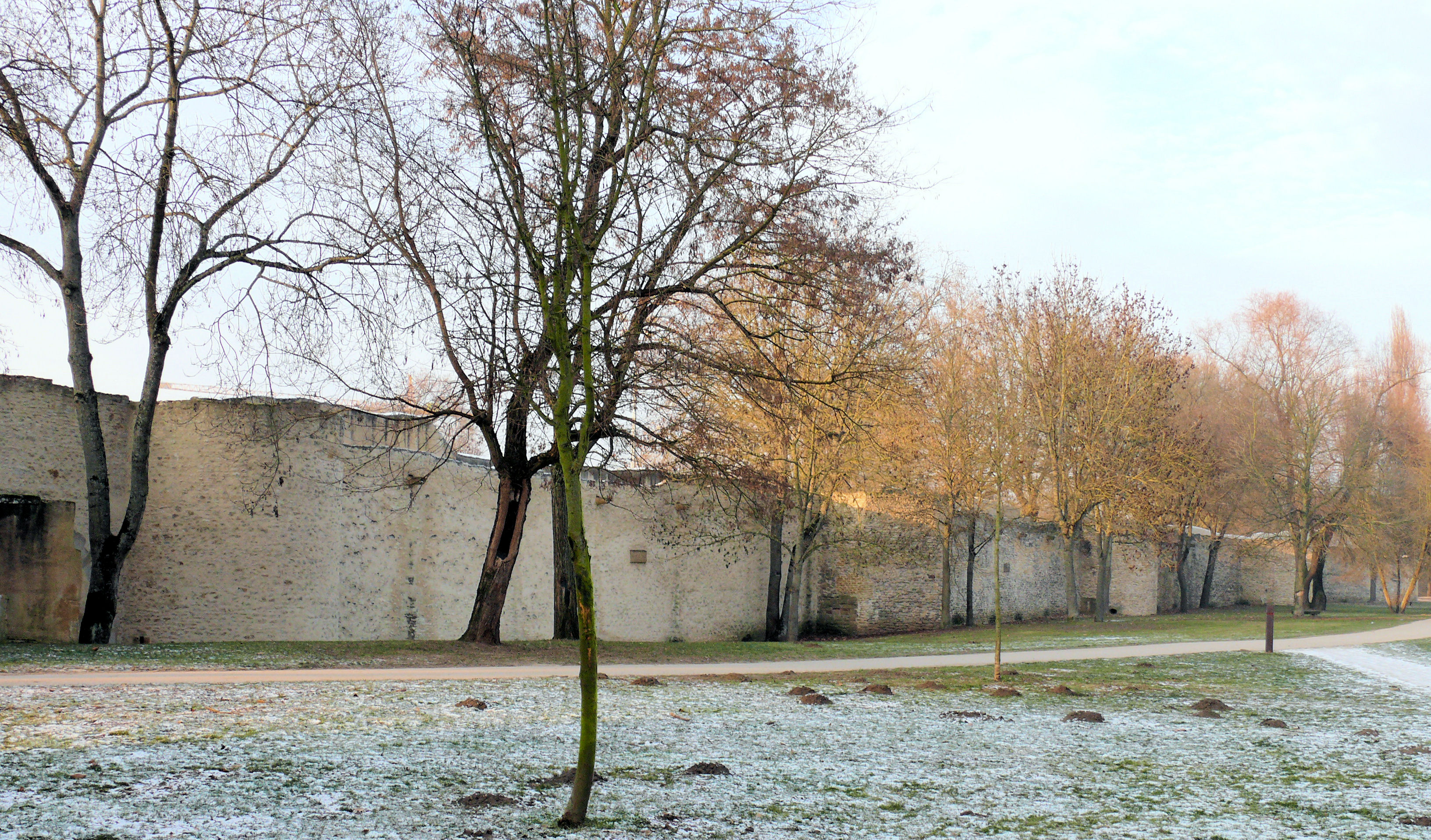
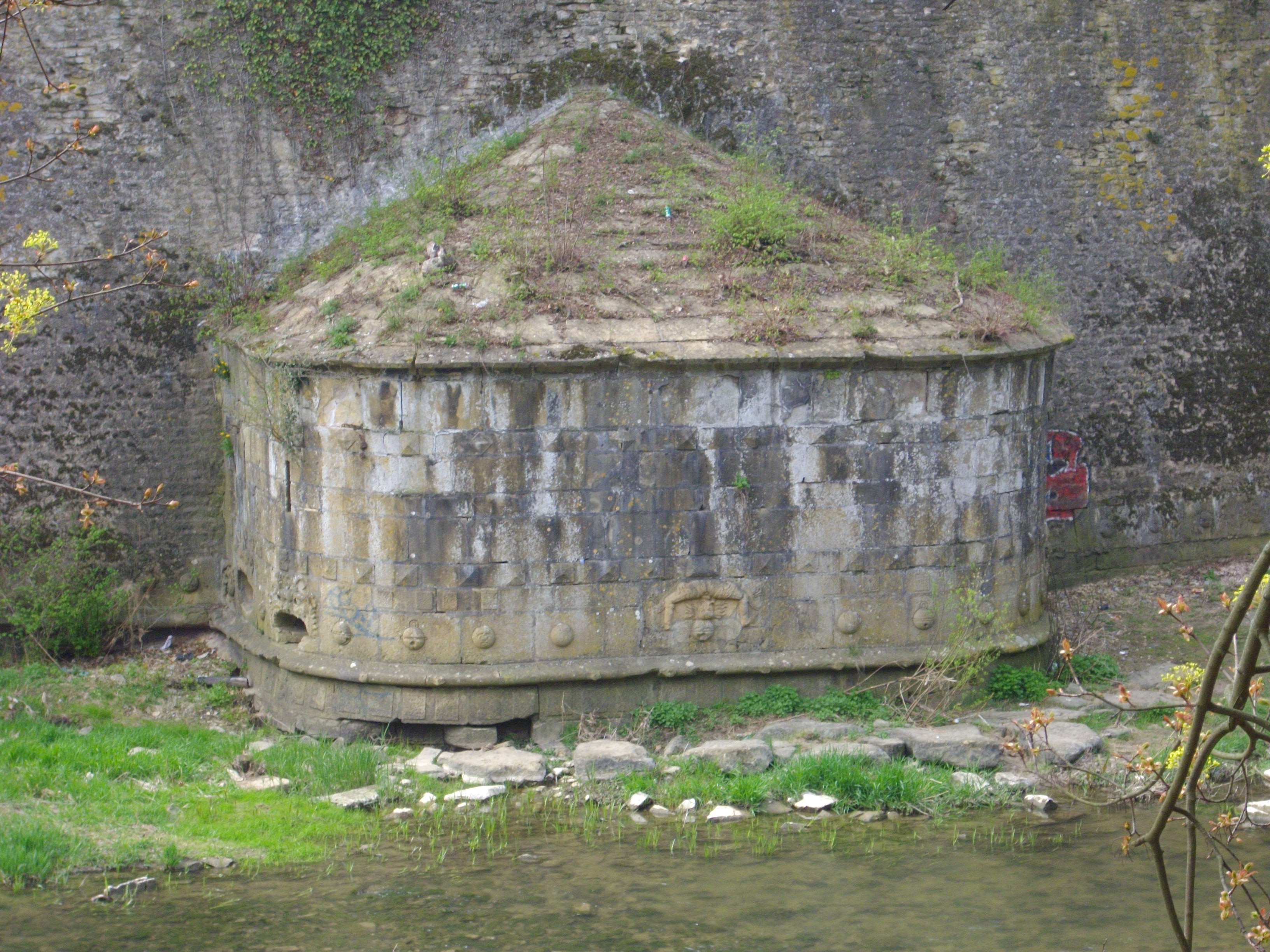
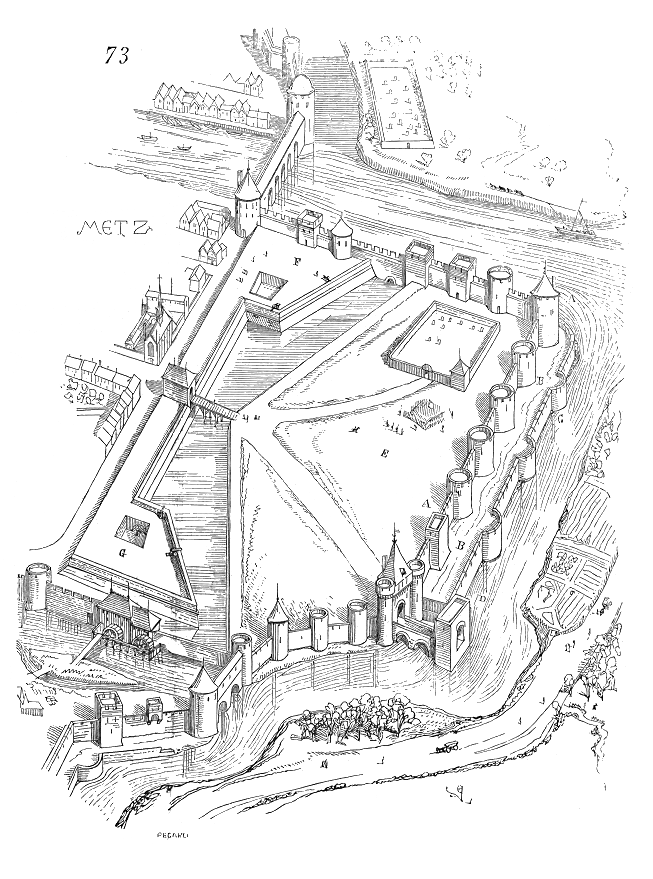
Les remparts médiévaux sont les premières fortifications de Metz à succéder aux remparts romains. Construits au XIIIe siècle, ils se composaient à l’époque d’un mur d’enceinte de sept kilomètres avec trente-huit tours de guet et dix-huit portes.
Gallery




Sponsored
Location
1 explorer visited this place

10 m
The fortifications of Metz, a city in northeastern France, are extensive, due to the city's strategic position near the border of France and Germany. After the Franco-Prussian War of 1870, the area was annexed by the newly created German Empire in 1871 by the Treaty of Frankfurt and became the Reichsland Alsace–Lorraine. The German Army decided to build a fortress line from Mulhouse to Luxembourg to protect their new territories. The centerpiece of this line was the Moselstellung between Metz and Thionville, in Lorraine.

10 m
The Germans' Gate is a medieval bridge castle and city gate in Metz, France. It is "a relic of the medieval fortifications, with two 13th century round towers and two gun bastions of the 15th century." It is a monument historique of France.
468 m
The cantons of Metz are administrative divisions of the Moselle department, in northeastern France. Since the French canton reorganisation which came into effect in March 2015, the city of Metz is subdivided into 3 cantons. Their seat is in Metz.

468 m
Eurométropole de Metz is the métropole, an intercommunal structure, centred on the city of Metz. It is located in the Moselle department, in the Grand Est region, northeastern France. It was created as a communauté d'agglomération in January 2014, and became a métropole in January 2018. Its area is 312.8 km2. Its population was 224,863 in 2019.
468 m
The County of Metz originated from the frankish Metzgau. In the second half of the 9th century it went to the Gerhardiner, which held at the same time the County of Paris.
Over the Gerhardiner went the County—perhaps even in male lineage—to the Matfriede, which furthermore in 1047 received the title of Duke in Lorraine, namely Gerard IV, Duke of Alsace, Seigneur of Châtenois.
The County of Metz was eventually merged into the Bishopric of Metz.
From 985 the city of Metz was a Free Imperial City of the German Holy Roman Empire.
Book your tour near
Enceinte médiévale de Metz
Book Now
4.3
in partnership with
GetYourGuide.com