


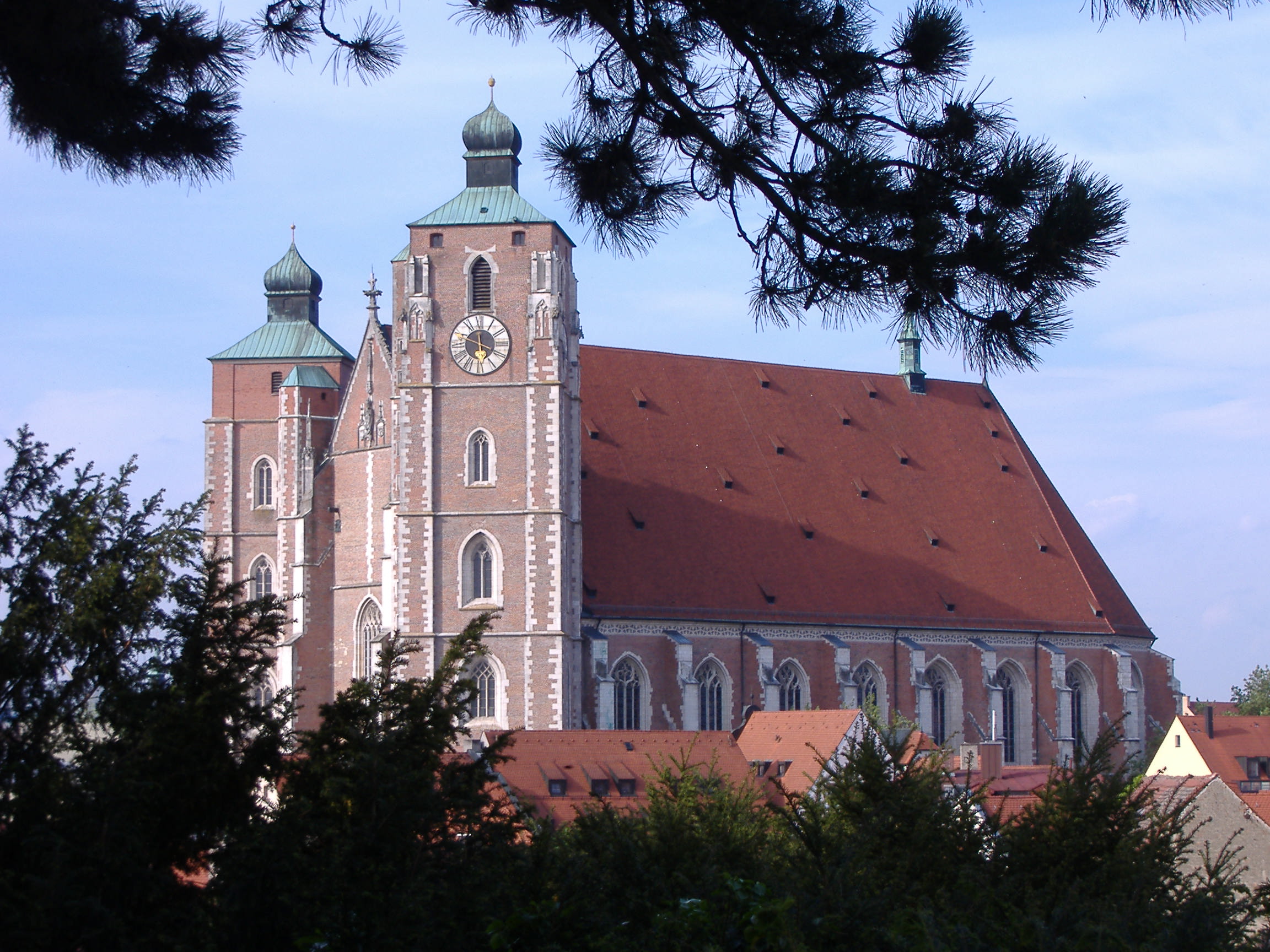
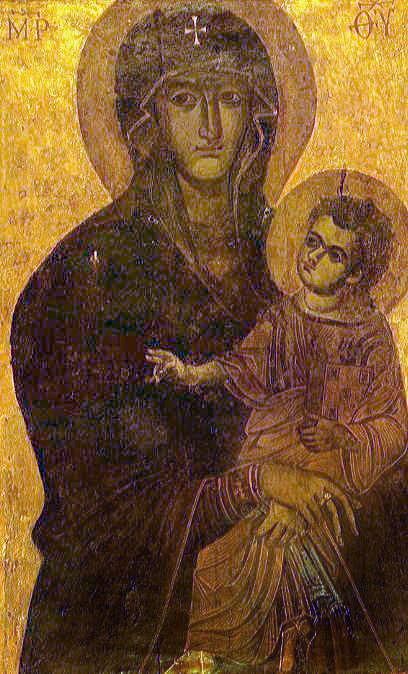
L'église Notre-Dame (en allemand Zur Schönen Unserer Lieben Frau ou Liebfrauenmünster) est une église catholique paroissiale (de la paroisse Obere Pfarr) à Ingolstadt en Bavière, dépendant du diocèse d'Eichstätt. C'est une église-halle en style style gothique tardif du XVe siècle, remarquable par le décalage de ses deux tours restées inachevées qui sont tournées vers l'intérieur, et par la richesse des objets intérieurs.
Gallery






Sponsored
Location
1 explorer visited this place

117 m
The Jesuit College of Ingolstadt was a Jesuit school in Ingolstadt, in the Duchy and Electorate of Bavaria, founded in 1556, that operated until the suppression of the Jesuit Order in 1773. The college was the headquarters of the Jesuits in Germany, and became a center of the Counter-Reformation. Many of its members taught at the University of Ingolstadt.
190 m
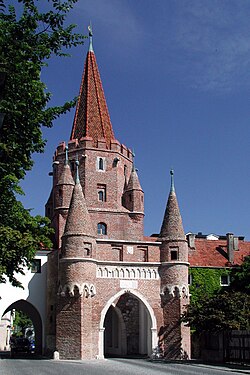
The Kreuztor, built in 1385, is the western gateway to the medieval city center of Ingolstadt. The tower's name is derived from the leper house belonging to the Church of the Holy Cross, which stood to the west of the city walls until its destruction in the Schmalkaldic War in 1546.
This seven-turreted guard tower was part of Ingolstadt's second city wall. Of the city's four principal gates, only this and the Feldkirchnertor survive today, the latter as part of the castle complex.
340 m
The WFI – Ingolstadt School of Management is a leading German business school and the faculty of business administration and economics of the Catholic University of Eichstätt-Ingolstadt. The WFI is one of Germany's foremost business schools and the modern successor of Bavaria's first university, i.e. the ancient University of Ingolstadt. It is also Germany's only Catholic business school and specifically marked with compulsory courses in economic and business ethics and an obligatory choice of a foreign commercial language course.

355 m
Ingolstadt is an independent city on the Danube, in Upper Bavaria, with 142,308 inhabitants. Around half a million people live in the metropolitan area. Ingolstadt is the second largest city in Upper Bavaria after Munich and the fifth largest city in Bavaria after Munich, Nuremberg, Augsburg and Regensburg. The city passed the mark of 100,000 inhabitants in 1989 and has since been one of the major cities in Germany. After Regensburg, Ingolstadt is the second largest German city on the Danube.
The city was first mentioned in 806. In the late Middle Ages, the city was one of the capitals of the Bavarian duchies alongside Munich, Landshut and Straubing, which is reflected in the architecture. On 13 March 1472 Ingolstadt became the seat of the first university in Bavaria, which later distinguished itself as the center of the Counter-Reformation. The freethinking Illuminati order was also founded here in 1776. The city was also a Bavarian state fortress for more than 400 years. The historic old town has been preserved.
There are two colleges in the city. The place is one of the three regional centers in Bavaria. The city is mainly characterized by the manufacturing industry, such as automobile and mechanical engineering. The unemployment rate was 3.3% in February 2022.
