

 English
 Français
Isle of Bute
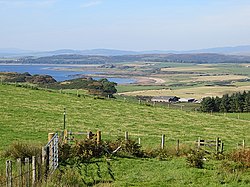
The Isle of Bute (Scots: Buit; Scottish Gaelic: Eilean Bhòid or An t-Eilean Bòdach), known as Bute (), is an island in the Firth of Clyde in Scotland. It is divided into highland and lowland areas by the Highland Boundary Fault. Formerly a constituent island of the larger County of Bute, it is now part of the council area of Argyll and Bute. Bute's resident population was 6,498 in 2011, a decline of just over 10% from the figure of 7,228 recorded in 2001 against a background of Scottish island populations as a whole growing by 4% to 103,702 for the same period.
Nearby Places View Menu
2.0 km
West Island Way
The West Island Way is a waymarked long distance footpath on the Isle of Bute. The route opened in September 2000 as part of Bute's millennium celebrations, and was the first waymarked long distance route on a Scottish island. As of 2018 it was estimated that between six and seven thousand people were using the trail each year. The route is designated as one of Scotland's Great Trails by NatureScot.

2.1 km
Dhu Loch
Dhu Loch (also known as "Loch Dhu") is an impounding reservoir, located 1 kilometre directly west of the much larger Loch Fad and 5 kilometres south west of Rothesay. The loch is part of the water supply system for the town. The earthen dam is 8.1 metres high and was completed in 1905.

2.2 km
Kilmory Castle, Bute
Kilmory Castle (Kilmorie Castle, Crowner's Castle) is the remains of a 15th-century castle at Meikle Kilmory, Isle of Bute, Scotland. The castle was the residence of the Jamiesons of Kilmorie, and was already a ruin in the 18th century. The Jamiesons of Kilmorie were the hereditary coroners of Bute. The ruins are a secular listed building.

3.0 km
Kirk Dam
Kirk Dam is an impounding dam, located 1.5 kilometres south of Rothesay, and is separated by a causeway from the much larger Loch Fad to the south-west. It was built to provide water to the cotton mills of the town, and is now the habitat for a variety of marshland birds. The earthfill dam is 6 metres high and records show it was constructed in the late 18th century.