


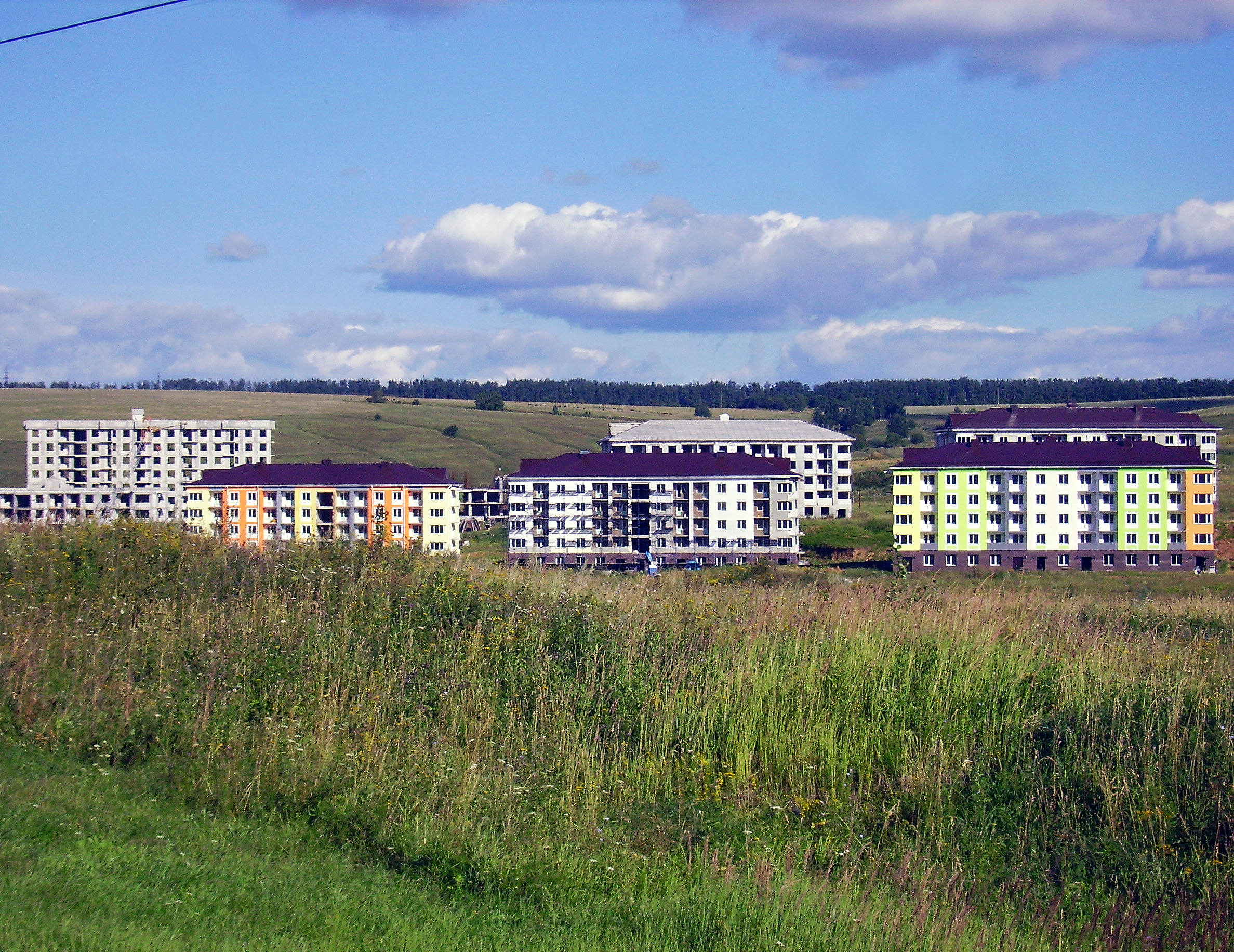
L'arrondissement de l'Oka (russe : Прио́кский райо́н, Prioksky raïon) est l'un des huit arrondissements de la ville de Nijni Novgorod en Russie. Il se trouve dans la partie dite Nagorodny de la ville.
Gallery




Sponsored
Location
1 explorer visited this place

608 m
Prioksky City District is one of the eight districts of the city of Nizhny Novgorod, Russia. It is located in the upper part of the city on the high right bank of the Oka River and has a land border only with Sovetsky City District along Meditsinskaya Street. It is also connected by the Myza Bridge with Avtozavodsky City District in the lower part of Nizhny Novgorod across the Oka. Population: 102,652 ; 90,410 ; 96,043 ; 106,206 .
The district local government headquarters are located in the district center on 40 Let Oktyabrya Street.
The district is essentially residential but it has some industrial enterprises. The latter include radio, electric, and electronics state-owned Frunze Plant as well as JSC Thermal and NITEL, which are in the same line of business. A number of scientific institutions are also located in the district. Their scope of interests are also connected with telecommunications and radar applications. A lot of small private-owned enterprises offer the service and employment opportunities for the residents of the district and the entire city.
Prioksky district is the greenest in Nizhny Novgorod city, green area occupied about 904.3 hectares.

1.5 km
Nitel Joint-Stock Company is a company based in Nizhniy Novgorod, Russia.
NITEL is among the world's leading producers of VHF air surveillance and surface-to-air missile target acquisition radars; its radars have counter-stealth features. Also a major manufacturer of television receivers, NITEL produces about 300,000 sets annually, 90 percent of which are color TVs. In the early 1990s, NITEL's civil production reportedly constituted 70 percent of its total output.

4.2 km
Fedyakovo is a rural locality in Kstovsky District of Nizhny Novgorod Oblast, Russia, located just a few kilometers outside of the Nizhny Novgorod's city line, with the apartment blocks on the south-eastern edge of the city being easily visible from the village.
The village church is that of Transfiguration of the Lord.

4.8 km
Operation Eisenhammer was a planned strategic bombing operation against power generators near Moscow and Gorky in the Soviet Union which was planned by Nazi Germany during World War II but eventually abandoned.
The plan of the operation was created in 1943 by Professor Heinrich Steinmann, an official at the Reich Air Ministry. A bombing raid was to destroy twelve turbines in water and steam power-plants near Moscow, Gorky, Tula, Stalinogorsk and under the Rybinsk Reservoir, as well as to attack certain substations, transmission lines and factories. If the attack were to succeed in destroying just two thirds of the turbines it would have knocked out about 75 percent of the power used by the Soviet defence industry. Only two smaller energy centers behind the Urals and in the Soviet Far East would have been left intact. At this time, the Soviet Union had no turbine manufacturing capabilities and the only repair facility had been heavily damaged.
To accomplish the goal Mistel long-range bombers were to be employed. To destroy water turbines, special floating mines called Sommerballon were to be dropped into the water and then pulled by the current straight into the turbines.
Due to the shortage of bombers and fuel, technical problems with the floating mine, and the Red Army overrunning advance bases, the plan was postponed repeatedly. In February 1945, however, Eisenhammer was resurrected, and Kampfgeschwader 200 assembled scout planes and about 100 Mistels near Berlin and waited for favourable weather to attack the plants around Moscow. After a US air raid on the primary Rechlin Erprobungstelle military aviation test headquarters facility, which destroyed 18 Mistels, the plan was postponed again and shortly afterwards finally dropped.
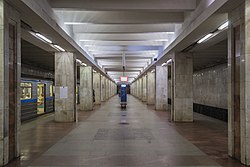
5.0 km
Proletarskaya is a station on the Avtozavodskaya line of the Nizhny Novgorod Metro. It opened on 20 November 1985 and was one of six initial stations of the Metro.
It is in the Leninsky district of Nizhny Novgorod, Russia. From its opening until 1987, when Avtozavodskaya station opened, it was the southern terminus of the line.
Situation
L'arrondissement de l'Oka se trouve dans la partie dite Nagorodny, la ville haute, sur la rive droite de l'Oka.