


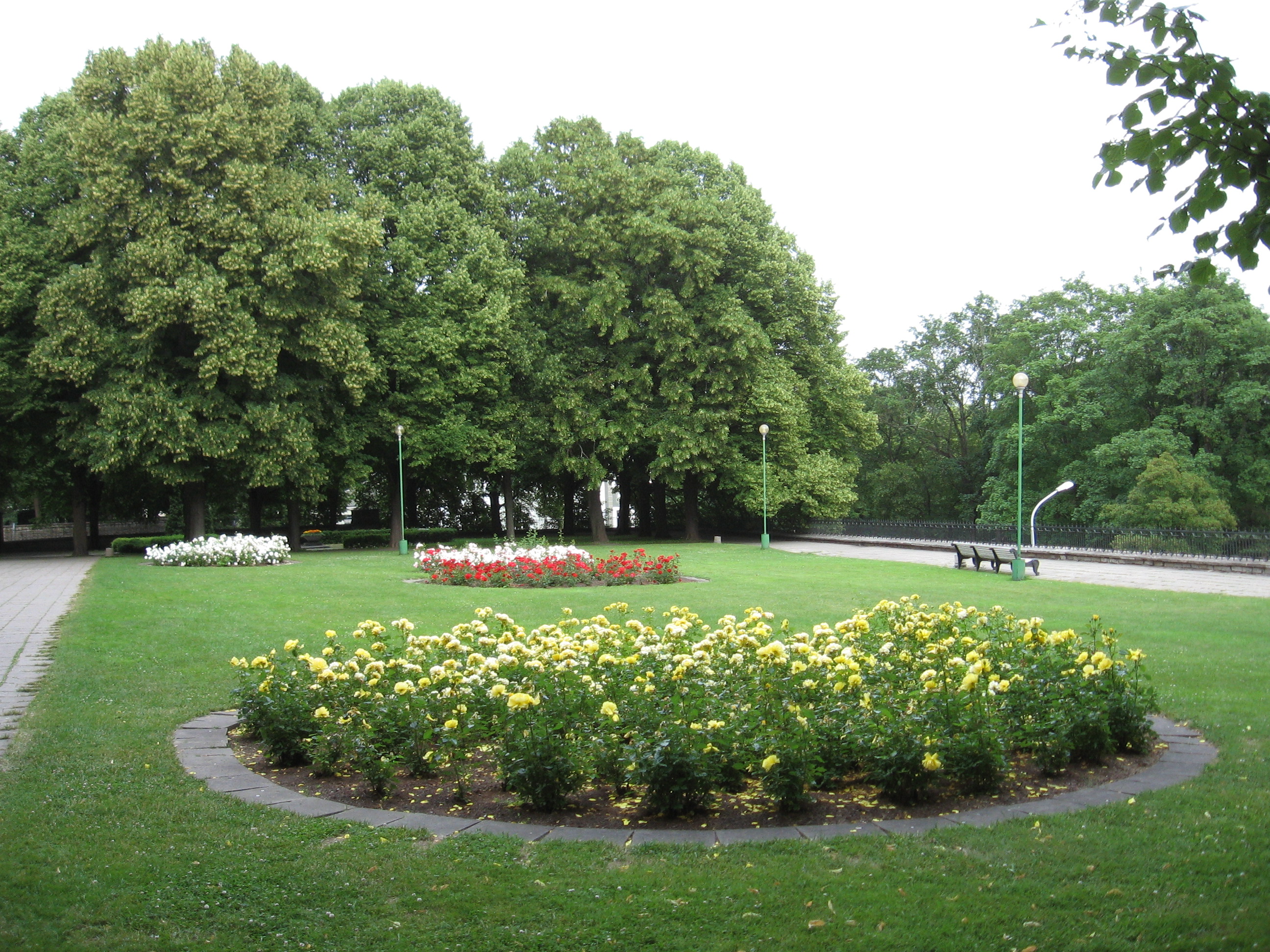
Le jardin du gouverneur (estonien : Kuberneri aed) ou jardin du château (estonien : Lossiaed) est un jardin sur le côté sud du château de Toompea à Tallinn.
Gallery


Sponsored
Location
1 explorer visited this place

66 m
Pikk Hermann is a tower of the Toompea Castle, on Toompea hill in Tallinn, the capital of Estonia. The first part of the tower was built in 1360–1370. It was rebuilt) in the 16th century. A staircase with 215 steps now leads to the top of the tower. It consists of ten internal floors and a viewing platform at the top.
Pikk Hermann is situated next to the building of the Estonian parliament. The flag on the top of the tower at 95 metres above sea level is one of the main symbols of the national government in force.
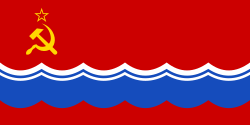
The national flag, a blue-black-white tricolour measuring 191 centimetres by 300 centimetres, is raised and the national anthem is played at the time of sunrise and lowered at the time of sunset. While it is lowered, the melody of "Mu isamaa on minu arm" is heard. For the first time, the national flag was raised to the top of Pikk Hermann in 1918, when Estonia became an independent country. The Soviet troops who later occupied Estonia lowered the flag from the tower in the summer of 1940 and later replaced it with the flag of the Estonian Soviet Socialist Republic. The original flag was raised back on the tower on February 24, 1989. Since then, raising the flag to the top of the tower is one of the traditions of Estonia's Independence Day.
The Estonian flag was also briefly raised over the Pikk Hermann during Otto Tief's brief interim government of Sept 18-22, 1944.

82 m
Toompea castle is a medieval castle on Toompea hill in the central part of Tallinn, the capital of Estonia. In modern times, it houses the Parliament of Estonia.

84 m
The Battle of Lyndanisse or Lindanise was fought on 15 June 1219 during the Northern Crusades, between the forces of the invading Kingdom of Denmark and the local non-Christian Estonians. The Danish victory in the battle, at the site of the later Hanseatic city of Reval helped King Valdemar II of Denmark to subsequently claim the territory of northern Estonia as his participation in the crusade into Estonia had been undertaken in response to calls from the Pope.
The 1219 Battle of Lyndanisse is still well known to this day, especially amongst Danes and Estonians, because of a popular legend about the first ever Danish flag, the Dannebrog, which allegedly fell from the sky, as an apparently helpful divine intervention, just when the Danish Crusaders were about to lose the battle to the local pagans.

94 m
The Estonian Soviet Socialist Republic, also known as Soviet Estonia, was a de facto administrative subunit of the former Soviet Union, covering the occupied and annexed territory of Estonia in 1940–1941 and 1944–1991.
It was nominally established to replace the until then independent Republic of Estonia on 21 July 1940, a month after the 16–17 June 1940 Soviet military invasion and occupation of the country during World War II. After the installation of a Stalinist government which, backed by the occupying Soviet Red Army, declared Estonia a Soviet constituency, the Estonian SSR was subsequently incorporated into the Soviet Union as a union republic on 6 August 1940. Estonia was occupied by Nazi Germany in 1941, and administered as a part of Reichskommissariat Ostland until it was reconquered by the USSR in 1944.
Most of the world's countries did not recognise the incorporation of Estonia into the Soviet Union de jure and only recognised its Soviet administration de facto or not at all. A number of countries continued to recognise Estonian diplomats and consuls who still functioned in the name of their former government. This policy of non-recognition gave rise to the principle of legal continuity, which held that de jure, Estonia remained an independent state under occupation throughout the period 1940–1991.
On 16 November 1988, Estonia became the first of the then Soviet-controlled countries to declare state sovereignty from the central government in Moscow. On 30 March 1990, the newly elected parliament declared that the Republic of Estonia had been illegally occupied since 1940, and formally announced a transitional period for the restoration of the country's full independence. Subsequently, on 8 May 1990, the Supreme Soviet ended the use of the Soviet symbols as state symbols together with the name Estonian Soviet Socialist Republic and adopted Republic of Estonia as the official name of the state. The parliament of Estonia declared the re-establishment of full independence on 20 August 1991. The Soviet Union formally recognised the independence of Estonia on 6 September 1991.
Book your tour near
Jardin du gouverneur
Book Now
4.0
in partnership with
GetYourGuide.com