Location Image

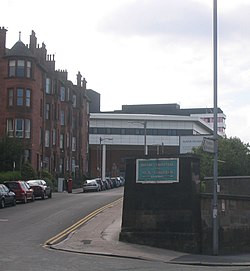
Kelvin Hall International Sports Arena

The Kelvin Hall International Sports Arena was located within the Kelvin Hall in Glasgow, Scotland. It hosted many athletics competitions including the 1990 European Athletics Indoor Championships and the Glasgow International Match from 1988 until 2012 when it moved to the Commonwealth Arena.
Nearby Places View Menu
Location Image
0 m

Kelvin Hall

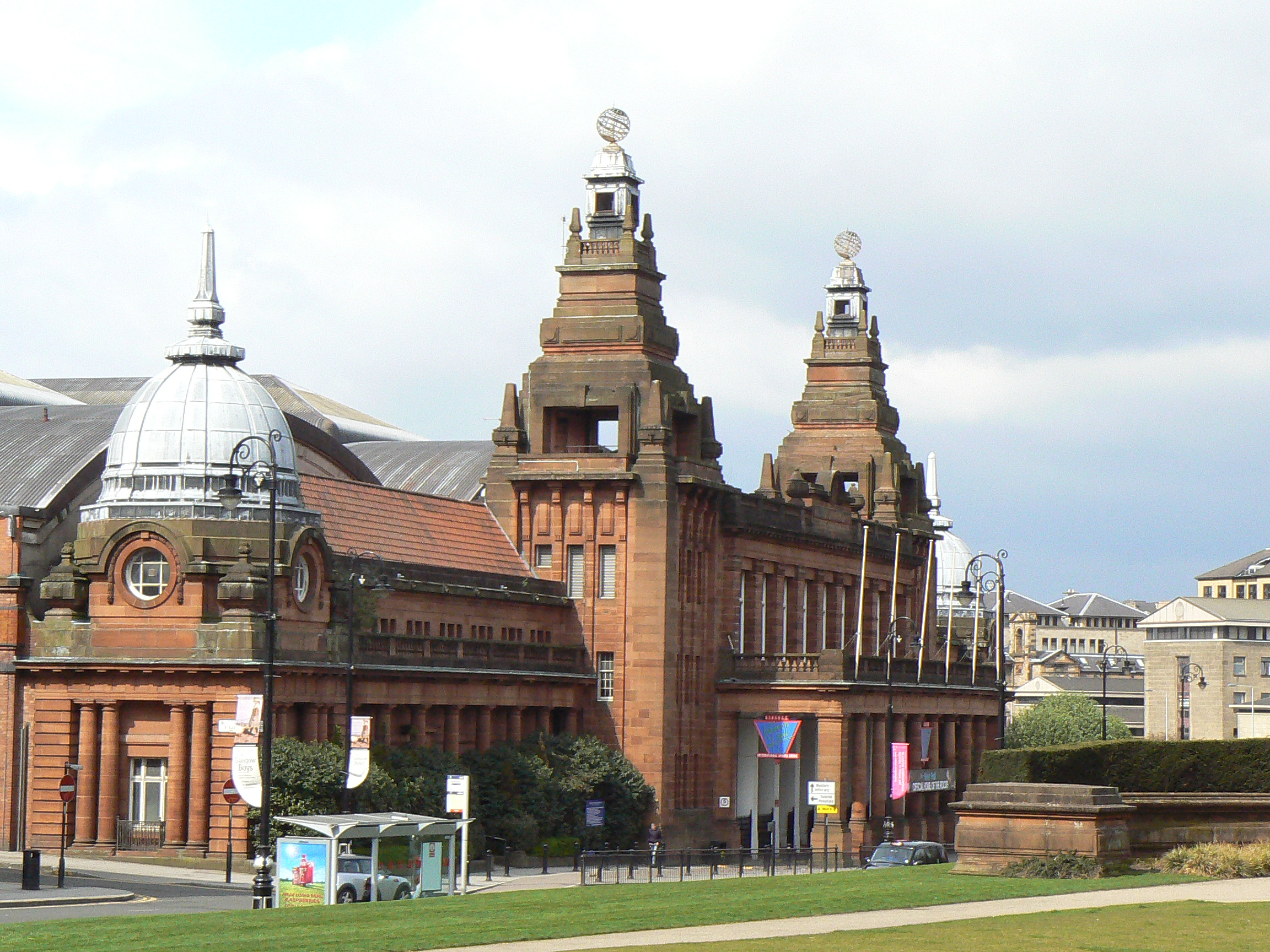
The Kelvin Hall, located on Argyle Street in the Yorkhill area of Glasgow, Scotland, is one of the largest exhibition centres in Britain and now a mixed-use arts and sports venue that opened as an exhibition venue in 1927. It has also been used as a concert hall, home to the Kelvin Hall International Sports Arena from 1987 to 2014, and from 1987 to 2010, Glasgow's Museum of Transport. As part of the economic redevelopment of Greater Glasgow promoted by the Scottish Development Agency and local authorities to enhance the city's tourist infrastructure and to attract further national and international conferences, the Scottish Exhibition and Conference Centre was designed as the Hall's successor for exhibitions and entertainments, built in 1983 and opened on the nearby Queen's Dock in 1985 with an exhibition area equal in size to the Kelvin Hall but with the benefit of extensive car parks and land for other complementary buildings. The Hall is protected as a category B listed building, and is served by city bus services and by Kelvinhall subway station.
Location Image
152 m

Cameronians War Memorial

The Cameronians War Memorial is a war memorial in Kelvingrove Park in the west of Glasgow, Scotland, to the north of Kelvingrove Art Gallery and Museum. It commemorates the service of the Cameronians (Scottish Rifles) regiment in the First and Second World Wars. The memorial includes a bronze sculpture representing a machine gun emplacement, with three human figures. It became a Category B listed building in 1988.
Location Image
193 m

Archives of the University of Glasgow

The Archives of the University of Glasgow (GUAS) maintain the historical records of the University of Glasgow back to its foundation in 1451. Its earliest record is a charter dating from 1304 for the lands of the earliest mention of record-keeping in the university is in 1490 when it is recorded in the Annales Universitatis Glasguensis 1451–1558 that 'in accordance with a proposition of the Lord Rector, a parchment book is ordered to be procured, in which important writs, statutes, and lists of the university, are to be engrossed: and also a paper book, for recording judicial proceedings.’ The Clerk to the Faculty, and subsequently the Clerk of Senate, maintained the records of the university due to the continuing requirement to ensure that the privileges, rights, policies and finances of the university were kept in good order.
Location Image
218 m

Kelvingrove Art Gallery and Museum

Kelvingrove Art Gallery and Museum owned by Glasgow City Council is a major art gallery and museum in the Yorkhill area of Glasgow, Scotland, managed by Glasgow Museums. It is located in Kelvingrove Park in the West End of the city. To its north is the University of Glasgow and to its south is the Kelvin Hall. It is adjacent to Argyle Street previously known as Dumbarton Road. Kelvingrove Art Gallery and Museum is one of Scotland's most popular buildings and free visitor attractions. The art gallery and museum opened in 1901, as part of the Glasgow International Exhibition (1901) , and fully opened to the public from 1st October 1902. The museum collections include natural history, Egyptian antiquities, design, architecture, medieval arms and armoury, Scottish history and the history of Glasgow. The art collections are one of Europe’s great civic art collections, including Scottish, European, African, Asian and Oceanic fine and decorative arts. In 2006, Kelvingrove re-opened after a three-year, £27 million refurbishment and restoration, with the collections re-organised into two halves: Life and Expression. The Life galleries represent natural history, human history and prehistory. The Expression galleries include the fine art collections. The 22 galleries display over 8,000 objects. Notable exhibits include Salvador Dalí's Christ of St John of the Cross, Sir Roger the Asian elephant, the Avant armour, and paintings by the Glasgow Boys and the Scottish Colourists.