


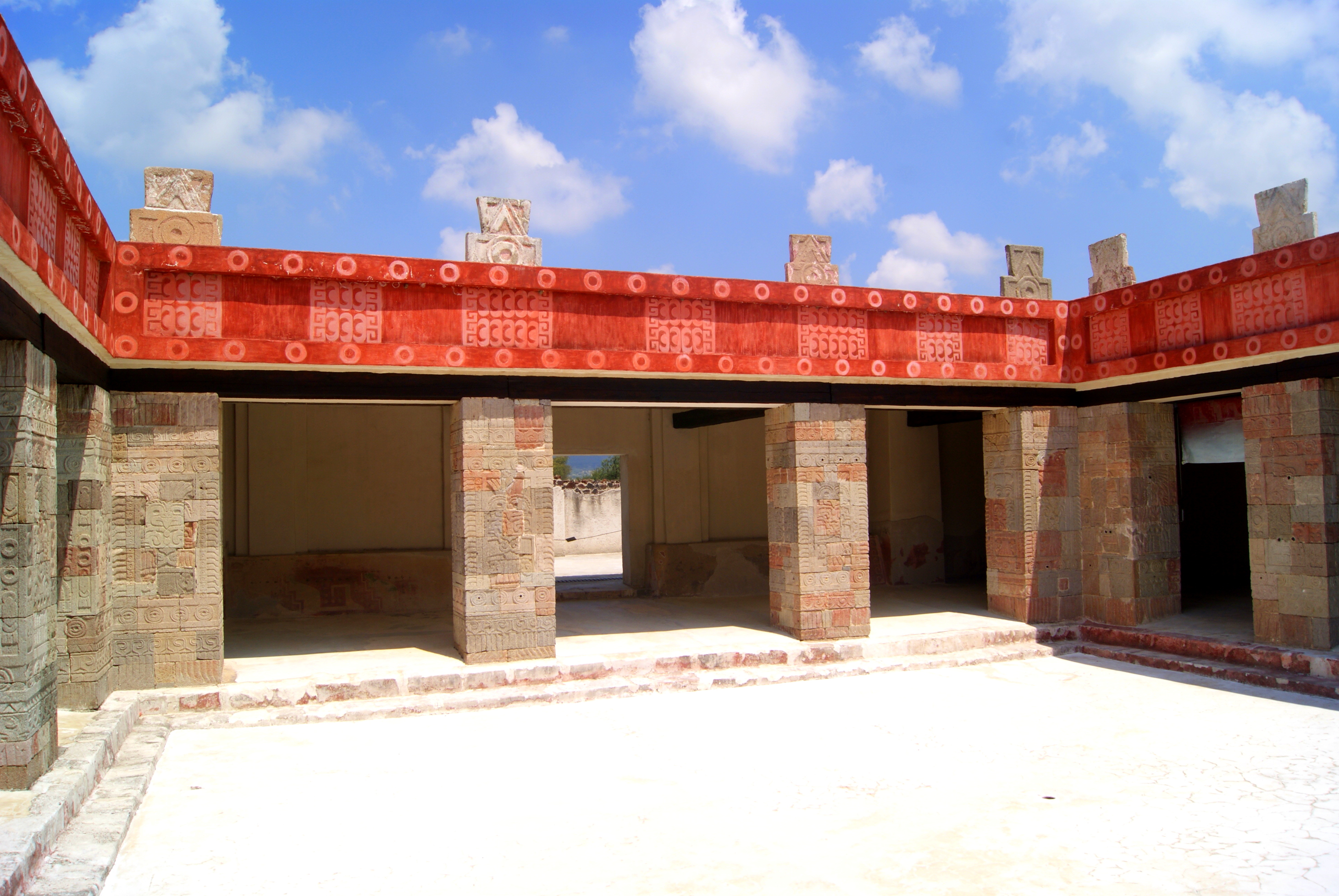
The Quetzalpapálotl complex are ruins located in Teotihuacán. The complex is best known for the Palace of Quetzalpapálotl (Spanish: Palacio de Quetzalpapálotl) and the stone reliefs in its courtyard. Adjacent structures house surviving murals. The main entrance faces the Avenue of the Dead and is southwest of the Pyramid of the Moon.
Book your tour near
Quetzalpapálotl
Book Now
4.5
in partnership with
GetYourGuide.com
Gallery


Sponsored
Location
1 explorer visited this place

217 m
On 20 April 2026, a mass shooting occurred at the Teotihuacan archaeological site in the State of Mexico, Mexico. Julio César Jasso Ramírez, 27, opened fire from atop the Pyramid of the Moon, killing a Canadian woman and injuring 13 other tourists before committing suicide.
253 m
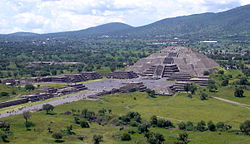
The Pyramid of the Moon is the second-largest pyramid in Teotihuacan, after the Pyramid of the Sun, and located in modern-day San Martín de las Pirámides, Mexico. It is found in the western part of the ancient city of Teotihuacan and mimics the contours of the mountain Cerro Gordo, just north of the site. Cerro Gordo may have been called Tenan, which in Nahuatl, means "mother or protective stone". The Pyramid of the Moon covers a structure older than the Pyramid of the Sun which existed prior to 200 AD.
The Pyramid's construction between 100 and 450 AD completed the bilateral symmetry of the temple complex. The pyramid is located at the end of the Avenue of the Dead, connected by a staircase, and was used as a stage for performing ritual sacrifices of animals and humans upon. It was also a burial ground for sacrificial victims. These burials were done in order to legitimize the addition of another pyramid layer over the existing one. The passing of several rulers, and rapid changes in ideologies, led to the Pyramid of the Moon's exponential expansion between 250 and 400 AD. A platform atop the pyramid was used to conduct ceremonies in honor of the Great Goddess of Teotihuacan, the goddess of water, fertility, the earth, and even creation itself. This platform and the sculpture found at the pyramid's bottom are thus dedicated to The Great Goddess.
Opposite the Great Goddess's altar is the Plaza of the Moon. The Plaza contains a central altar and an original construction with internal divisions, consisting of four rectangular and diagonal bodies that formed what is known as the "Teotihuacan Cross."

558 m
The Pyramid of the Sun is the largest building in Teotihuacan, and one of the largest in Mesoamerica. It is believed to have been constructed about 200 AD. Found along the Avenue of the Dead, in between the Pyramid of the Moon and the Ciudadela, and in the shadow of the mountain Cerro Gordo, the pyramid is part of a large complex in the heart of the city.

615 m
Teotihuacan is an ancient Mesoamerican city located in a sub-valley of the Valley of Mexico, which is located in the State of Mexico, 40 kilometers northeast of modern-day Mexico City.
Teotihuacan is known today as the site of many of the most architecturally significant Mesoamerican pyramids built in the pre-Columbian Americas, namely the Pyramid of the Sun and the Pyramid of the Moon. Although close to Mexico City, Teotihuacan was not a Mexica city, and it predates the Aztec Empire by many centuries. At its zenith, perhaps in the first half of the first millennium, Teotihuacan was the largest city in the Americas. Its population has been estimated to be at least 25,000, but likely sitting around 100,000 during its height, potentially making it the sixth-largest city in the world during its epoch.
The city covered eight square miles and 80 to 90 percent of the total population of the valley resided in Teotihuacan. Apart from the pyramids, Teotihuacan is also anthropologically significant for its complex, multi-family residential compounds, the Avenue of the Dead, and its vibrant, well-preserved murals. Additionally, Teotihuacan exported fine obsidian tools found throughout Mesoamerica. The city is thought to have been established around 100 BCE, with major monuments continuously under construction until about 250 CE. The city may have lasted until sometime between the 7th and 8th centuries CE, but its major monuments were sacked and systematically burned around 550 CE. Its collapse might be related to the extreme weather events of 535–536.
Teotihuacan began as a religious center in the Mexican Plateau around the first century CE. It became the largest and most populated center in the pre-Columbian Americas. Teotihuacan was home to multi-floor apartment compounds built to accommodate the large population. The term Teotihuacan is also used to refer to the whole civilization and cultural complex associated with the site. Although it is a subject of debate whether Teotihuacan was the center of a state empire, its influence throughout Mesoamerica is well documented. Evidence of Teotihuacano presence is found at numerous sites in Veracruz and the Maya region. The later Aztecs saw these magnificent ruins and claimed a common ancestry with the Teotihuacanos, modifying and adopting aspects of their culture.
The ethnicity of the inhabitants of Teotihuacan is the subject of debate. Possible candidates are the Nahuas, Otomi, or Totonac. Other scholars have suggested that Teotihuacan was multi-ethnic, due to the discovery of cultural aspects connected to the Maya as well as Oto-Pamean people. It is clear that many different cultural groups lived in Teotihuacan during the height of its power, with migrants coming from all over, but especially from Oaxaca and the Gulf Coast. After the collapse of Teotihuacan, central Mexico was dominated by more regional powers, notably Xochicalco and Tula.
The city and the archeological site are located in what is now the San Juan Teotihuacán municipality in the State of México, approximately 40 kilometers northeast of Mexico City. The site covers a total surface area of 83 square kilometers and was designated a UNESCO World Heritage Site in 1987. It was the second most-visited archeological site in Mexico in 2024, receiving 1,313,321 visitors.

1.2 km
La Gruta is a Mexican restaurant located inside a natural volcanic cave in San Juan Teotihuacán Municipality, State of Mexico, adjacent to the Teotihuacan archaeological zone. The cave was used for private banquets hosted by President Porfirio Díaz during the early-twentieth-century archaeological rescue of Teotihuacán, beginning on 9 April 1906. It opened as a public restaurant in 1926 and serves Mexican cuisine drawing on the pre-Hispanic culinary tradition of central Mexico.