Crompton Hall was an historic house situated at Crompton Fold in the township of Crompton, Lancashire, and within the historic parish of Prestwich-cum-Oldham. Crompton Hall was in the township for hundreds of years. The hall has two known stages, the first being a medieval one, of which the manor existed at least as early as 1442 to provide for Norman conquest settlers, the second was a 19th-century phase, built in c.1848 with much more splendour, and reflected the Crompton's increased affluence much due to the Industrial Revolution which took place in the town. Crompton Hall was demolished in 1952, but much of its forested gardens still remain today. The location of the demolished house, by then within the suburbs of Greater Manchester, was "Buckstones Road, Shaw, Greater Manchester".

Nearby Places View Menu
Location Image
628 m

Old Brook (England)

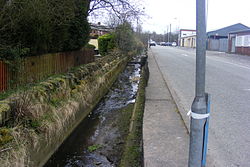
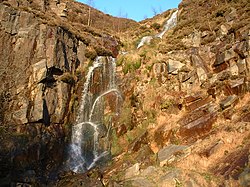
Old Brook is a small watercourse in Shaw and Crompton in the Metropolitan Borough of Oldham, Greater Manchester in the northwest of England. It flows from Crow Knowl on Crompton Moor to the River Beal. Its main feature is a waterfall at Pingot Quarry.
Location Image
661 m

Pencil Brook

Pencil Brook is a small watercourse in High Crompton in the Metropolitan Borough of Oldham, Greater Manchester, England. It is a tributary of the River Beal.
Location Image
698 m

Newby Mill, Shaw

Elm Mill was a four-storey cotton spinning mill in Shaw and Crompton, Greater Manchester, England. It was built in 1890 for the Elm Spinning Company Ltd., and was called Elm Mill until it closed in 1928. It was revived by the Lancashire Cotton Corporation in 1929 and called Newby Mill. LCC and all their assets passed to Courtaulds in 1964. Production at Newby finished in 1970, and it was used for warehousing. Subsequently, named Shaw No 3 Mill, it became part of Littlewoods's Shaw National Distribution Centre. It was demolished to make way for housing in 2022.
Location Image
721 m

Brushes Clough Reservoir

Brushes Clough Reservoir is on Crompton Moor in Shaw and Crompton, Greater Manchester, England. It was created in the 19th century by the damming of Leornardin Brook. The outlet of the reservoir flows through Brushes Clough to merge with Old Brook, a tributary of the River Beal.